Lights-Out Manufacturing
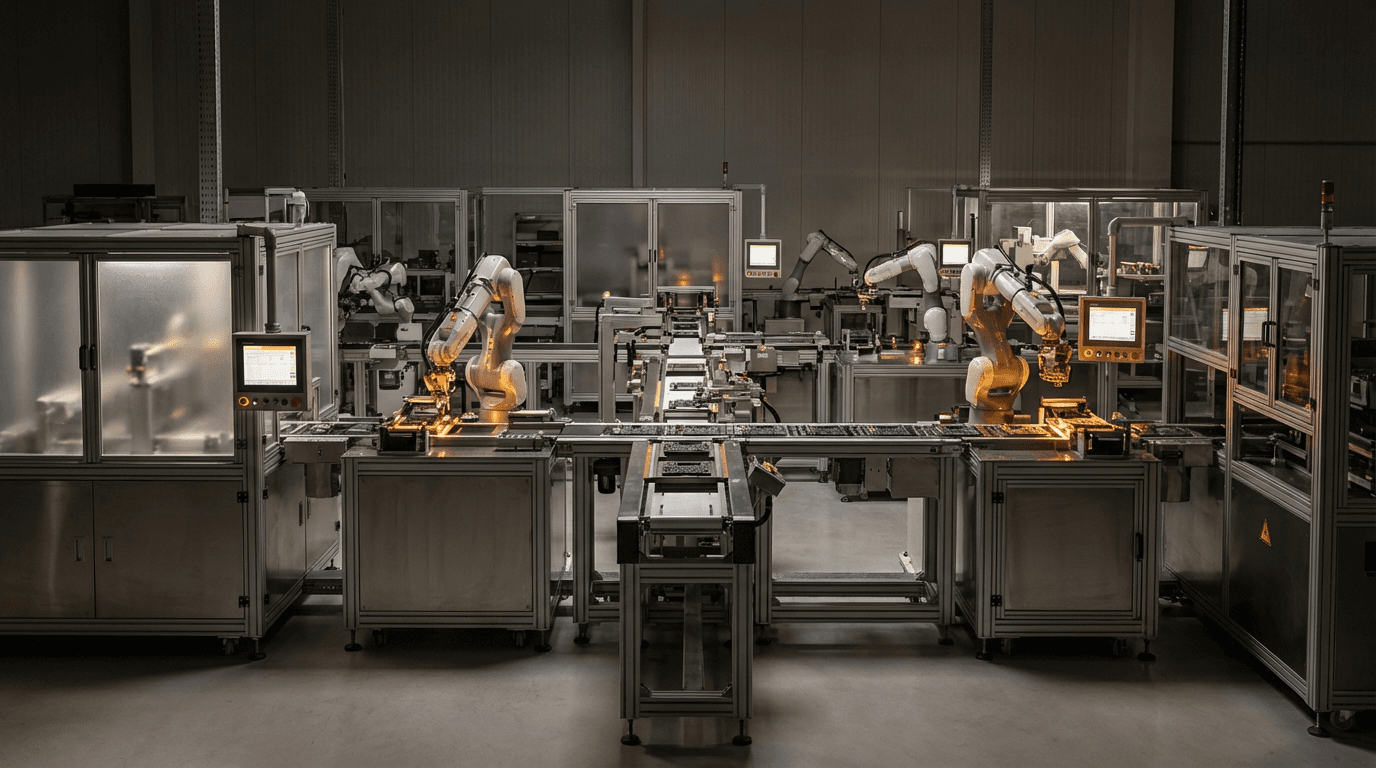
Lights-out manufacturing represents the culmination of decades of industrial automation, creating production environments where machines operate independently without human supervision or intervention on the factory floor. The term "lights-out" refers to the literal ability to turn off the lighting in these facilities, as no human workers need to see their surroundings. These systems integrate advanced robotics with machine vision, artificial intelligence-driven control systems, automated material handling equipment, and sophisticated sensor networks that continuously monitor production parameters. The technical foundation relies on closed-loop feedback systems where machines self-correct based on real-time quality measurements, predictive maintenance algorithms that anticipate equipment failures before they occur, and digital twin simulations that optimize production sequences. Unlike traditional automation that handles specific repetitive tasks, lights-out manufacturing creates entire production ecosystems where robots collaborate, materials flow autonomously through the facility, and software orchestrates complex manufacturing processes from raw material intake through final product packaging.
The primary challenge this approach addresses is the fundamental constraint of human labor in manufacturing: the need for breaks, shifts, and safe working conditions that limit production hours and introduce variability in output quality. Traditional factories operate in shifts with significant downtime for changeovers, maintenance windows, and safety protocols. Lights-out facilities eliminate these constraints, enabling true 24/7 production with consistent quality levels that human operators struggle to maintain over extended periods. This technology proves particularly valuable for high-precision manufacturing where tolerances measured in microns demand unwavering consistency, hazardous production environments where human presence poses safety risks, and high-mix low-volume manufacturing scenarios where rapid reconfiguration between product variants provides competitive advantage. The economic implications extend beyond labor cost reduction to include dramatic improvements in floor space utilization, energy efficiency through optimized production scheduling, and the ability to locate facilities based on logistics and supply chain considerations rather than labor availability.
Early implementations in automotive component manufacturing and electronics assembly have demonstrated the viability of this approach, with some facilities achieving months of continuous operation between required human interventions. The technology enables manufacturers to respond to demand fluctuations by scaling production intensity rather than workforce size, and to implement just-in-time manufacturing strategies with unprecedented precision. However, the transition requires substantial upfront capital investment in automation infrastructure and represents a fundamental shift in workforce requirements from direct production labor to roles in system programming, remote monitoring, and specialized maintenance. As manufacturing faces pressures from supply chain volatility, labor shortages in developed economies, and demands for greater customization, lights-out manufacturing offers a pathway toward resilient, flexible production systems. The technology aligns with broader trends toward digital manufacturing and Industry 4.0 initiatives, where physical production increasingly merges with digital control systems to create adaptive, self-optimizing manufacturing environments that can operate with minimal human oversight while maintaining the flexibility to produce diverse product portfolios.
Related Organizations

Changying Precision Technology Company
China · Company
A Dongguan-based manufacturer that replaced 90% of its human workforce with robots, achieving massive productivity gains.

Develops intelligent robot controllers that enable industrial robots to perform complex picking and logistics tasks autonomously without human teaching.

Operates a famous facility in Drachten, Netherlands, producing electric shavers with highly automated lines that run with minimal human presence.

Uses robotic arms to form sheet metal (Robotic Blacksmithing), allowing for autonomous, mold-less manufacturing of metal parts.

Builds autonomous welding cells that use computer vision to scan parts and weld them without programming, enabling unmanned operation.

Industrial giant offering the 'Senseye Predictive Maintenance' suite and MindSphere IoT platform.

Provides 'Robots-as-a-Service' (RaaS), deploying fully managed automated workcells to factories to replace manual labor shifts.

Manufacturer of the TUG autonomous mobile robot, widely used for delivering medications, meals, and linens in hospitals.
Supporting Evidence
Research this in Signals
Signals turns a topic into a sourced research record you can inspect and rerun. Your first scan is free, and this one starts with Lights-Out Manufacturing already loaded, so edit it or scan as is.