Autonomous Factory Orchestration Platforms
Modern manufacturing facilities face mounting pressure to operate with maximum efficiency while managing increasingly complex production environments. Traditional manufacturing execution systems (MES) and scheduling tools, while valuable, often struggle to respond dynamically to the real-time disruptions that characterize contemporary factory floors—unexpected machine downtime, supply chain delays, quality issues, or sudden order changes. These legacy systems typically rely on static schedules created hours or days in advance, leaving plant managers scrambling to manually adjust when reality diverges from plan. Autonomous factory orchestration platforms emerge as a solution to this challenge, providing a layer of intelligent coordination that sits above conventional control systems and continuously adapts to changing conditions across the entire production environment.
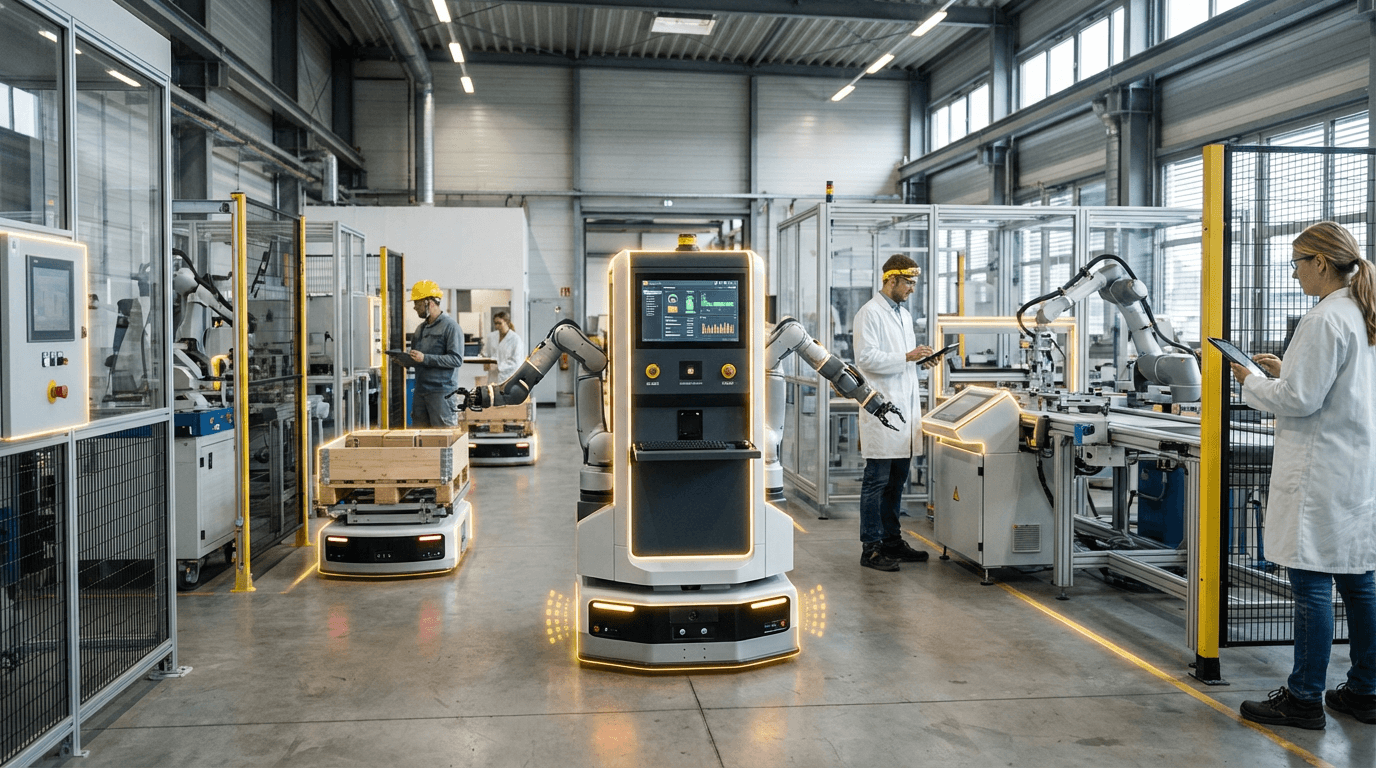
At their core, these platforms function as sophisticated decision-making engines that integrate data streams from programmable logic controllers (PLCs), industrial robots, warehouse management systems, enterprise resource planning (ERP) software, and quality control stations. By synthesizing this information in real-time, they create a comprehensive digital representation of factory operations. The platforms employ multi-agent optimization algorithms—computational approaches where multiple autonomous software agents collaborate to solve complex problems—to continuously evaluate thousands of possible production scenarios and select optimal paths forward. This enables them to dynamically re-sequence work orders, redistribute tasks across production lines, and intelligently route materials through the facility to minimize costly changeovers and eliminate bottlenecks. Critically, these systems respect real-world constraints such as scheduled maintenance windows, labor availability, skill requirements, and quality specifications, ensuring that optimization remains practical and executable rather than purely theoretical.
Early deployments in automotive, electronics, and consumer goods manufacturing indicate substantial improvements in overall equipment effectiveness and throughput. Research suggests that these platforms can reduce unplanned downtime by identifying potential conflicts before they cascade into production stoppages, while also improving material utilization by coordinating just-in-time delivery of components to assembly stations. The technology represents a convergence of advances in industrial IoT sensor networks, edge computing infrastructure, and artificial intelligence, particularly reinforcement learning techniques that allow systems to improve their decision-making over time. As manufacturers face growing demands for mass customization—producing highly varied products on the same production lines—and as labor markets tighten, autonomous orchestration platforms are positioned to become essential infrastructure for competitive manufacturing operations. The trajectory points toward factories that function less like rigidly programmed machines and more like adaptive organisms, continuously sensing their environment and adjusting behavior to maintain optimal performance across shifting conditions.
Related Organizations


Manufacturing data platform for discrete and process manufacturing.

Provides AI-driven manufacturing analytics that help operators orchestrate process settings to reduce waste and improve speed.

Provides a 'Connected Worker' platform that digitizes standard operating procedures and orchestrates human labor alongside machines.

Offers a cloud-native smart manufacturing platform (acquired by Rockwell Automation) that connects people, systems, and machines.

Enterprise AI company using a 'Eureka' architecture involving specialized agents for industry verticals.

Manufacturing Automation Platform (MAP) that allows users to design, order, and deploy automated equipment.

The market leader in process mining, providing an 'MRI' of organizational processes to drive execution management.

Siemens-owned low-code platform enabling rapid application development, used by various European and US government bodies.

A connected worker platform (acquired by IFS) that facilitates real-time knowledge sharing and task management on the factory floor.
Supporting Evidence
Research this in Signals
Signals turns a topic into a sourced research record you can inspect and rerun. Your first scan is free, and this one starts with Autonomous Factory Orchestration Platforms already loaded, so edit it or scan as is.