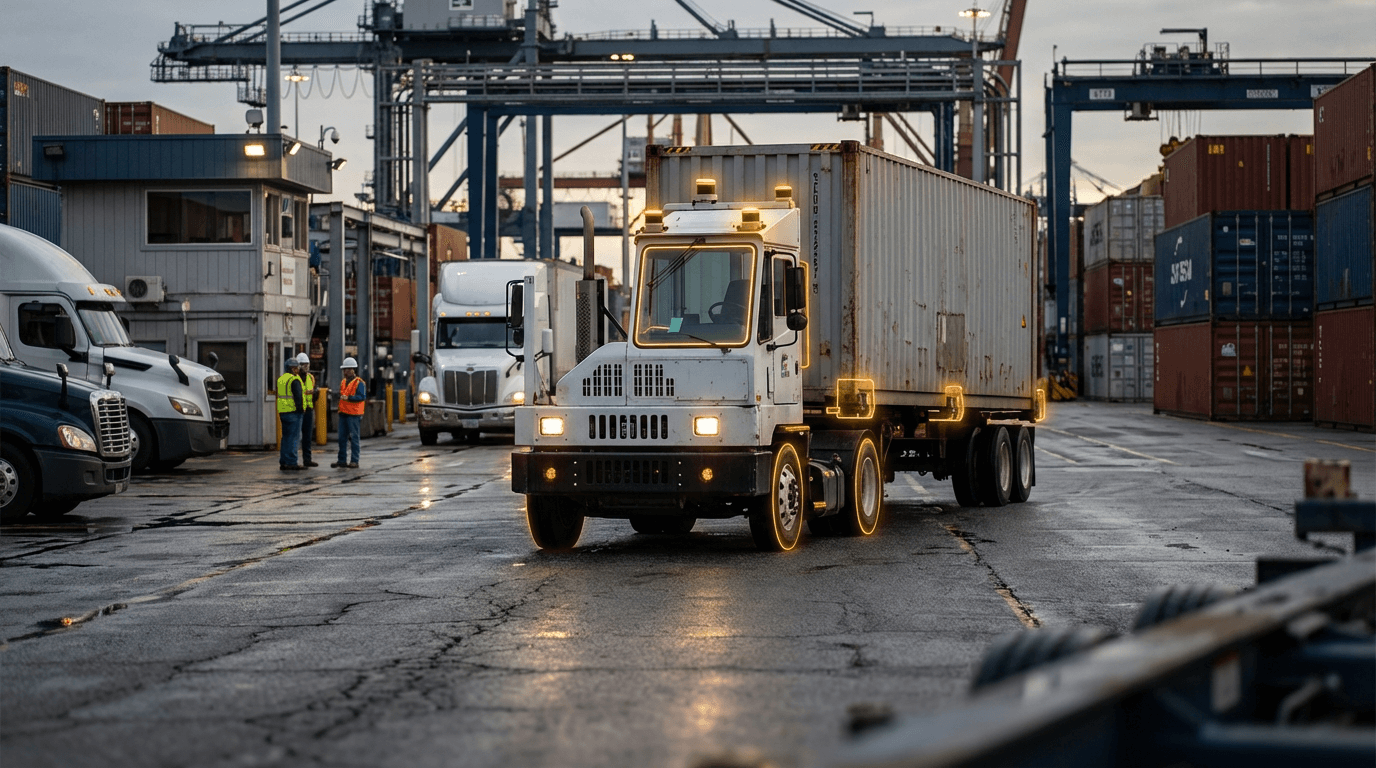
Autonomous Freight and Yard Logistics
The movement of goods through industrial facilities, ports, and distribution centers has long been constrained by the limitations of human-operated vehicles and the complexities of coordinating material flows across multiple touchpoints. Traditional yard operations suffer from driver shortages, shift-based scheduling constraints, and the inherent inefficiencies of manual coordination between loading docks, storage areas, and outbound gates. These bottlenecks translate into extended dwell times, underutilized equipment, and missed delivery windows that ripple through entire supply chains. Autonomous freight and yard logistics addresses these challenges by deploying self-driving vehicles equipped with perception sensors, localization systems, and fleet orchestration software specifically designed for the structured, repetitive environments of industrial yards. Unlike autonomous vehicles navigating open roads, these systems operate within geofenced areas with known layouts, predictable traffic patterns, and controlled access, enabling faster validation and deployment. The technology stack typically combines LiDAR, cameras, and GPS with high-definition maps of the facility, allowing yard tractors and terminal trucks to navigate loading zones, avoid obstacles, and execute precise docking maneuvers without human intervention.
The industrial implications of autonomous yard logistics extend far beyond simple labor substitution. By operating continuously without shift changes or mandatory rest periods, these systems fundamentally reshape throughput capacity and asset utilization. Ports deploying autonomous terminal tractors report the ability to maintain consistent container movement during night shifts and peak periods when human driver availability traditionally constrains operations. In manufacturing environments, autonomous tuggers create predictable just-in-time material delivery between production lines and warehouses, reducing the buffer inventory required to accommodate scheduling uncertainties. The orchestration layer coordinates multiple vehicles as a unified fleet rather than independent units, dynamically routing equipment based on real-time demand signals and optimizing the sequence of pickups and deliveries to minimize empty travel. This coordination eliminates the communication delays and handoff inefficiencies inherent in human-operated systems, where drivers must receive instructions, locate loads, and manually update status. For logistics operators, the technology enables new service models such as guaranteed turnaround times and usage-based pricing that were previously impossible to deliver reliably.
Early commercial deployments have moved beyond pilot programs into operational scale at major logistics hubs. Automotive manufacturing plants have integrated autonomous yard trucks to shuttle parts between receiving docks and line-side delivery points, achieving measurable reductions in production delays caused by material shortages. Intermodal terminals are deploying mixed fleets where autonomous tractors handle the repetitive shuttling of containers between rail sidings and truck gates, while human operators focus on exception handling and maintenance. The structured nature of these environments has proven crucial to adoption, as operators can validate safety performance within controlled boundaries before expanding operational design domains. Industry analysts note that the technology aligns with broader trends toward lights-out logistics facilities and the integration of autonomous systems with warehouse management and transportation management platforms. As labor markets tighten and e-commerce drives demand for faster order fulfillment, autonomous yard logistics represents a pathway to continuous operations that can scale independently of workforce availability, positioning it as foundational infrastructure for next-generation supply chain networks.
Related Organizations

Freight technology company developing autonomous electric trucks, with signed MOUs for deployment in UAE logistics.

Develops autonomous driving systems specifically for yard trucks and logistics hubs.

Provides a human-assisted autonomy platform for yard trucking, integrating teleoperation centers to handle edge cases in logistics hubs.

Develops autonomous box trucks for middle-mile logistics, relying heavily on sensor data and route analytics.

Provides full-stack AI solutions for container logistics, including the autonomous Q-Truck.

Developing the Aurora Driver for Class 8 trucks, focusing on highway corridors in Texas.

Focuses exclusively on long-haul autonomous trucking for freight corridors, using a 'light' mapping approach.

Independent subsidiary of Daimler Truck developing L4 autonomous trucking solutions.

Autonomous trucking technology company developing the PlusDrive system.

Supporting Evidence
Research this in Signals
Signals turns a topic into a sourced research record you can inspect and rerun. Your first scan is free, and this one starts with Autonomous Freight and Yard Logistics already loaded, so edit it or scan as is.