Circular Manufacturing Systems
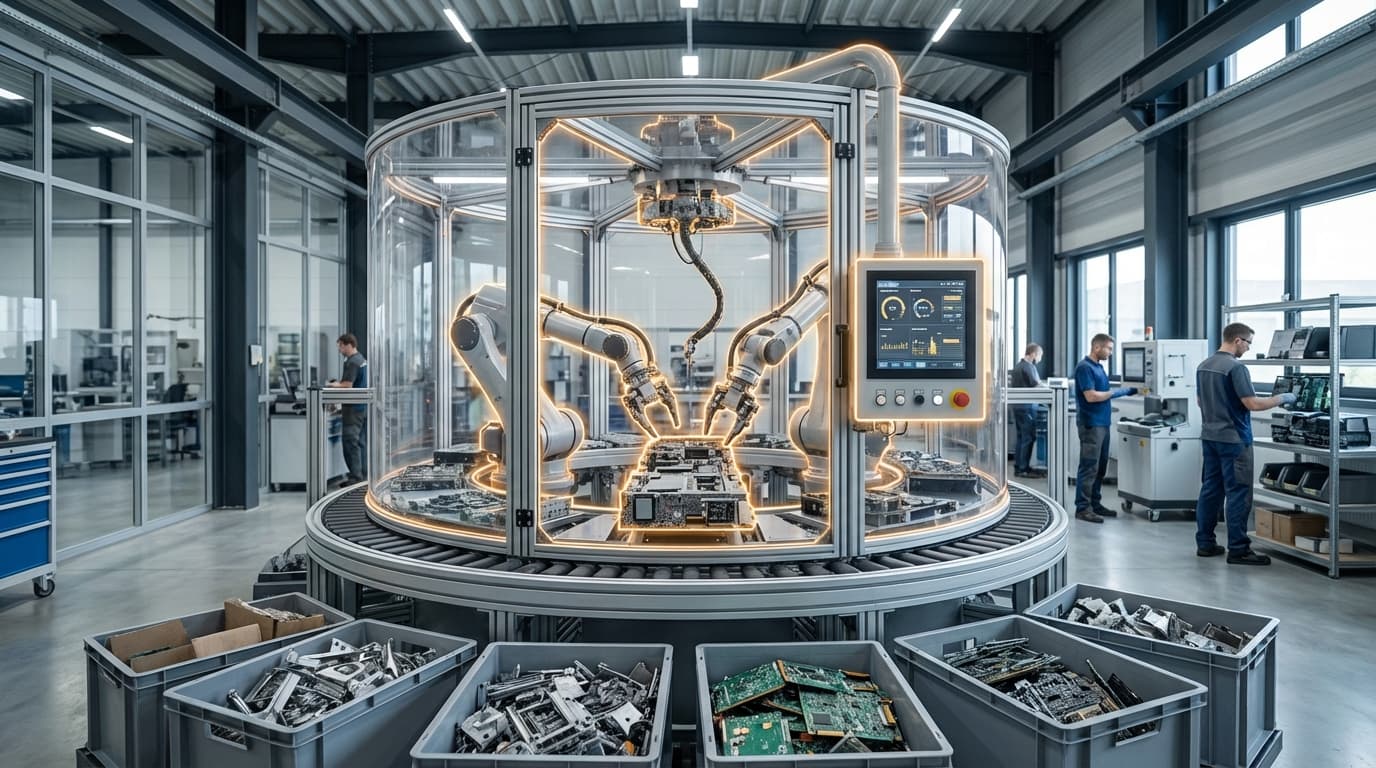
The linear "take-make-dispose" model that has dominated industrial production for over a century is fundamentally incompatible with the resource constraints and environmental pressures facing modern manufacturing. Traditional production systems extract virgin materials, transform them into products, and ultimately consign them to landfills or incinerators at end-of-life, creating massive waste streams and perpetuating dependence on finite resources. Circular manufacturing systems represent a paradigm shift away from this linear approach, establishing closed-loop production networks where materials and components flow continuously through cycles of use, recovery, and regeneration. At their technical core, these systems integrate several sophisticated capabilities: reverse logistics networks that efficiently collect end-of-life products from dispersed locations, automated disassembly lines equipped with robotic systems capable of non-destructive component separation, advanced material sorting technologies using spectroscopy and AI-powered visual recognition, and remanufacturing processes that restore components to original or improved specifications. Digital product passports—embedded data records tracking material composition, component history, and maintenance records throughout a product's lifecycle—enable intelligent decision-making about optimal recovery pathways, while machine learning algorithms assess component condition to determine whether parts should be directly reused, refurbished, remanufactured, or recycled for material recovery.
The manufacturing sector faces mounting pressure from multiple directions: volatile commodity prices that make virgin material sourcing economically unpredictable, increasingly stringent environmental regulations such as the EU's Circular Economy Action Plan and extended producer responsibility mandates, and growing consumer and investor demand for demonstrable sustainability performance. Circular manufacturing systems address these challenges by fundamentally decoupling production from virgin resource extraction, creating economic value from what was previously considered waste. By recovering materials and components at their highest possible value—prioritizing reuse and remanufacturing over downcycling—these systems reduce manufacturing costs while simultaneously decreasing environmental impact. The approach also builds supply chain resilience by creating secondary material sources that are less vulnerable to geopolitical disruptions and price volatility. Industries with high-value components, complex assemblies, or material-intensive products stand to benefit particularly from circular approaches, as the economics of recovery become increasingly favorable compared to virgin production. Furthermore, circular systems enable new business models such as product-as-a-service offerings, where manufacturers retain ownership and responsibility for products throughout their lifecycle, creating incentives for durability and recoverability rather than planned obsolescence.
Early implementations of circular manufacturing are already demonstrating viability across various sectors. Automotive manufacturers have established remanufacturing operations for engines, transmissions, and electronic components, achieving cost savings of 40-65% compared to new production while maintaining equivalent performance standards. Electronics manufacturers are developing modular product designs specifically engineered for disassembly, with pilot programs recovering precious metals and rare earth elements at rates significantly higher than traditional recycling. Industrial equipment producers are implementing condition-monitoring systems that predict component lifecycles and coordinate proactive recovery before failure occurs. The integration of Industry 4.0 technologies—including IoT sensors, blockchain-based material tracking, and digital twins—is accelerating the sophistication of circular systems, enabling real-time visibility into material flows and automated optimization of recovery decisions. As regulatory frameworks increasingly mandate circular approaches and material scarcity intensifies, circular manufacturing systems are transitioning from niche sustainability initiatives to core competitive strategies. The trajectory points toward production ecosystems where waste is systematically designed out, materials circulate indefinitely at high value, and manufacturing becomes regenerative rather than extractive—fundamentally reshaping industrial production for resource-constrained future.
Related Organizations

A global thought leader promoting the circular economy, working with cities to implement strategies that design out waste and keep products in use.

World's leading manufacturer of construction and mining equipment.

Major automotive manufacturer operating the 'Refactory' in Flins, Europe's first circular economy factory.

Creates a closed-loop supply chain for lithium-ion batteries by recycling end-of-life batteries into critical materials.

Uses blockchain and Zero-Knowledge Proofs to share product data (like chemical content) without revealing sensitive supplier information.

Operates a famous facility in Drachten, Netherlands, producing electric shavers with highly automated lines that run with minimal human presence.

Global materials technology group with extensive operations in battery recycling and refining.

A global leader in water, waste, and energy management with dedicated facilities for e-waste and battery recycling.


A technology rental subscription platform that is expanding the 'access over ownership' model.
Supporting Evidence
Research this in Signals
Signals turns a topic into a sourced research record you can inspect and rerun. Your first scan is free, and this one starts with Circular Manufacturing Systems already loaded, so edit it or scan as is.