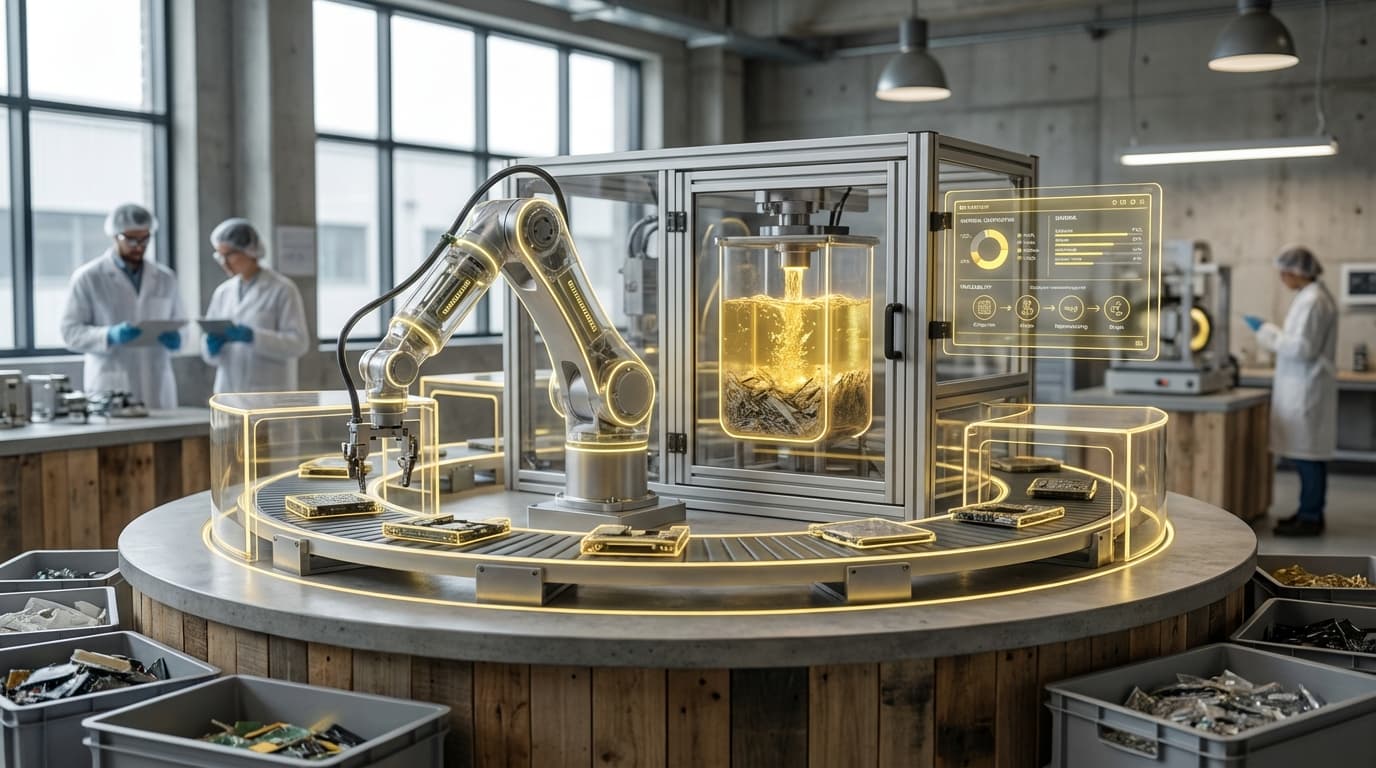
Circular Manufacturing Systems
Circular Manufacturing Systems represent a fundamental shift from traditional linear production models to closed-loop industrial processes where materials are continuously cycled through production, use, and recovery phases. These systems integrate advanced tracking technologies—including RFID tags, blockchain-based digital product passports, and IoT sensors—to maintain complete visibility of materials throughout their entire lifecycle. By embedding unique digital identities into components and materials at the point of manufacture, these systems create an unbroken chain of custody that follows products from initial production through consumer use and eventual return for remanufacturing or recycling. The technical architecture typically combines edge computing devices that capture real-time data on material composition, condition, and location with cloud-based platforms that aggregate this information across entire supply networks. This digital infrastructure enables automated sorting, quality assessment, and routing decisions that were previously impossible with manual processes.
The industrial challenges addressed by circular manufacturing are substantial and growing. Traditional manufacturing operates on a take-make-dispose model that generates enormous waste streams, depletes finite resources, and creates significant environmental liabilities. Manufacturers face increasing regulatory pressure around extended producer responsibility, rising raw material costs, and consumer demand for sustainable products. Circular systems solve these problems by transforming end-of-life products from waste into valuable feedstock. When a product reaches the end of its useful life, embedded digital identities allow automated systems to instantly determine optimal recovery pathways—whether a component should be refurbished, remanufactured into new products, or broken down for material recovery. This eliminates the guesswork and manual labor that has historically made recycling economically unviable for complex products. The systems also enable new business models based on product-as-a-service, where manufacturers retain ownership and responsibility for materials throughout multiple use cycles, fundamentally aligning economic incentives with resource efficiency.
Early implementations are emerging across industries with high-value, complex products. Automotive manufacturers are piloting systems that track battery packs through multiple vehicle lifecycles, ensuring valuable materials like lithium and cobalt are recovered rather than landfilled. Electronics producers are experimenting with modular designs coupled with digital tracking to enable component harvesting and reuse. Industrial equipment manufacturers are establishing take-back programs where sensors embedded in machinery provide continuous feedback on component wear, triggering proactive replacement and remanufacturing before failure occurs. Research indicates that these approaches can reduce material costs by twenty to thirty percent while significantly decreasing environmental impact. As digital infrastructure becomes more standardized and interoperable across supply chains, circular manufacturing systems are positioned to become integral to Industry 4.0 transformation, moving industrial production toward regenerative models that decouple economic growth from resource consumption and waste generation.
Related Organizations

Provides supply chain traceability and battery passports to ensure ethical sourcing and recycling verification.

Creates a closed-loop supply chain for lithium-ion batteries by recycling end-of-life batteries into critical materials.

Applies AI and robotics to modernize recycling infrastructure.

Global materials technology group with extensive operations in battery recycling and refining.
Uses blockchain and Zero-Knowledge Proofs to share product data (like chemical content) without revealing sensitive supplier information.

Software company creating the Digital ID for physical products.

Enterprise software giant providing data analytics solutions to esports teams like Team Liquid.

Developed 'atma.io', a connected product cloud that assigns unique digital IDs to billions of items, bridging physical tags (RFID/QR) with digital data.

Major automotive manufacturer operating the 'Refactory' in Flins, Europe's first circular economy factory.
Supporting Evidence
Research this in Signals
Signals turns a topic into a sourced research record you can inspect and rerun. Your first scan is free, and this one starts with Circular Manufacturing Systems already loaded, so edit it or scan as is.