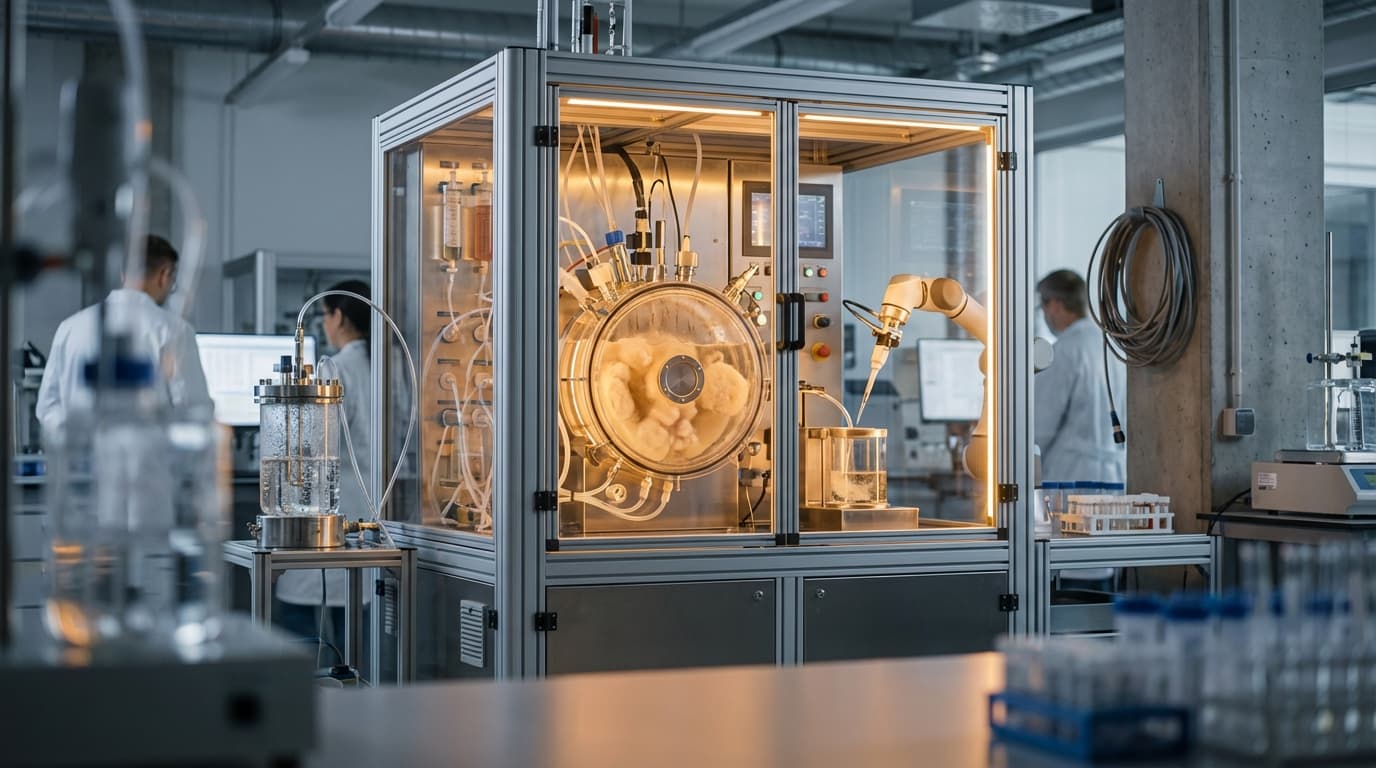
Biomanufacturing & Synthetic Biology
Traditional manufacturing has long relied on resource-intensive extraction, refining, and synthesis processes that consume vast amounts of energy and generate significant waste. Biomanufacturing and synthetic biology represent a fundamental shift in how we produce materials and chemicals, replacing these conventional methods with biological systems that grow products at the cellular level. At its core, this approach involves engineering microorganisms—primarily bacteria, yeast, fungi, and algae—to function as living factories. Scientists modify the genetic code of these organisms to produce specific proteins, polymers, enzymes, or chemical compounds that would traditionally require petroleum feedstocks or mineral extraction. The process typically begins with identifying the desired molecular structure, then programming cellular pathways to synthesise it through fermentation in controlled bioreactors. These engineered organisms consume renewable feedstocks like agricultural waste, sugars, or even carbon dioxide, converting them into target materials through their natural metabolic processes. The resulting products can range from structural proteins that mimic spider silk's tensile strength to enzymes that catalyse chemical reactions, bio-based polymers for packaging, or even construction materials like mycelium-based composites and bacterial cellulose.
The manufacturing sector faces mounting pressure to reduce carbon emissions, eliminate dependence on finite resources, and minimise toxic byproducts from chemical synthesis. Biomanufacturing addresses these challenges by offering production pathways that operate at ambient temperatures and pressures, dramatically reducing energy requirements compared to high-heat industrial processes. This technology enables the creation of materials with properties that are difficult or impossible to achieve through conventional chemistry, such as self-assembling structures or biodegradable alternatives to persistent plastics. Perhaps most significantly, it decouples production from petroleum and mineral supply chains, offering manufacturers greater resilience against resource volatility. Industries from textiles to construction are exploring how engineered biology can replace animal-derived materials like leather and silk, eliminate harmful tanning chemicals, or produce cement alternatives that sequester carbon rather than emit it. The approach also enables distributed manufacturing models, where smaller-scale bioreactors could produce materials closer to end-use locations, reducing transportation costs and emissions.
Early commercial deployments have already demonstrated viability across multiple sectors. Engineered yeast now produces high-performance proteins for athletic apparel and automotive interiors, while bacterial fermentation generates alternatives to animal leather that major fashion brands have begun incorporating into product lines. Research institutions and startups are advancing applications in bio-cement that could reduce the construction industry's substantial carbon footprint, and algae-based systems that produce both materials and capture industrial carbon emissions. The technology remains in rapid development, with ongoing work to improve yield efficiency, reduce production costs, and expand the range of materials that biological systems can manufacture. As synthetic biology tools become more sophisticated and accessible, industry analysts note growing investment in scaling production capacity and developing new applications. The trajectory suggests biomanufacturing will increasingly complement and, in some cases, replace conventional chemical manufacturing, particularly as regulatory frameworks evolve to accommodate these novel production methods and as sustainability pressures intensify across global supply chains.
Related Organizations

A horizontal platform for cell programming that enables other companies to develop precision fermentation strains.

Produces essential chemicals using enzymes and metal catalysts (Bioforge), decoupling production from fossil fuels.

Develops bio-based processes to manufacture widely used chemicals and materials, such as bio-nylon and butanediol.

The pioneer of mycelium technology platform (AirMycelium), providing the foundational biology for functional fungal applications.

Japanese biotechnology company producing 'Brewed Protein,' a structural protein fiber produced via microbial fermentation that mimics spider silk and wool.

Recycles carbon from industrial off-gases into sustainable fuels and chemicals using biological catalysts.

Material solutions company that developed Mylo, a mycelium-based leather alternative.

Offers cloud-connected bioreactors allowing companies to run high-throughput fermentation experiments remotely.

Industrial supplier of synthetic silk biopolymers produced through bacterial fermentation.

Uses microalgae to produce unique oils and materials for performance skis and outdoor gear, replacing petroleum-based polyurethanes.
Supporting Evidence
Research this in Signals
Signals turns a topic into a sourced research record you can inspect and rerun. Your first scan is free, and this one starts with Biomanufacturing & Synthetic Biology already loaded, so edit it or scan as is.