Distributed Manufacturing Networks
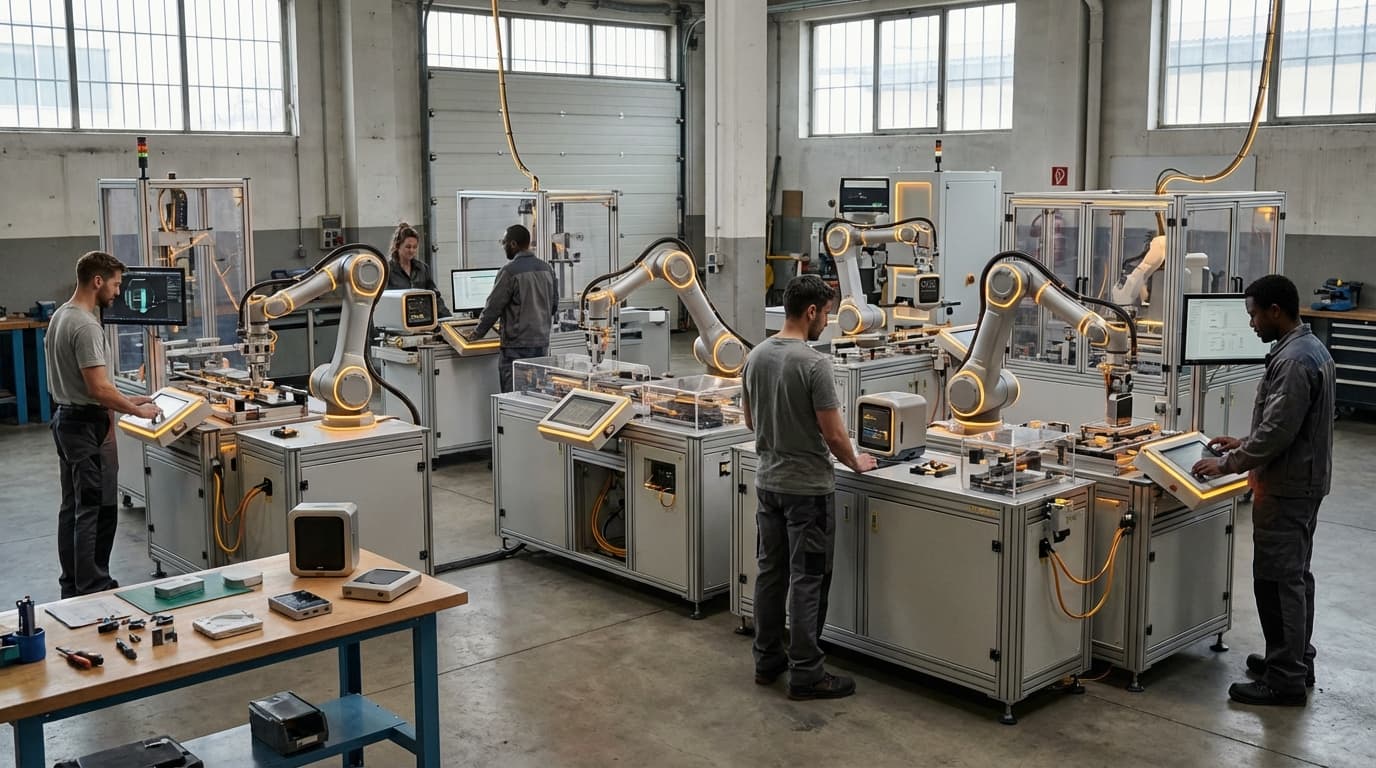
Distributed manufacturing networks represent a fundamental shift from centralized mass production to geographically dispersed, demand-responsive manufacturing ecosystems. Rather than concentrating production in distant industrial zones and shipping finished goods across continents, this approach establishes networks of smaller-scale production facilities positioned strategically near end markets. The technical foundation rests on several converging capabilities: advanced additive manufacturing systems that can produce complex parts without traditional tooling, modular micro-factory configurations that require minimal capital investment, and cloud-based design repositories that enable instant sharing of production specifications across network nodes. Digital fabrication technologies—including industrial 3D printing, CNC machining, and automated assembly systems—allow these distributed facilities to switch between product types rapidly, eliminating the economies of scale that historically favored centralized factories. The network operates through coordinated digital platforms that match production capacity with local demand, routing orders to the nearest capable facility and synchronizing quality standards across geographically separated units.
The traditional manufacturing paradigm faces mounting challenges that distributed networks directly address. Global supply chains have proven vulnerable to disruption from pandemic lockdowns, geopolitical tensions, and transportation bottlenecks, exposing the fragility of just-in-time systems stretched across oceans. Long lead times between order and delivery create inventory carrying costs and limit responsiveness to shifting consumer preferences. Transportation of finished goods generates substantial carbon emissions, particularly for lightweight products where shipping costs and environmental impact outweigh production expenses. Furthermore, centralized production struggles to accommodate the growing consumer demand for personalized products without prohibitive cost increases. Distributed manufacturing networks tackle these issues simultaneously by shortening physical and temporal distances between production and consumption. Local production nodes can respond to demand fluctuations within days rather than months, while the network's redundancy ensures that disruption at one facility doesn't cripple the entire system. The ability to customize products economically stems from digital manufacturing's independence from fixed tooling—each unit can be uniquely configured without retooling costs.
Early implementations have emerged across industries ranging from automotive spare parts to medical devices and consumer goods. Companies are establishing regional micro-factories that produce components on-demand rather than maintaining vast warehouses of inventory, while some municipalities are exploring community fabrication hubs that serve local businesses and entrepreneurs. The technology particularly suits products with high value-to-weight ratios, complex geometries benefiting from additive processes, or rapid obsolescence requiring flexible production. As digital manufacturing capabilities mature and energy costs for transportation rise, distributed networks are positioned to capture growing market share, especially in sectors prioritizing supply chain resilience and sustainability. This evolution aligns with broader trends toward regionalization of trade, circular economy principles emphasizing local material loops, and the democratization of manufacturing capabilities beyond traditional industrial centers.
Related Organizations

AI-driven marketplace connecting enterprise buyers with a global network of manufacturing service providers.

Digital manufacturing ecosystem that delivers custom parts on-demand via a vetted network of partners.

Digital manufacturing source for rapid prototyping and on-demand production.

Develops autonomous manufacturing software to automate CNC machining and runs a high-tech factory.

A Manufacturing-as-a-Service (MaaS) platform connecting engineers with manufacturing partners.

Cloud manufacturing platform for metal fabrication connecting engineers to production capacity.

Manufacturing Automation Platform (MAP) that allows users to design, order, and deploy automated equipment.

Operates digital production foundries using advanced laser powder bed fusion.
Supporting Evidence
Research this in Signals
Signals turns a topic into a sourced research record you can inspect and rerun. Your first scan is free, and this one starts with Distributed Manufacturing Networks already loaded, so edit it or scan as is.