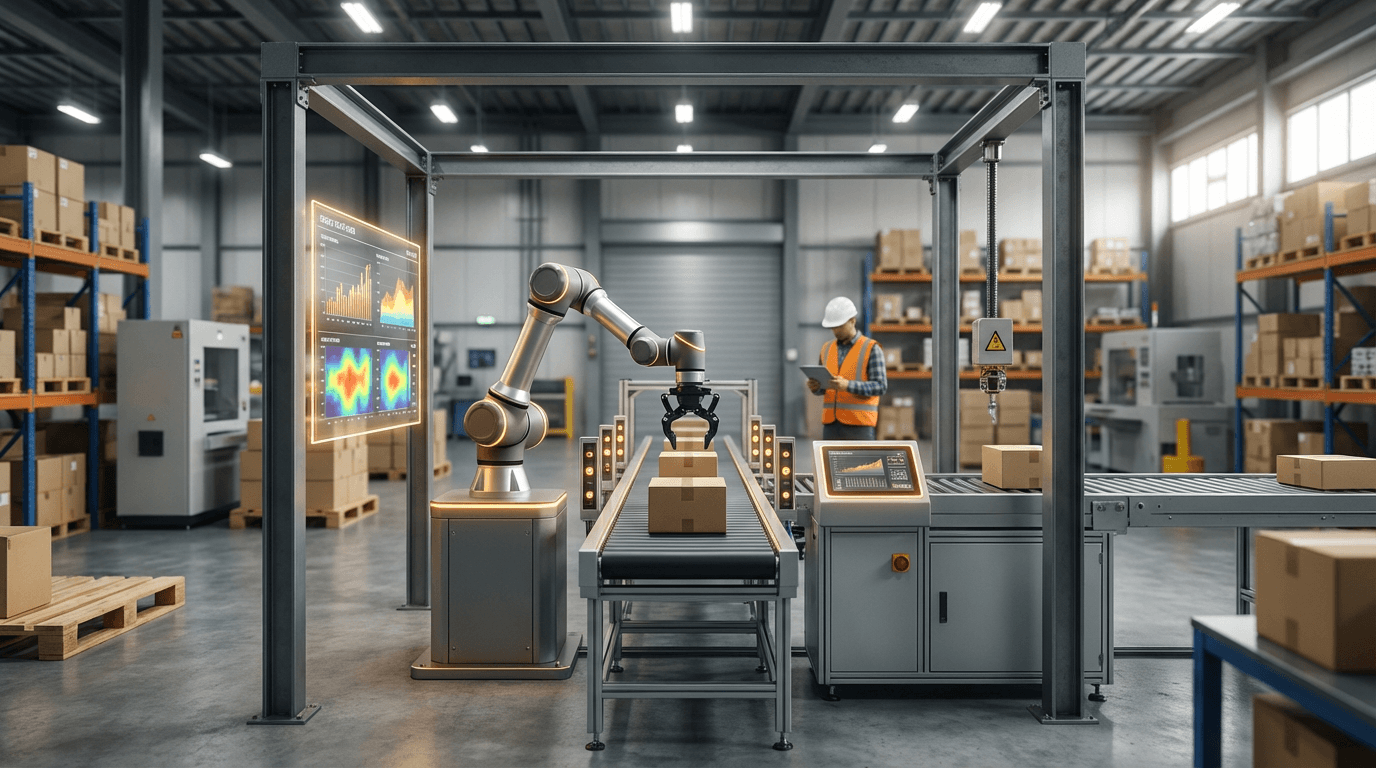
AI Demand Sensing and Dynamic Planning
Manufacturing and supply chain operations have long struggled with the fundamental challenge of matching supply with demand in an increasingly volatile and interconnected global marketplace. Traditional forecasting methods, which rely heavily on historical sales data and static planning cycles, often fail to capture sudden shifts in consumer behavior, supply disruptions, or macroeconomic changes. This disconnect leads to costly inefficiencies: excess inventory that ties up capital and risks obsolescence, stockouts that result in lost sales and damaged customer relationships, and the bullwhip effect where small demand fluctuations at the retail level amplify into massive swings upstream in the supply chain. AI demand sensing and dynamic planning addresses these challenges by creating a continuously adaptive system that processes diverse real-time data streams to anticipate demand changes before they fully materialize in sales figures.
At its technical core, AI demand sensing integrates multiple data sources that traditional forecasting typically ignores or processes separately. Point-of-sale data provides the baseline signal, but the system enriches this with external indicators such as weather patterns, social media sentiment, web search trends, promotional calendars, and telemetry from IoT-enabled products already in use. Advanced machine learning algorithms, including deep neural networks and ensemble methods, identify complex patterns and correlations across these heterogeneous data streams that would be invisible to conventional statistical models. The dynamic planning component then translates these demand insights into actionable decisions, using optimization algorithms to continuously rebalance inventory positions, adjust production schedules, and modify purchase orders across the entire supply network. This creates a closed-loop system where planning decisions are updated in near real-time rather than through traditional monthly or quarterly cycles, allowing organizations to respond to market signals with unprecedented agility.
Early adopters in retail, consumer goods, and electronics manufacturing report significant improvements in forecast accuracy and inventory efficiency, though specific metrics vary widely by industry and implementation scope. The technology proves particularly valuable in industries with short product lifecycles, seasonal demand patterns, or products sensitive to external events and trends. Distribution centers are beginning to use these systems to optimize stock positioning across regional networks, while manufacturers employ them to smooth production runs and reduce expedited shipping costs. As supply chains become more complex and consumer expectations for product availability continue to rise, AI demand sensing represents a shift from reactive to anticipatory supply chain management. The convergence of this technology with autonomous supply chain execution systems and digital twins suggests a future where supply networks can self-optimize with minimal human intervention, fundamentally transforming how goods flow from production to consumption in response to real-world demand signals.
Related Organizations

Provides an AI-powered 'Digital Brain' platform that creates digital twins of enterprise supply chains, heavily utilized by major fashion and apparel retailers.

Develops the 'Decision Cloud' to digitize, augment, and automate supply chain and operational decisions.

Supply chain planning software (RapidResponse) that provides concurrent planning via the cloud.

Owned by Panasonic, their Luminate platform offers a digital twin of the supply chain for real-time visibility and prediction.

Provides unified retail planning solutions that optimize demand forecasting and replenishment using AI.

Supply chain planning software focused on service-driven planning and probabilistic forecasting.

Connected planning platform that enables dynamic forecasting across finance and supply chain.

Provides a digital supply chain platform that leverages AI and digital twins for planning and traceability.

Invests heavily in 'in silico' biology and microbiome digital twins to test product efficacy without animal testing.
Supporting Evidence
Research this in Signals
Signals turns a topic into a sourced research record you can inspect and rerun. Your first scan is free, and this one starts with AI Demand Sensing and Dynamic Planning already loaded, so edit it or scan as is.