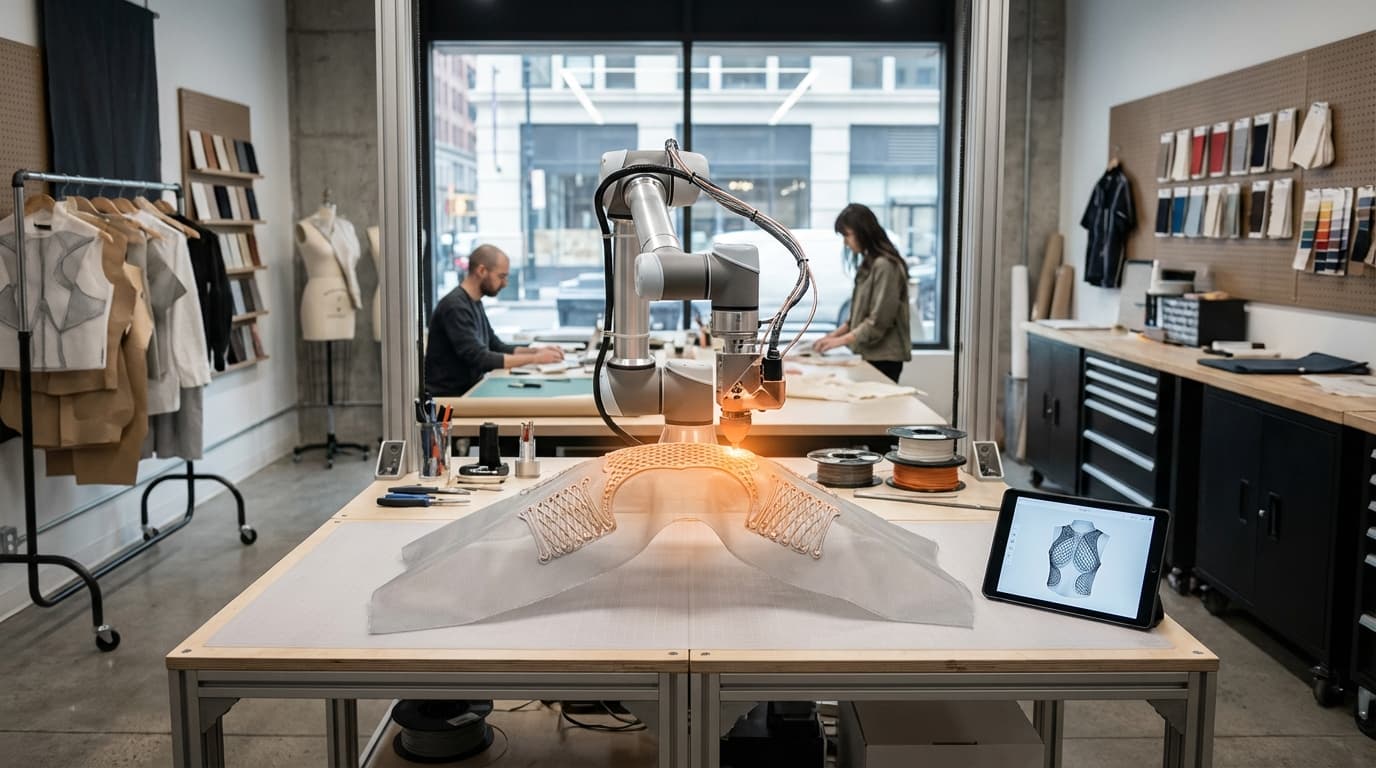
Additive Manufacturing for Functional Components
Additive manufacturing (3D printing) for functional components uses layer-by-layer material deposition to create complex geometries directly integrated into garments, such as breathable mesh structures, flexible joint reinforcements, custom cushioning, or structural elements. Unlike traditional manufacturing methods that require molds, cutting, or assembly, 3D printing can create intricate, customized structures in a single process.
This innovation enables new design possibilities and functional capabilities that are difficult or impossible to achieve with conventional textile manufacturing. 3D-printed components can have complex internal structures for breathability, variable density for customized cushioning, or intricate geometries that provide support or flexibility in specific areas. Companies like Stratasys, Carbon, and specialized 3D printing firms are developing materials and processes for textile applications, with some products already commercialized in footwear and performance wear.
The technology is particularly valuable for creating highly customized functional elements, such as personalized orthopedic supports, custom-fit protective padding, or performance-enhancing structures tailored to individual athletes. As 3D printing materials become more flexible, durable, and compatible with textile integration, additive manufacturing could enable new categories of functional apparel that combine the comfort of textiles with the precision and customization of 3D-printed components.
Related Organizations


Adidas
Germany · Company
Multinational sportswear manufacturer.

Digital Light Synthesis (DLS) 3D printing technology company.




HP
United States · Company
Partnering with Google to commercialize Project Starline hardware for enterprise meeting rooms.



Leading 3D printing manufacturer focusing on SLA and SLS technology.
Supporting Evidence
Research this in Signals
Signals turns a topic into a sourced research record you can inspect and rerun. Your first scan is free, and this one starts with Additive Manufacturing for Functional Components already loaded, so edit it or scan as is.