Envisioning is an emerging technology research institute and advisory.

LinkedInInstagramGitHub

2011 — 2026

research
  • Reports
  • Newsletter
  • Methodology
  • Origins
  • Vocab
services
  • Research Sessions
  • Signals Workspace
  • Bespoke Projects
  • Use Cases
  • Signal Scanfree
  • Readinessfree
impact
  • ANBIMAFuture of Brazilian Capital Markets
  • IEEECharting the Energy Transition
  • Horizon 2045Future of Human and Planetary Security
  • WKOTechnology Scanning for Austria
audiences
  • Innovation
  • Strategy
  • Consultants
  • Foresight
  • Associations
  • Governments
resources
  • Pricing
  • Partners
  • How We Work
  • Data Visualization
  • Multi-Model Method
  • FAQ
  • Security & Privacy
about
  • Manifesto
  • Community
  • Events
  • Support
  • Contact
  • Login
ResearchServicesPricingPartnersAbout
  1. Home
  2. Research
  3. Fabric
  4. Shape-Memory Alloy Textiles

Shape-Memory Alloy Textiles

Fabrics with embedded wires that autonomously reshape when heated by body or ambient temperature
Back to FabricView interactive version

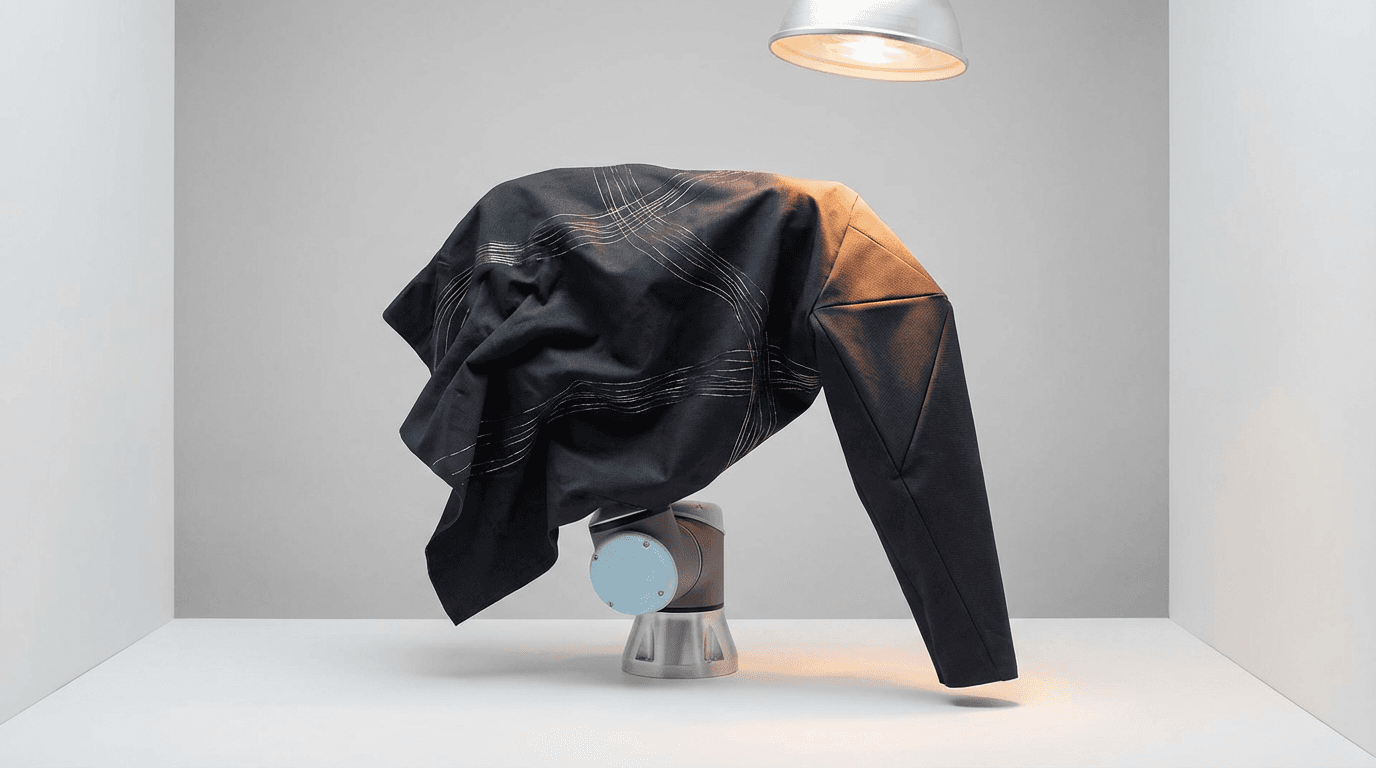
Shape-memory alloy textiles integrate materials like Nitinol (nickel-titanium alloy) that can be programmed to remember a specific shape and return to it when heated above a transition temperature. These alloys are embedded as fine wires or fibers within textile structures, enabling garments that autonomously change structure, permeability, or fit in response to temperature changes.

This innovation enables truly adaptive clothing that responds to environmental conditions without electronic controls or power sources. When body temperature or ambient conditions change, the shape-memory alloys activate, causing the fabric to adjust its structure—expanding for breathability in heat, contracting for insulation in cold, or changing compression levels for medical applications. Research institutions and startups are exploring applications ranging from self-adjusting athletic wear to adaptive medical compression garments.

The technology represents a shift toward passive, material-based intelligence in textiles, where functionality emerges from material properties rather than embedded electronics. While still in early development, shape-memory alloy textiles offer a pathway to creating garments that adapt to both environmental conditions and individual body needs, potentially reducing the need for multiple layers or manual adjustments.

TRL
4/9Formative
Impact
2/5
Investment
2/5
Category
Hardware

Related Organizations

Dynalloy, Inc. logo
Dynalloy, Inc.

United States · Company

98%

Manufacturer of Flexinol® actuator wires, the primary shape-memory alloy used in smart textiles.

Developer
MIT Media Lab logo
MIT Media Lab

United States · Research Lab

95%

Home of the Affective Computing research group led by Rosalind Picard.

Researcher
Empa logo

Empa

Switzerland · Research Lab

90%

Swiss Federal Laboratories for Materials Science and Technology, researching self-healing elastomers.

Researcher
Wyss Institute at Harvard logo
Wyss Institute at Harvard

United States · Research Lab

90%

A premier research center for biologically inspired engineering, known for soft exosuits and microrobotics.

Researcher
Drexel University logo
Drexel University

United States · University

85%

Home to the Center for Functional Fabrics (CFF).

Researcher
SAES Getters logo
SAES Getters

Italy · Company

85%

An advanced materials company that owns Memry Corporation, a leader in Nitinol production.

Developer
Fort Wayne Metals logo
Fort Wayne Metals

United States · Company

80%

Manufacturer of precision wire and components, including Nitinol, used in medical and thermal applications.

Developer
Loomia logo
Loomia

United States · Startup

75%

Produces the Loomia Electronic Layer (LEL), a soft flexible circuit system for textiles.

Developer

Supporting Evidence

Evidence data is not available for this technology yet.

Connections

Applications
Applications
Adaptive Camouflage Textiles

Fabrics that change color and pattern to match surroundings using photonic crystals and responsive pigments

TRL
4/9
Impact
3/5
Investment
3/5
Hardware
Hardware
Digital Knitting Machines with Per-Stitch Material Modulation

Knitting systems that vary yarn properties stitch-by-stitch for gradient fabrics and embedded sensors

TRL
9/9
Impact
4/5
Investment
3/5
Hardware
Hardware
Graphene-Enhanced Smart Fabrics

Conductive nanolayers that add sensing, heating, or energy storage to flexible textiles

TRL
5/9
Impact
3/5
Investment
3/5
Hardware
Hardware
Phase-Change Material Integration

Microencapsulated materials that absorb and release heat to regulate fabric temperature

TRL
7/9
Impact
4/5
Investment
3/5
Applications
Applications
Thermoelectric Cooling Garments

Garments with solid-state modules that actively cool or heat the wearer on demand

TRL
6/9
Impact
4/5
Investment
4/5
Hardware
Hardware
High-Performance Stretch and Compression Knits

Engineered knits delivering graduated compression for athletic support and medical therapy

TRL
9/9
Impact
4/5
Investment
4/5

Book a research session

Bring this signal into a focused decision sprint with analyst-led framing and synthesis.
Research Sessions