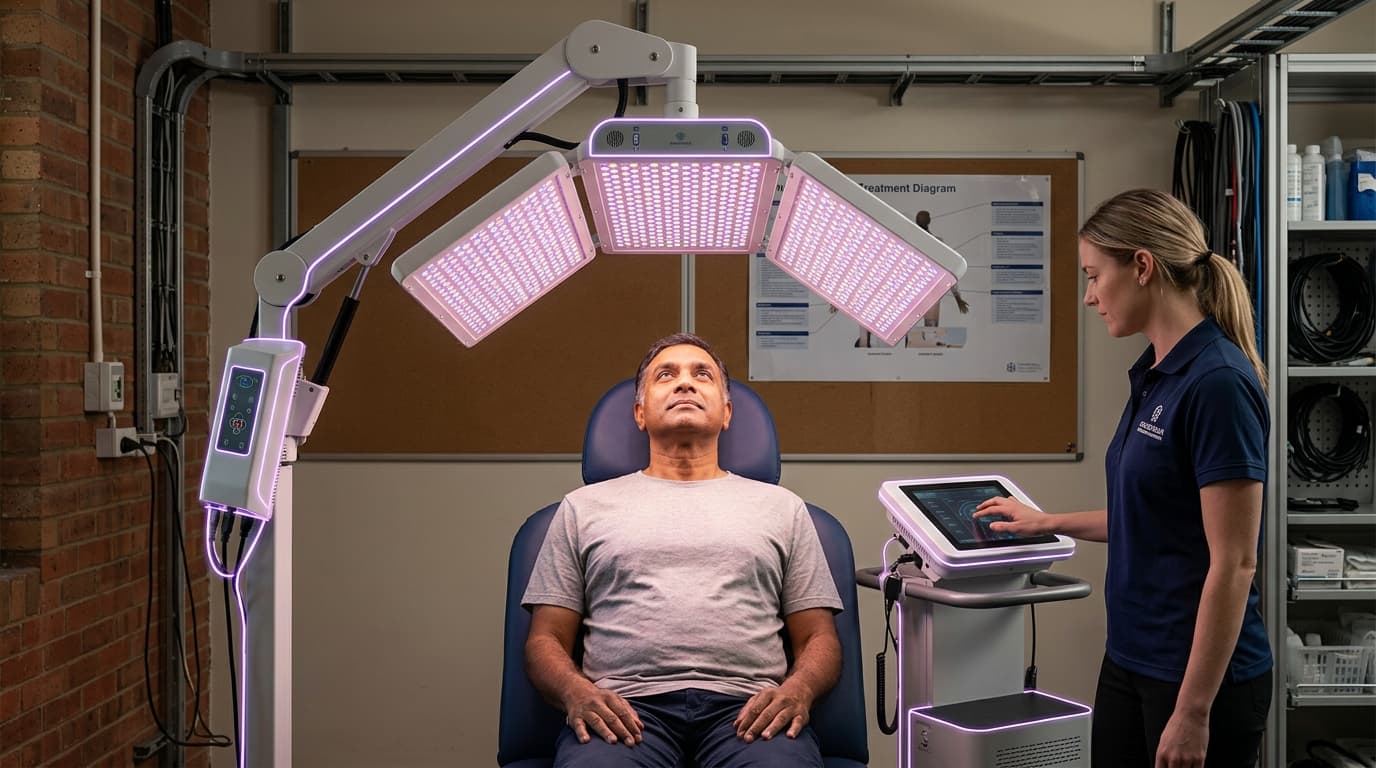
Precision Photobiomodulation Systems
Precision photobiomodulation systems represent a convergence of optical engineering and cellular biology, delivering carefully calibrated wavelengths of light—typically in the red (630-700 nm) and near-infrared (700-1100 nm) spectrum—to stimulate specific biological responses at the cellular level. These systems employ sophisticated light-emitting diode (LED) arrays, laser diodes, or hybrid configurations designed to penetrate tissue at varying depths while maintaining therapeutic intensity. The core mechanism centers on the interaction between photons and cytochrome c oxidase, a key enzyme in the mitochondrial electron transport chain. When this chromophore absorbs photons at optimal wavelengths, it triggers a cascade of beneficial cellular responses: enhanced adenosine triphosphate (ATP) synthesis, modulation of reactive oxygen species, increased nitric oxide release, and activation of transcription factors that promote cellular repair and regeneration. Modern systems incorporate precise dosimetry controls, allowing practitioners to adjust parameters such as irradiance, exposure duration, and pulse frequencies to match specific therapeutic protocols and tissue types.
The longevity and regenerative medicine industries face persistent challenges in addressing age-related mitochondrial dysfunction, a fundamental driver of cellular senescence and systemic decline. Traditional interventions often rely on pharmaceutical approaches with limited specificity or significant side effects, while many regenerative therapies remain invasive or prohibitively expensive. Precision photobiomodulation addresses these limitations by offering a non-invasive, targeted method to enhance cellular energy production and resilience. Research suggests these systems can improve cognitive function in aging populations by enhancing cerebral blood flow and neuronal metabolism, potentially slowing neurodegenerative processes. In dermatological applications, controlled light delivery stimulates collagen synthesis and accelerates wound healing, addressing both cosmetic aging concerns and clinical wound management challenges. The technology also shows promise in reducing inflammation and oxidative stress markers associated with chronic age-related conditions, offering a complementary approach to metabolic optimization that doesn't require systemic drug administration or genetic intervention.
Clinical adoption of precision photobiomodulation has expanded beyond early research settings into specialized wellness centers, sports medicine facilities, and home-use devices, though regulatory frameworks and standardization protocols continue to evolve. Current applications range from transcranial photobiomodulation helmets designed for cognitive enhancement and neuroprotection, to full-body LED panels targeting systemic anti-aging effects, to handheld devices for localized tissue repair. Early deployments indicate particular promise in post-stroke rehabilitation, traumatic brain injury recovery, and management of age-related macular degeneration, though larger-scale clinical trials are ongoing to establish definitive efficacy standards. The technology aligns with broader trends in personalized medicine and preventive health optimization, as advances in wearable sensors and artificial intelligence enable increasingly sophisticated treatment protocols tailored to individual mitochondrial function profiles. As manufacturing costs decline and evidence bases strengthen, precision photobiomodulation systems are positioned to transition from specialized clinical tools to mainstream components of comprehensive longevity strategies, potentially becoming as commonplace as nutritional supplementation in proactive aging interventions.
Related Organizations

Produces medical-grade Low Level Laser Therapy (LLLT) systems used in clinical settings for tissue repair and pain relief.

Specializes in photobiomodulation devices, particularly wearable intranasal and transcranial units.

A research center at Mass General Hospital dedicated to the study of light-body interactions.

Manufacturer of modular, full-body red and near-infrared light therapy devices for cellular rejuvenation.

Specializes in intravenous and interstitial laser therapy systems for systemic application.

Creators of the MOVE+ device, a wearable laser and LED therapy module for joint pain and inflammation.

Develops super-pulsed laser technology for physical therapy and veterinary applications.

Developer of FlexBeam, a wearable recovery device using red and NIR light.

Manufactures flexible, shape-taking light therapy panels that can be wrapped around body parts.
Supporting Evidence
Research this in Signals
Signals turns a topic into a sourced research record you can inspect and rerun. Your first scan is free, and this one starts with Precision Photobiomodulation Systems already loaded, so edit it or scan as is.