Closed-Loop Metabolic Therapies
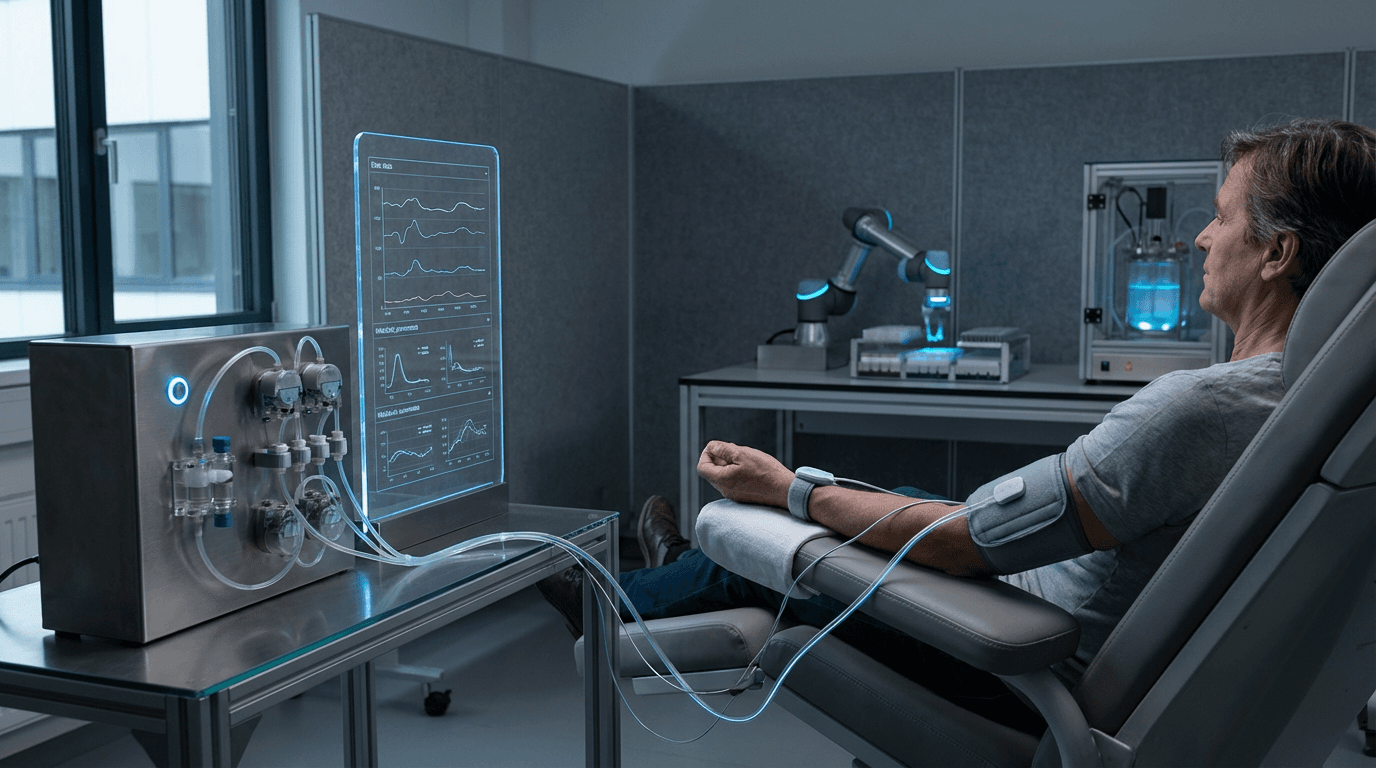
Closed-loop metabolic therapies represent an evolution of automated medical systems that continuously monitor and regulate key metabolic parameters to maintain optimal physiological states associated with youth and health. Unlike traditional treatment approaches that rely on periodic measurements and manual interventions, these platforms integrate real-time biosensing with algorithmic decision-making and automated drug delivery. The technology builds upon decades of research in artificial pancreas systems for diabetes management, extending the concept beyond glucose control to encompass a broader spectrum of metabolic markers including lipid profiles, hormone levels, inflammatory markers, and indicators of mitochondrial function. Advanced sensor arrays track these parameters continuously, feeding data into sophisticated algorithms that calculate precise dosing regimens for multiple therapeutic agents. These may include insulin for glucose regulation, GLP-1 receptor agonists for metabolic optimization, NAD+ precursors for mitochondrial support, and other compounds targeting specific pathways of metabolic aging. The system operates autonomously, adjusting interventions in response to physiological changes, dietary intake, physical activity, and circadian rhythms.
The fundamental challenge these systems address is the progressive metabolic dysregulation that characterizes aging and contributes to age-related diseases. Metabolic syndrome, characterized by insulin resistance, dyslipidemia, and chronic inflammation, affects a substantial portion of aging populations and significantly impacts healthspan. Traditional approaches to managing these conditions rely on intermittent monitoring and static dosing protocols that cannot adapt to the dynamic nature of human metabolism. This often results in suboptimal control, with patients experiencing periods of both under- and over-treatment. Closed-loop metabolic therapies overcome these limitations by providing continuous, personalized optimization of metabolic parameters. By preventing the metabolic drift that occurs with aging, these systems may help preserve cellular energy production, reduce oxidative stress, and maintain the metabolic flexibility characteristic of younger organisms. This represents a shift from reactive disease management to proactive metabolic preservation, potentially preventing or delaying the onset of conditions ranging from type 2 diabetes to cardiovascular disease and neurodegenerative disorders.
Early research prototypes and clinical investigations suggest promising applications for these integrated platforms, particularly for individuals at high risk of metabolic dysfunction or those seeking to optimize healthspan. Initial deployments focus on populations with prediabetes or early metabolic syndrome, where intervention may prevent progression to more serious conditions. The technology also shows potential for managing complex cases where multiple metabolic pathways require simultaneous optimization. As sensor miniaturization advances and algorithms become more sophisticated through machine learning approaches, these systems are expected to become less invasive and more predictive, potentially anticipating metabolic disturbances before they manifest. The convergence of wearable biosensors, implantable drug delivery systems, and artificial intelligence is driving this field toward increasingly autonomous and personalized metabolic management. Looking forward, closed-loop metabolic therapies align with broader trends in precision medicine and preventive healthcare, offering a technological pathway to maintaining the metabolic vigor of youth throughout extended lifespans.
Related Organizations

Developer of the iLet Bionic Pancreas, an autonomous insulin delivery system.

Creator of the FreeStyle Libre system, a leading continuous glucose monitoring platform.

Leader in Continuous Glucose Monitoring (CGM) systems for diabetes management.

Provides software that analyzes continuous glucose monitor (CGM) data to provide real-time feedback on diet and lifestyle.

Makers of the Omnipod, a tubeless automated insulin delivery system.

Uses AI to predict glucose response to foods without needing a permanent CGM, creating a 'digital twin' for metabolic health.

Develops insulin pumps with Control-IQ technology.

Provides a metabolic health platform integrating third-party CGM sensors (like Abbott's) with their own smart ring for holistic tracking.

Alphabet's life sciences arm, which operates the WastewaterScan initiative.

Developing a wearable biosensor using a microneedle array to measure glucose and ketones simultaneously.
Supporting Evidence
Research this in Signals
Signals turns a topic into a sourced research record you can inspect and rerun. Your first scan is free, and this one starts with Closed-Loop Metabolic Therapies already loaded, so edit it or scan as is.