Adaptive Metabolic Orchestration Engines
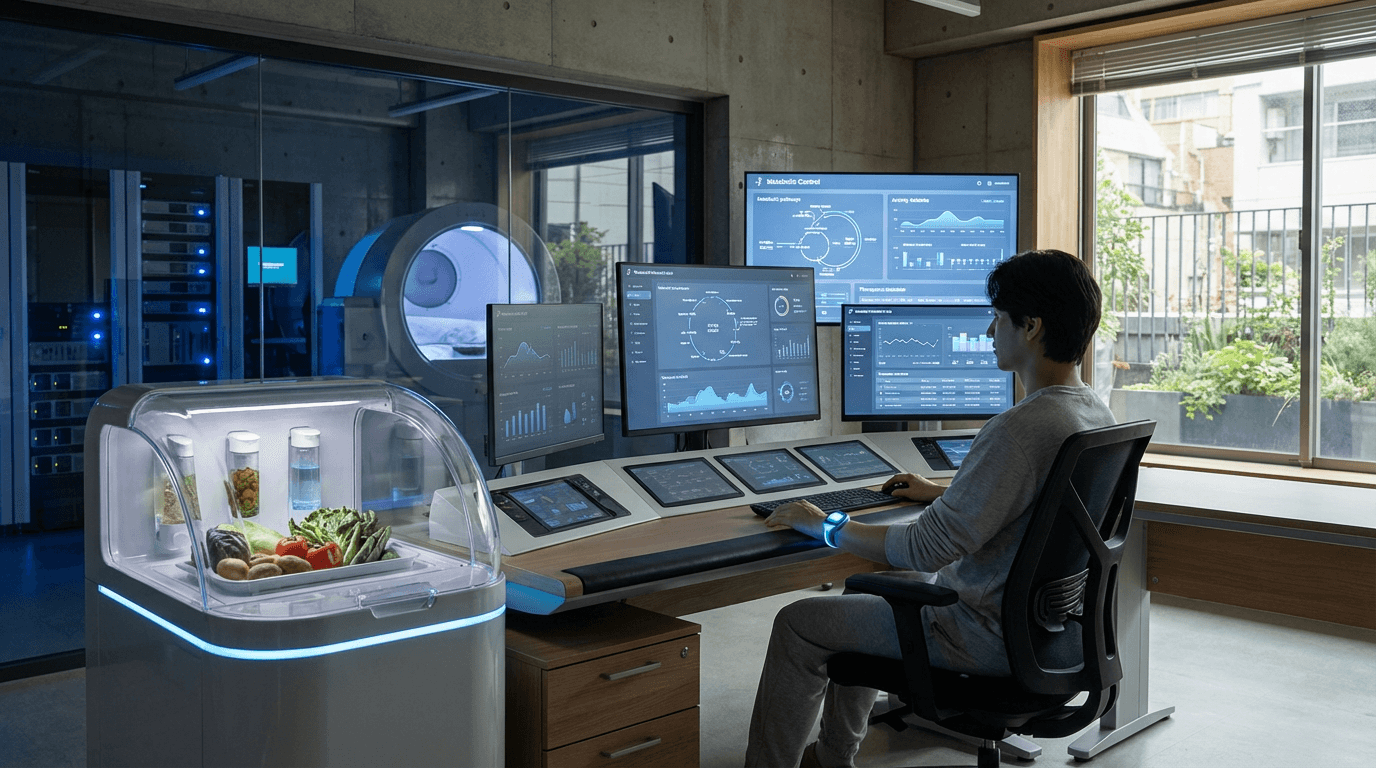
Adaptive Metabolic Orchestration Engines represent a convergence of artificial intelligence, continuous biosensing, and precision medicine, designed to maintain metabolic function at levels characteristic of younger biological states. These systems employ reinforcement learning algorithms that process streams of physiological data from wearable devices, implantable glucose monitors, periodic blood panels, and environmental sensors tracking factors like air quality, temperature, and light exposure. The core technical mechanism involves building individualized metabolic models that predict how specific interventions—ranging from macronutrient timing to pharmaceutical dosing—will affect markers of biological aging such as insulin sensitivity, mitochondrial efficiency, inflammatory cytokines, and epigenetic clocks. Unlike static health recommendations, these engines operate as closed-loop control systems, continuously refining their protocols based on real-time feedback, much like an autopilot adjusts flight parameters in response to changing conditions. The algorithms integrate knowledge from longevity research on pathways like mTOR, AMPK, and sirtuins, translating complex biochemistry into actionable daily guidance.
The fundamental challenge these engines address is metabolic drift—the gradual decline in how efficiently the body processes energy, manages inflammation, and repairs cellular damage. Traditional approaches to metabolic health rely on population-level guidelines that fail to account for individual variation in genetics, microbiome composition, stress responses, and dozens of other factors that influence how a person ages. Research suggests that even among individuals of the same chronological age, biological age can vary by more than a decade, largely driven by metabolic differences. Adaptive orchestration engines solve this by treating metabolism as a dynamic system requiring personalized, time-varying interventions rather than one-size-fits-all advice. They enable the practical application of emerging longevity therapeutics—such as GLP-1 receptor agonists for metabolic optimization, rapamycin analogs for mTOR pathway modulation, or NAD+ precursors for mitochondrial support—by determining optimal timing, dosing, and combination strategies for each individual. This capability transforms experimental geroscience into deployable protocols, potentially preventing the cascade of age-related metabolic diseases including type 2 diabetes, cardiovascular disease, and neurodegenerative conditions.
Early implementations of these systems are emerging in longevity clinics and wellness programs that serve affluent early adopters willing to invest in extensive monitoring infrastructure. Pilot deployments typically involve clients wearing continuous glucose monitors and activity trackers while providing weekly blood samples, with AI systems generating daily protocols covering meal timing, macronutrient ratios, exercise intensity windows, sleep schedules aligned to circadian biology, and supplement regimens. Some platforms are beginning to incorporate pharmacological recommendations, though regulatory frameworks around AI-directed medication management remain in development. The technology aligns with broader trends toward preventive medicine, quantified-self movements, and the shift from treating disease to optimizing healthspan. As sensor technology becomes less invasive and more affordable, and as longevity biomarkers become better validated, these orchestration engines could transition from boutique services to mainstream health management tools. The long-term trajectory points toward a future where metabolic optimization becomes as routine as fitness tracking, with AI systems helping individuals maintain youthful metabolic function decades longer than previous generations, fundamentally altering the relationship between chronological age and biological decline.
Related Organizations

Uses AI to predict glucose response to foods without needing a permanent CGM, creating a 'digital twin' for metabolic health.

Provides software that analyzes continuous glucose monitor (CGM) data to provide real-time feedback on diet and lifestyle.

Personalized nutrition company running large-scale studies to predict individual responses to food based on gut health and blood sugar.

Creator of the FreeStyle Libre system, a leading continuous glucose monitoring platform.

Combines CGM technology with human dietitian coaching and app-based data analysis.

Maker of the Oura Ring, a smart ring that tracks sleep, readiness, and stress.

A consumer longevity company co-founded by David Sinclair that offers epigenetic age testing and personalized lifestyle/supplement recommendations.

A personalized health analytics company that analyzes blood and DNA biomarkers to provide science-backed lifestyle and nutrition recommendations.

A biotechnology company that digitizes human biology to prevent and reverse chronic diseases using mRNA analysis of the microbiome.
Supporting Evidence
Research this in Signals
Signals turns a topic into a sourced research record you can inspect and rerun. Your first scan is free, and this one starts with Adaptive Metabolic Orchestration Engines already loaded, so edit it or scan as is.