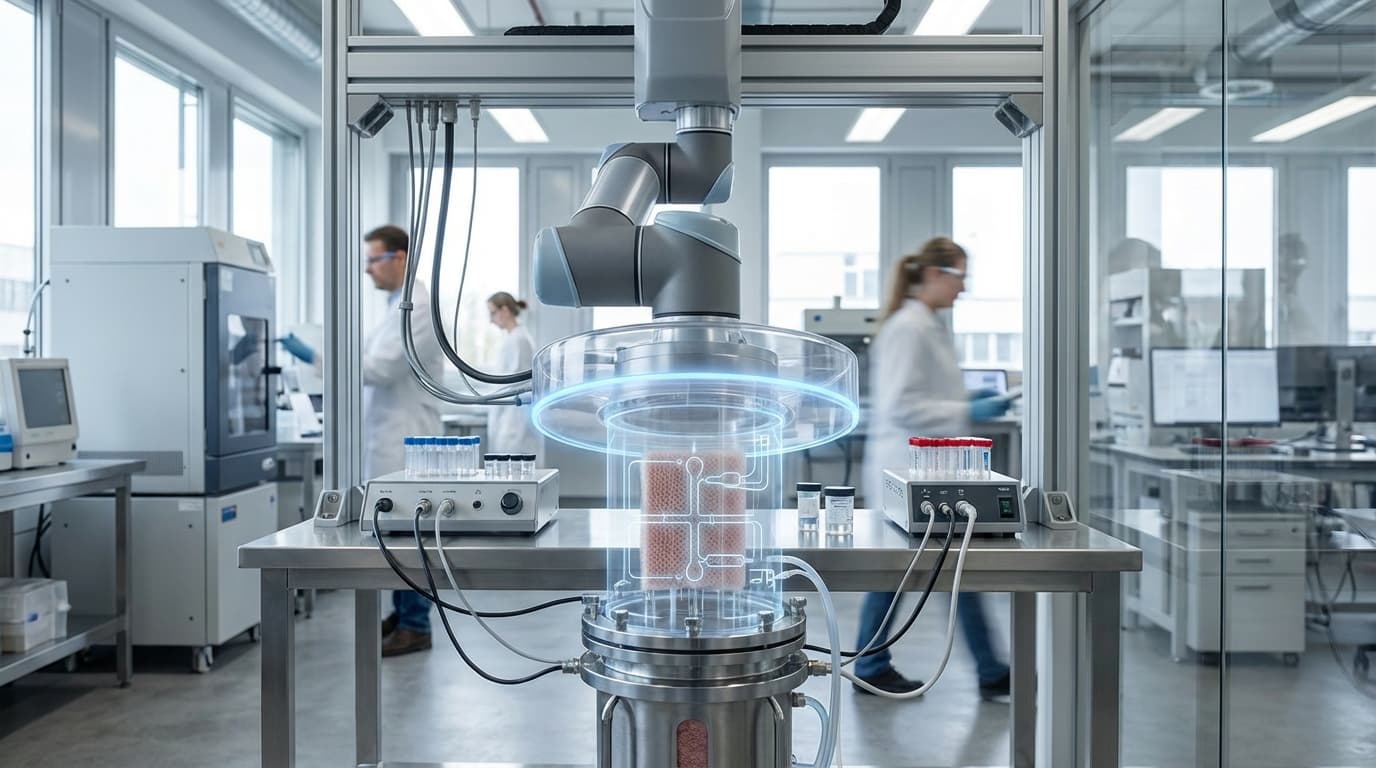
Extracellular Matrix Remodeling Devices
The extracellular matrix (ECM) serves as the structural scaffolding that supports cells and tissues throughout the body, but as we age, this critical framework undergoes detrimental changes that compromise tissue function. One of the most significant age-related alterations is the accumulation of pathological crosslinks—particularly advanced glycation end-products (AGEs) and other molecular bridges—that bind collagen and elastin fibers together in rigid, inflexible configurations. This progressive stiffening affects virtually every organ system, from the cardiovascular system where arterial walls lose their compliance, to the skin where dermal layers become less resilient, to vital organs like the lungs and kidneys where functional tissue is gradually replaced by fibrotic scar tissue. Extracellular matrix remodeling devices represent a targeted intervention strategy that employs focused ultrasound, specific wavelengths of light, or precision-guided enzyme delivery systems to selectively break down these pathological crosslinks while preserving the underlying tissue architecture. The technical approach typically involves either mechanical disruption through controlled acoustic cavitation, photochemical cleavage using targeted light activation, or biochemical degradation through enzymes like collagenase or matrix metalloproteinases delivered in controlled doses to specific tissue regions.
The clinical and commercial promise of ECM remodeling technology lies in its potential to address a fundamental driver of age-related disease that current pharmaceutical approaches cannot effectively target. Cardiovascular stiffening alone contributes to hypertension, heart failure, and reduced organ perfusion in aging populations, representing a massive healthcare burden that conventional medications can only manage symptomatically rather than reverse. Similarly, dermal aging and loss of skin elasticity drive both cosmetic concerns and functional problems like impaired wound healing, creating demand across medical and aesthetic markets. Early research suggests that restoring ECM compliance can reactivate dormant regenerative pathways by improving the mechanical and biochemical signals that cells receive from their surrounding matrix—a phenomenon known as mechanotransduction. This creates a regenerative cascade where breaking down aged matrix not only restores tissue flexibility but also stimulates resident stem cells and fibroblasts to deposit fresh, properly organized ECM components. The technology also addresses the challenge of fibrotic diseases, where excessive or disorganized matrix deposition impairs organ function, offering a potential therapeutic avenue for conditions ranging from liver cirrhosis to pulmonary fibrosis.
While still largely in preclinical and early clinical development, several research groups and biotechnology companies are exploring different modalities for ECM remodeling, with focused ultrasound approaches showing particular promise due to their non-invasive nature and ability to target deep tissues. Dermatological applications represent a likely near-term entry point, where devices could offer alternatives to current anti-aging treatments by addressing the underlying structural causes of skin aging rather than merely its superficial manifestations. Cardiovascular applications, though more complex from a regulatory standpoint, could transform the treatment of age-related arterial stiffness and associated complications. The broader trajectory of this technology aligns with the shift in regenerative medicine toward targeting the tissue microenvironment rather than solely focusing on cellular interventions, recognizing that aged or pathological matrix actively inhibits regeneration even when healthy cells are present. As our understanding of ECM biology deepens and delivery mechanisms become more refined, these devices may evolve from specialized clinical tools into routine interventions for maintaining tissue health across the lifespan, potentially extending both healthspan and functional capacity in aging populations.
Related Organizations

Owner of Ultherapy, a micro-focused ultrasound device for lifting and tightening skin.

Develops shockwave technology for wound healing and tissue regeneration.

Provides unfocused extracorporeal shockwave therapy (ESWT) devices for tissue regeneration.

A major aesthetic device manufacturer offering the Potenza RF microneedling system and TempSure RF platform.

A leading provider of medical technologies, famous for the Morpheus8 platform which combines microneedling with fractional RF.
Soliton
United States · Company
Developed Rapid Acoustic Pulse (RAP) technology for tattoo removal and cellulite (acquired by AbbVie).

Global innovator of laser, light-based, RF, and ultrasound solutions.

Develops universally implantable bioengineered human tissues, specifically acellular tissue engineered vessels (ATEVs) that act as scaffolds for host cell repopulation.

Develops fish-skin grafts rich in Omega-3 for tissue regeneration.
Supporting Evidence
Research this in Signals
Signals turns a topic into a sourced research record you can inspect and rerun. Your first scan is free, and this one starts with Extracellular Matrix Remodeling Devices already loaded, so edit it or scan as is.