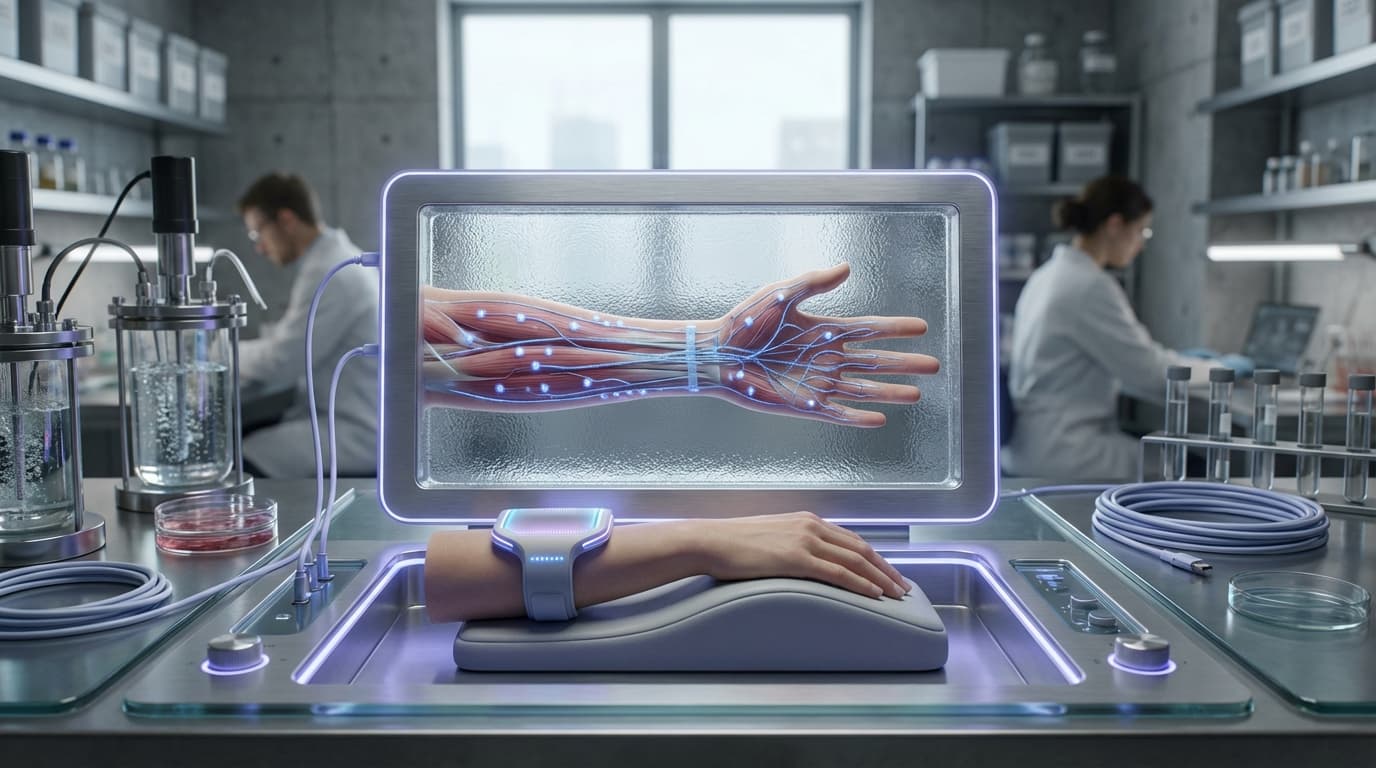
Implantable Multi-Omics Sensor Grids
Implantable multi-omics sensor grids represent a convergence of miniaturized biosensing technology, biocompatible materials science, and continuous health monitoring systems. These networks consist of arrays of microscale sensors—typically combining electrochemical, optical, and sometimes piezoelectric detection mechanisms—that are strategically positioned throughout the body, either subcutaneously just beneath the skin or within vascular environments where they can directly sample blood chemistry. Each sensor node is engineered to detect specific molecular signatures: metabolites like lactate and glucose, hormones including cortisol and thyroid markers, inflammatory cytokines, oxidative stress indicators, and epigenetic markers associated with cellular aging. The sensors utilize advanced materials such as biocompatible polymers, graphene-based electrodes, and anti-fouling coatings that prevent protein buildup and maintain accuracy over extended periods. Data transmission occurs wirelessly through near-field communication or ultra-low-power radio frequencies, with onboard microprocessors performing initial signal processing before relaying information to external devices. The grid architecture allows for spatial mapping of biomarker concentrations across different tissue environments, revealing how aging processes vary between organ systems and anatomical regions.
The fundamental challenge these sensor grids address is the current reliance on episodic, snapshot-based health assessments that fail to capture the dynamic, fluctuating nature of biological aging. Traditional blood tests provide only momentary glimpses into physiological status, missing critical patterns that emerge over hours, days, or weeks. For individuals pursuing longevity interventions—whether pharmaceutical, dietary, or lifestyle-based—this temporal blindness makes it nearly impossible to assess intervention efficacy with precision or detect adverse effects before they become clinically significant. Research in geroscience increasingly suggests that aging is not a linear process but rather characterized by periods of stability punctuated by rapid transitions, and that early molecular signatures of decline precede observable symptoms by months or years. Continuous multi-omics monitoring transforms this landscape by enabling the detection of subtle shifts in inflammatory profiles, metabolic efficiency, or hormonal balance that signal the onset of age-related pathologies. This capability is particularly valuable for validating emerging rejuvenation therapies, where researchers need granular data to understand whether interventions like senolytics, NAD+ precursors, or partial cellular reprogramming are producing the intended molecular effects without triggering unexpected systemic responses.
Early research deployments of implantable biosensor technology have focused primarily on single-analyte monitoring for diabetes management, but the field is rapidly expanding toward multi-parameter systems. Industry analysts note growing investment in bioelectronics platforms that can simultaneously track dozens of biomarkers, with some prototypes demonstrating stable operation for several months in animal models. The integration of machine learning algorithms capable of identifying complex biomarker patterns associated with biological age—as distinct from chronological age—represents a crucial advancement, potentially enabling predictive models that forecast health trajectories and recommend preemptive interventions. As longevity medicine transitions from reactive treatment to proactive optimization, these sensor grids could become foundational infrastructure for personalized aging management, providing the continuous feedback loops necessary to fine-tune interventions in real-time. The technology aligns with broader trends toward precision medicine and quantified health, offering a pathway to transform aging from an inevitable decline into a manageable, data-driven process where individuals and clinicians can make informed decisions based on their unique molecular aging signatures rather than population averages.
Related Organizations

A biotech company developing tissue-integrated biosensors for continuous monitoring of body chemistry.

A high-tech medical device company developing a continuous multi-metabolite monitoring (CMM) sensor.

Commercializing 'neural dust' technology: millimeter-sized ultrasonic implants.

A medical technology company focused on the development and commercialization of long-term, implantable continuous glucose monitoring systems.

A world-renowned science and engineering institute.

GlySens
United States · Company
A biomedical company developing a long-term implantable continuous glucose monitoring system.

Developing a continuous molecular monitoring patch using DNA aptamer sensors to track multiple targets like vancomycin and lactate.

Home to the Center for Wearable Sensors (Joseph Wang Lab).

Creator of the FreeStyle Libre system, a leading continuous glucose monitoring platform.

Developing a wearable biosensor using a microneedle array to measure glucose and ketones simultaneously.
Supporting Evidence
Research this in Signals
Signals turns a topic into a sourced research record you can inspect and rerun. Your first scan is free, and this one starts with Implantable Multi-Omics Sensor Grids already loaded, so edit it or scan as is.