Bioelectric Pattern Decoders
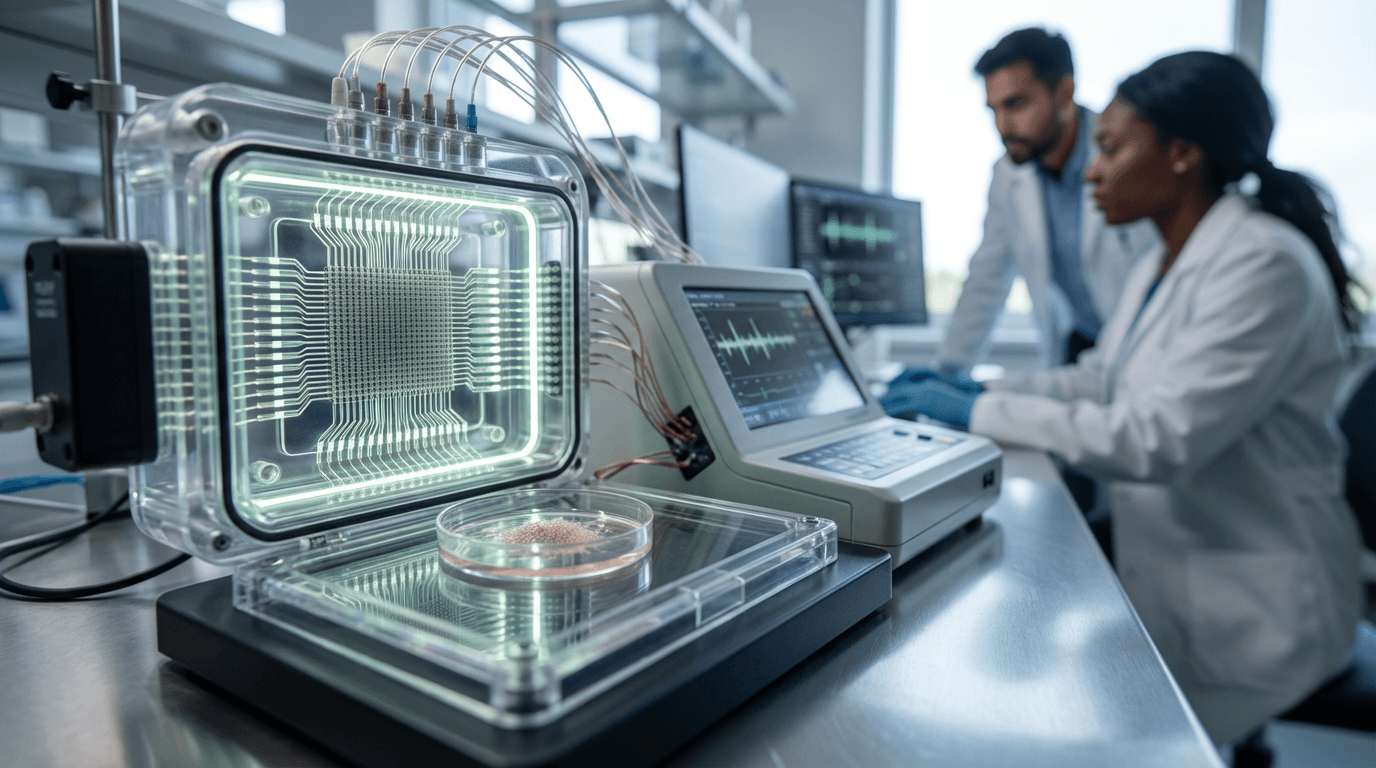
Bioelectric pattern decoders represent a convergence of artificial intelligence and developmental biology, designed to interpret the complex electrical signals that govern cellular behavior and tissue formation. Every cell maintains a resting voltage potential across its membrane, and these voltages collectively form what researchers call the "electrome"—a dynamic electrical landscape that influences how cells communicate, differentiate, and organize into functional tissues. These AI systems employ machine learning algorithms trained on vast datasets of bioelectric measurements to recognize patterns in voltage distributions across cell clusters. By analyzing the spatial arrangement and magnitude of these electrical signals, the decoders can identify characteristic signatures that precede specific morphological outcomes, from normal organ development to pathological states like tumor formation. The technology relies on advanced imaging techniques that capture real-time voltage changes across tissue samples, feeding this data into neural networks capable of distinguishing subtle variations in bioelectric states that would be imperceptible to human observers.
The primary challenge these systems address is the longstanding difficulty in predicting and controlling tissue development and regeneration at the cellular level. Traditional approaches to regenerative medicine have focused primarily on biochemical signals and genetic factors, often overlooking the crucial role that bioelectric patterns play in coordinating large-scale tissue architecture. When cells lose their normal bioelectric coordination, the result can be developmental defects, failed regeneration attempts, or the emergence of cancerous growth patterns. Bioelectric pattern decoders offer a solution by providing early warning systems that detect aberrant electrical signatures before they manifest as visible tissue abnormalities. This predictive capability enables clinicians and researchers to intervene at critical decision points in cellular development, applying targeted electrical stimulation to guide cells back toward healthy organizational patterns. The technology also facilitates the rational design of bioelectric interventions, replacing trial-and-error approaches with data-driven protocols that specify precisely when, where, and how to apply electrical signals to achieve desired regenerative outcomes.
Current research applications include monitoring embryonic development in model organisms, where these decoders have successfully predicted limb malformations and organ defects days before they become anatomically apparent. In cancer research, early deployments suggest that bioelectric signatures may offer a complementary diagnostic approach, potentially identifying pre-cancerous states through their distinctive voltage patterns. The technology is also being explored for optimizing wound healing protocols and enhancing the success rates of organ regeneration experiments in salamanders and other species with natural regenerative abilities. As the field of bioelectric medicine matures, these AI-driven decoders are expected to become integral tools in personalized regenerative therapies, where patient-specific electrome profiles could guide customized treatment strategies. The convergence of this technology with advances in wearable biosensors and implantable devices points toward a future where continuous bioelectric monitoring could enable real-time correction of developmental errors, fundamentally expanding our capacity to direct tissue formation and maintain cellular health throughout the human lifespan.
Related Organizations

Led by Michael Levin, this lab is the world leader in cracking the bioelectric code of morphogenesis.
A spin-off from Tufts University developing bioelectric interventions for limb regeneration and organ health.

Commercializing 'neural dust' technology: millimeter-sized ultrasonic implants.

Partnership between GSK and Verily to develop bioelectronic medicines.

Runs the Semantic Forensics (SemaFor) program to develop technologies for automatically detecting, attributing, and characterizing falsified media.


Manufacturer of the Utah Array, the gold-standard electrode system used in the majority of human BCI research.
Supporting Evidence
Research this in Signals
Signals turns a topic into a sourced research record you can inspect and rerun. Your first scan is free, and this one starts with Bioelectric Pattern Decoders already loaded, so edit it or scan as is.