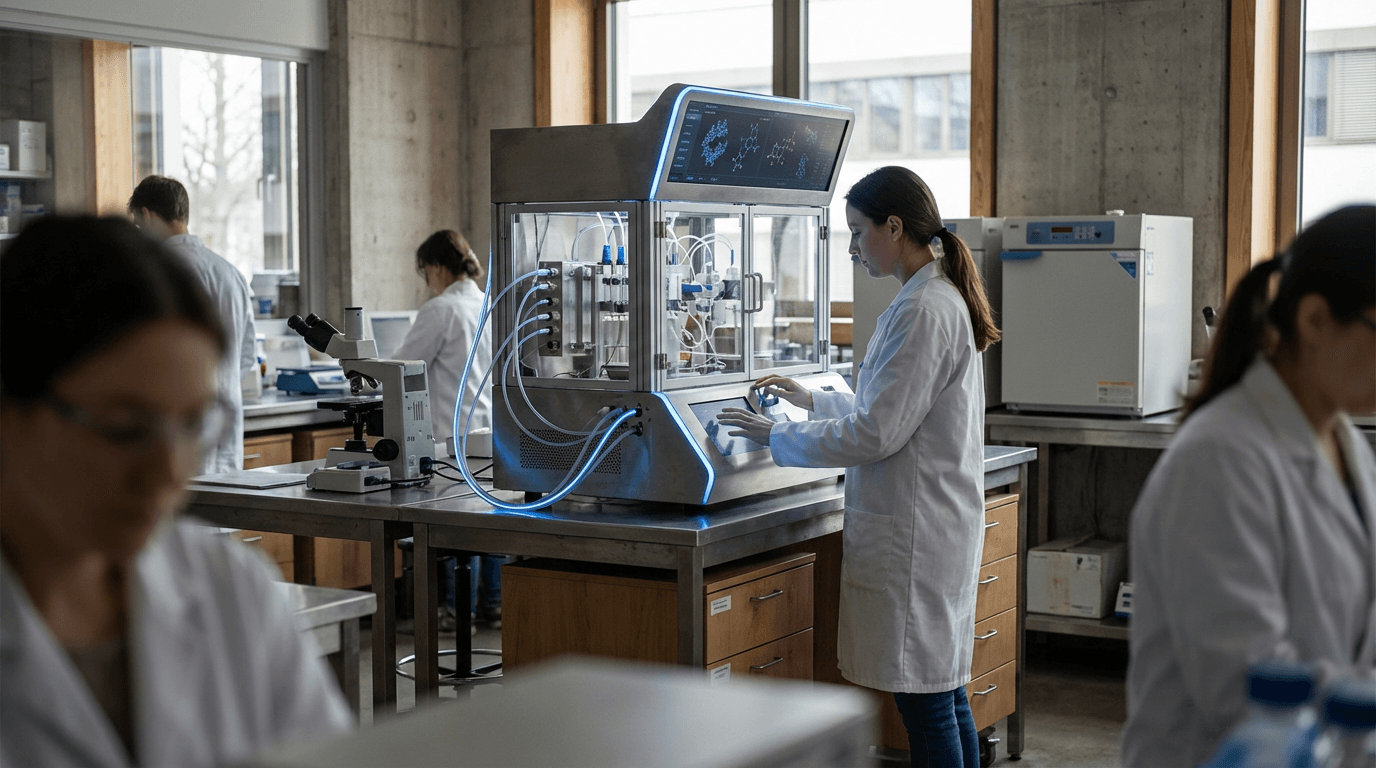
Generative Biology Models
Generative biology models represent a paradigm shift in how we approach molecular design, leveraging artificial intelligence to create proteins and enzymes that transcend the limitations of natural evolution. These systems employ deep learning architectures trained on vast databases of protein structures, amino acid sequences, and functional relationships to understand the fundamental principles governing biomolecular behavior. Unlike traditional protein engineering, which modifies existing natural proteins through directed evolution or rational design, generative models can conceptualize entirely novel molecular architectures from scratch. The technology operates by learning the complex patterns and rules that govern protein folding, stability, and function, then applying these learned principles to generate new sequences optimized for specific therapeutic goals. Advanced models incorporate multi-modal training data including genomic sequences, protein crystallography data, and functional assays, enabling them to predict not just structure but also biological activity and potential interactions within living systems.
The pharmaceutical and biotechnology industries face significant challenges in developing treatments for age-related metabolic decline, as natural biological systems were not optimized by evolution for extended human lifespans. Generative biology models address this gap by enabling the design of synthetic enzymes capable of performing functions that natural biology cannot achieve efficiently. For instance, these systems can generate proteins designed to degrade specific senescent cell markers, enhance mitochondrial efficiency beyond natural limits, or catalyze the breakdown of accumulated metabolic waste products like advanced glycation end-products that contribute to aging. This capability overcomes the traditional drug development bottleneck where researchers must work within the constraints of naturally occurring molecules or their derivatives. The technology also dramatically accelerates the discovery timeline, as AI can explore vast design spaces and propose candidate molecules in days rather than the years required for conventional approaches. Early research suggests these models can achieve success rates in generating functional proteins that far exceed random mutation approaches.
Several biotechnology companies and research institutions have begun deploying generative biology platforms in longevity-focused applications, with some synthetic enzymes entering preclinical testing phases. Current applications include the design of novel NAD+ precursor enzymes for cellular energy enhancement, synthetic proteins that target cellular senescence pathways, and engineered enzymes for breaking down lipofuscin and other age-related cellular debris. The technology is particularly promising for personalized medicine approaches, where generative models could theoretically design patient-specific therapeutic proteins based on individual metabolic profiles and genetic backgrounds. As computational power increases and training datasets expand to include more diverse biological information, these systems are expected to become increasingly sophisticated in their ability to predict in vivo performance and minimize off-target effects. The convergence of generative AI with synthetic biology and longevity research represents a fundamental shift toward programmable biology, where therapeutic molecules can be designed with the same precision and intentionality as software code, potentially unlocking interventions that address the root causes of aging at the molecular level.
Related Organizations

Academic hub at the University of Washington led by David Baker, creating tools like RosettaFold and RFdiffusion.

A public benefit corporation developing large language models for biology, founded by the team behind Meta's ESM models.

Uses generative AI to create de novo protein therapeutics across multiple modalities.

A subsidiary of Alphabet applying AI (specifically AlphaFold technology) to reimagine the drug discovery process.

Developing Large Language Models (LLMs) trained on protein sequences to design functional proteins.

Uses generative AI to help biologists design improved proteins and accelerate R&D pipelines.

A generative AI drug creation company focused on creating de novo antibodies.

Builds a knowledge graph of global biodiversity to train AI models for protein design.

Developing foundation models for robotics (Project GR00T) and vision-language models like VILA.
Supporting Evidence
Research this in Signals
Signals turns a topic into a sourced research record you can inspect and rerun. Your first scan is free, and this one starts with Generative Biology Models already loaded, so edit it or scan as is.