Natural Organic Reduction Vessels
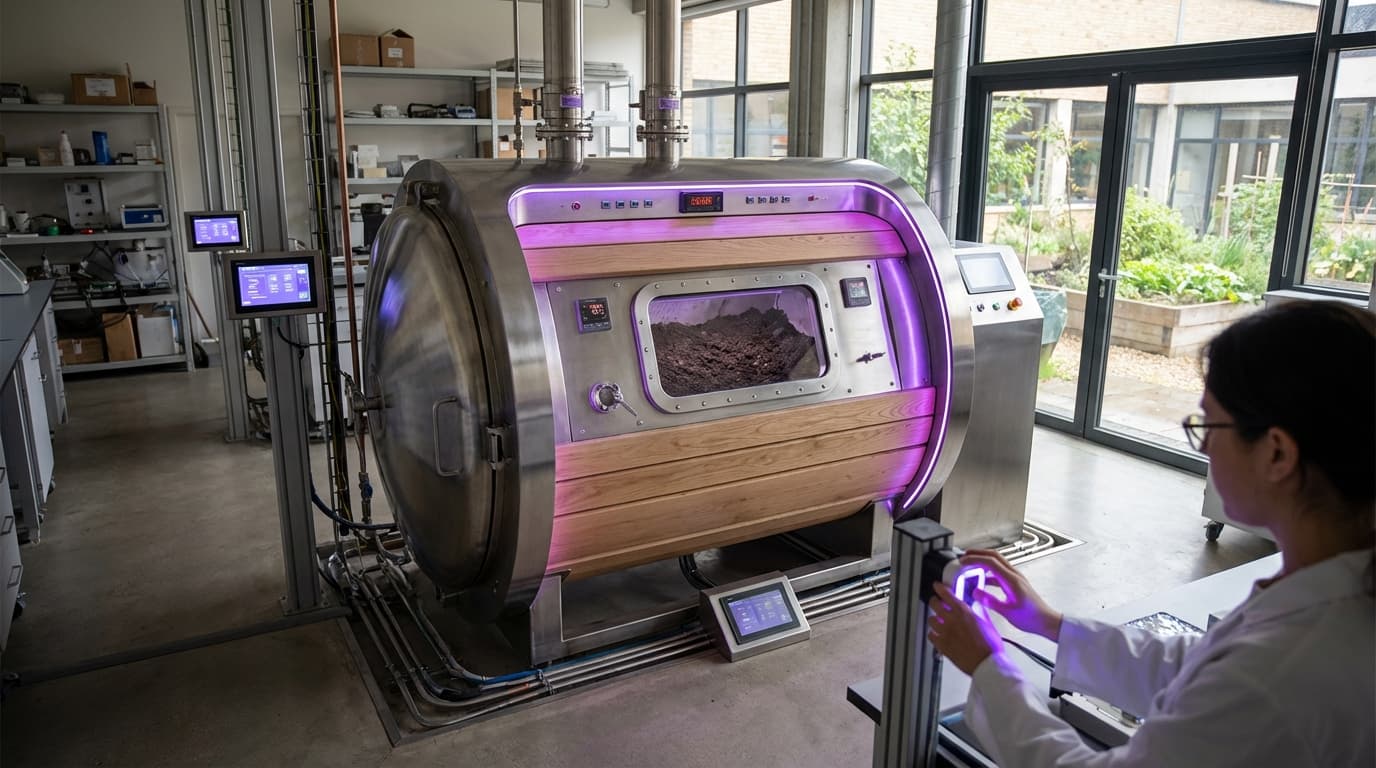
Natural Organic Reduction (NOR) vessels represent a significant advancement in death care technology, offering an environmentally conscious alternative to traditional burial and cremation. These specialized chambers are engineered to facilitate the accelerated decomposition of human remains through carefully controlled biological processes. The vessels themselves are typically constructed from durable, non-reactive materials such as stainless steel or reinforced composites, designed to withstand repeated use while maintaining precise environmental conditions. Inside these chambers, bodies are placed alongside organic materials like wood chips, alfalfa, and straw, which provide carbon sources and create optimal conditions for microbial activity. The system's core mechanism relies on maintaining specific parameters: temperatures between 131-160°F (55-71°C), controlled moisture levels around 50-60%, and regulated oxygen flow to support aerobic decomposition. Advanced sensors continuously monitor these conditions, while automated systems adjust ventilation, humidity, and material composition to ensure efficient breakdown of organic matter. This process mimics and accelerates natural decomposition that would otherwise take years, compressing it into approximately 30 days through optimized microbial activity.
The death care industry faces mounting pressure to address its environmental footprint, particularly as cremation rates rise and traditional burial practices consume increasingly scarce land resources. Conventional cremation requires significant energy—typically 28 gallons of fuel per body—and releases approximately 400 pounds of carbon dioxide, along with mercury and other pollutants from dental fillings and medical devices. Meanwhile, traditional burials introduce embalming chemicals into soil and groundwater while occupying land in perpetuity. Natural Organic Reduction vessels address these challenges by offering a process that produces minimal emissions, requires no fossil fuels beyond facility operations, and generates approximately one cubic yard of nutrient-rich soil per body. This soil can be returned to families or used in conservation projects, creating a tangible legacy of ecological contribution. The technology also enables new business models for funeral homes and dedicated NOR facilities, allowing the death care industry to meet growing consumer demand for sustainable options while potentially reducing operational costs associated with crematorium maintenance and energy consumption.
Washington became the first U.S. state to legalize human composting in 2019, followed by Colorado, Oregon, Vermont, California, and New York, signaling growing regulatory acceptance of this approach. Several facilities now offer NOR services commercially, with early adopters reporting strong interest from environmentally conscious consumers. The process has found particular resonance in urban areas where cemetery space is limited and among individuals seeking to minimize their environmental impact even in death. Beyond individual applications, research suggests potential for NOR soil in reforestation projects, habitat restoration, and regenerative agriculture, though regulations currently vary regarding its use. As climate concerns intensify and cultural attitudes toward death continue evolving, Natural Organic Reduction vessels represent a convergence of technological innovation and shifting values around mortality, sustainability, and our relationship with the natural world. The technology's trajectory points toward broader adoption as regulatory frameworks mature and public awareness grows, potentially reshaping end-of-life practices to align with ecological principles that view death not as an end, but as a transformation that nourishes new life.
Related Organizations
Pioneering public benefit corporation that developed the proprietary vessel system for natural organic reduction (human composting).
Provides soil transformation services using a proprietary vessel technology that mimics the natural forest floor decomposition process.

German startup introducing 'Reerdigung' (Re-earthing) using specialized stainless steel cocoons for transformation.

Operates one of the world's largest terramation facilities with a proprietary vessel system designed for high-volume organic reduction.

European startup developing technology for accelerating natural decomposition processes for funeral applications.
Funeral provider offering 'Chrysalis' natural organic reduction services.

Colorado-based provider of water cremation and natural organic reduction services.

A natural burial cemetery that developed its own solar-powered natural organic reduction cradle system.

The regulatory body that established the first legal framework and operational standards for NOR facilities.
Supporting Evidence
Research this in Signals
Signals turns a topic into a sourced research record you can inspect and rerun. Your first scan is free, and this one starts with Natural Organic Reduction Vessels already loaded, so edit it or scan as is.