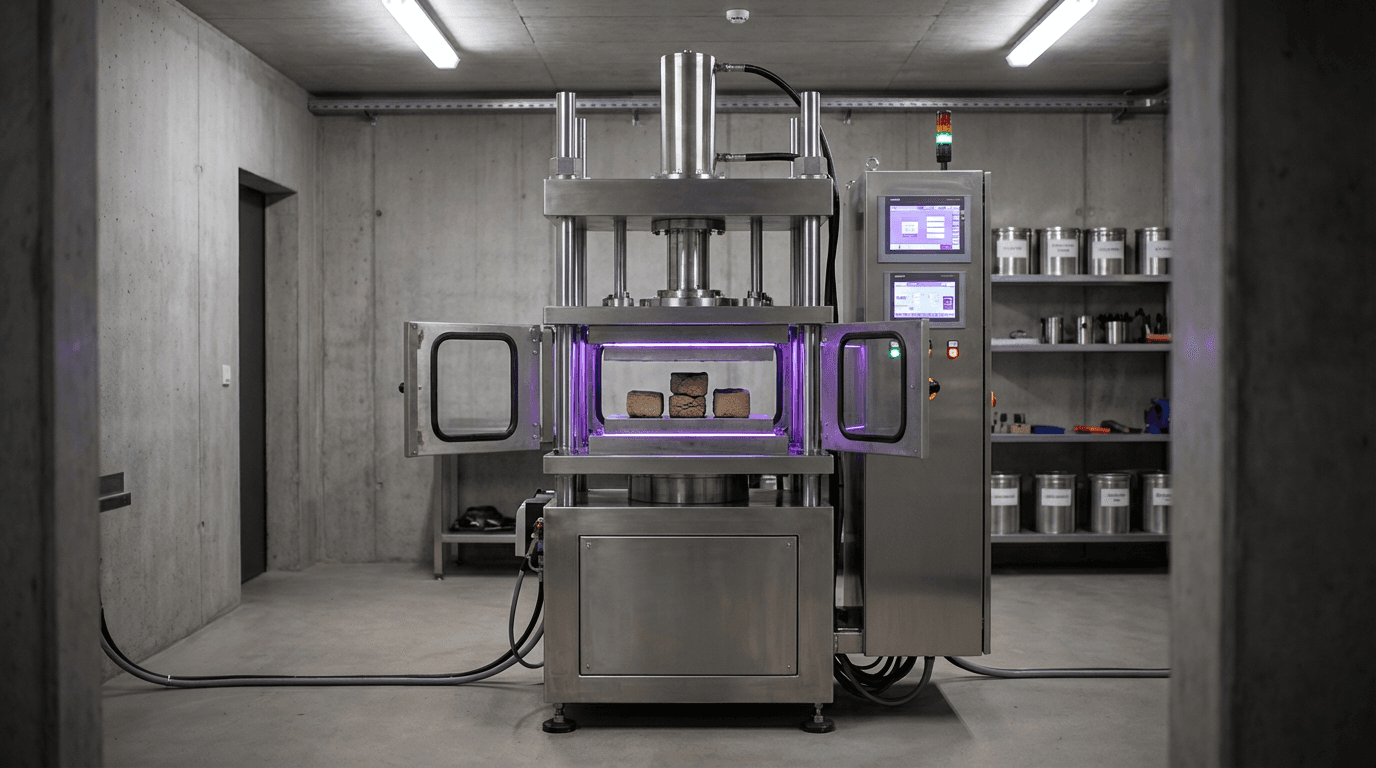
Remains Solidification Press
Remains solidification presses represent a specialized category of post-cremation processing equipment that transforms cremated ashes into dense, stone-like memorial objects through controlled compression and binding processes. The technology operates by first refining cremated remains to remove metallic residues and achieve consistent particle size, then combining the processed ash with binding agents—often mineral-based compounds or specialized resins—before subjecting the mixture to hydraulic pressure ranging from several hundred to several thousand pounds per square inch. Some systems incorporate heat during compression to enhance molecular bonding, while others rely purely on mechanical pressure to achieve the desired density and durability. The resulting solidified remains typically exhibit smooth surfaces, uniform coloration, and structural integrity comparable to natural stone, with the entire process taking anywhere from several hours to a few days depending on the desired size and density of the final product.
The funeral industry has long grappled with evolving consumer preferences around memorialization, particularly as traditional burial practices face challenges from limited cemetery space, environmental concerns, and changing cultural attitudes toward death rituals. Remains solidification addresses several practical limitations of conventional ash storage: the risk of accidental spillage, the bulkiness of traditional urns, difficulties in dividing remains among family members, and the challenge of creating portable keepsakes that can be easily transported or displayed. This technology enables funeral homes and memorial service providers to offer families multiple memorial stones from a single set of remains, facilitating the distribution of keepsakes among relatives while maintaining the dignity and permanence associated with traditional memorialization. The process also opens new revenue streams for the death care industry, positioning solidification as a value-added service that bridges traditional cremation and emerging preferences for personalized, tactile memorial objects.
Early adoption of remains solidification technology has primarily occurred in progressive funeral homes and specialized memorial service providers, particularly in regions with high cremation rates such as the Pacific Northwest, parts of Europe, and urban centers in Asia. The solidified stones serve diverse purposes: some families choose to keep them as touchstones for remembrance, others incorporate them into memorial gardens or architectural features, and still others use them as portable memorial objects that can accompany family members during relocations or travels. The technology aligns with broader trends in the death care industry toward personalization, environmental consciousness, and the creation of interactive memorial experiences that move beyond static monuments. As cremation rates continue to rise globally—driven by cost considerations, space constraints, and shifting religious attitudes—the demand for innovative post-cremation options is expected to grow, positioning remains solidification as part of a larger ecosystem of technologies that reimagine how societies honor and preserve the memory of the deceased.
Related Organizations

The primary developer of the technology that solidifies cremated remains into stone-like forms using a ceramic binding process.

A US Department of Energy national laboratory that partnered with Parting Stone to develop the material science behind the solidification process.

Mixes cremated remains with environmentally safe concrete to cast 'reef balls' that solidify the remains into marine habitats.

Swiss company that uses high-pressure high-temperature (HPHT) presses to turn cremated remains into memorial diamonds.

A consumer technology company that manufactures diamonds from cremated remains or hair using HPHT presses.

UK-based manufacturer of laboratory-grown memorial diamonds.

One of the original companies to offer memorial diamonds created through carbon purification and pressing.

Swiss memorial diamond manufacturer serving the global market.

Presses cremated remains into vinyl records, allowing audio to be stored alongside the physical remains.
Supporting Evidence
Research this in Signals
Signals turns a topic into a sourced research record you can inspect and rerun. Your first scan is free, and this one starts with Remains Solidification Press already loaded, so edit it or scan as is.