Ultrasound Neuromodulation Devices
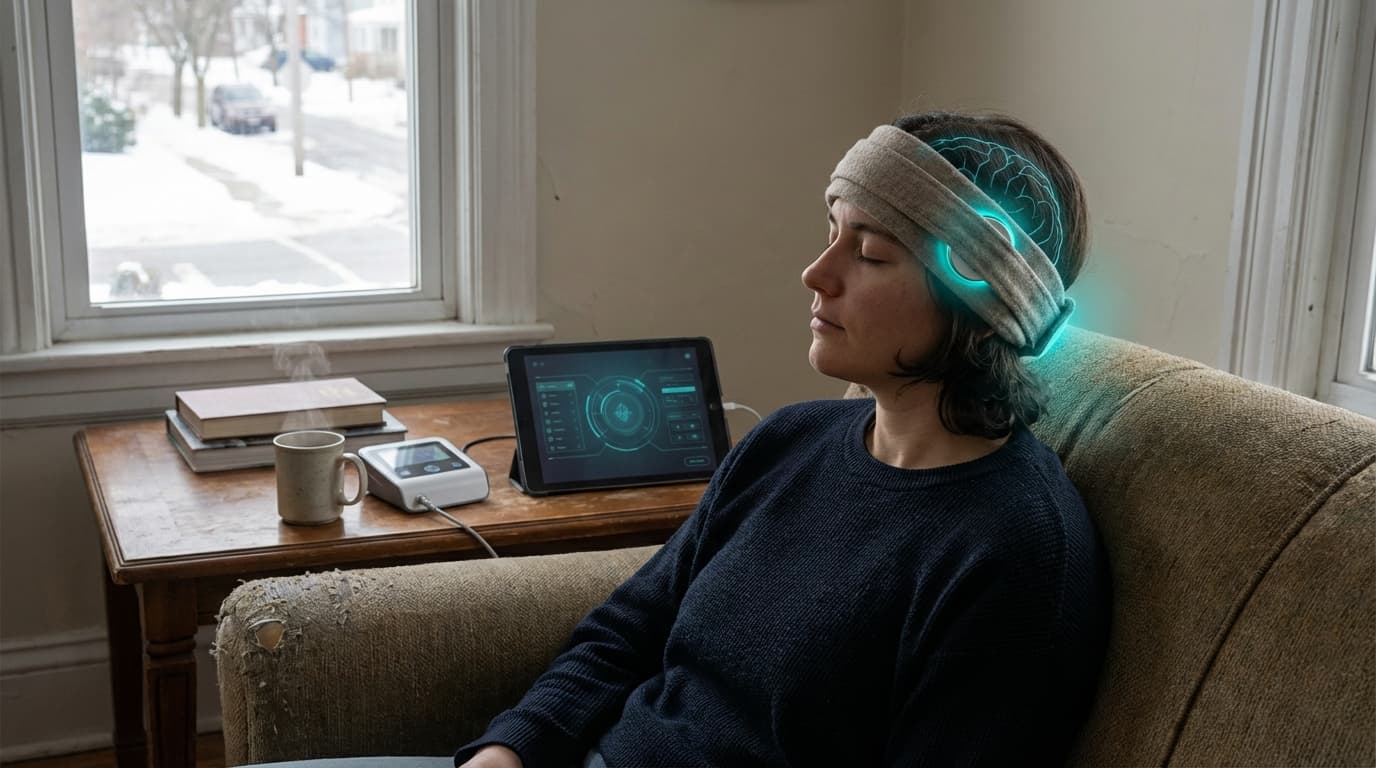
Ultrasound neuromodulation devices are clinical-grade platforms that use focused ultrasound transducers to deliver steerable acoustic beams through the skull to stimulate deep-brain nuclei without requiring surgical implants, enabling non-invasive neuromodulation that can target specific brain regions with precision. Systems like Insightec's Exablate are evolving from applications like tremor ablation (permanently destroying tissue) toward reversible neuromodulation therapies for conditions including depression and chronic pain, where the ultrasound can temporarily modulate neural activity without causing permanent damage, opening new possibilities for non-invasive brain stimulation treatments.
This innovation addresses the limitation of traditional deep brain stimulation, which requires invasive surgery to implant electrodes. By using focused ultrasound that can penetrate the skull, these systems can stimulate deep brain structures non-invasively, making the treatment accessible to more patients. Companies like Insightec, BrainSonix, and research institutions are developing these technologies.
The technology is particularly significant for treating neurological and psychiatric conditions where non-invasive approaches could dramatically expand access to treatment. As the technology improves, it could enable new therapies for a wide range of conditions. However, ensuring precise targeting, managing safety, and demonstrating effectiveness remain challenges. The technology represents an important evolution toward non-invasive neuromodulation, but requires continued development and clinical validation. Success could make deep brain stimulation accessible without surgery, but the technology must prove its effectiveness and safety in clinical trials. The field is still developing, and it remains to be seen which applications will prove most effective.
Related Organizations

Develops Low Intensity Focused Ultrasound (LIFU) devices specifically for brain mapping and neuromodulation.

Pioneer in MR-guided Focused Ultrasound (MRgFUS) for non-invasive brain surgery and modulation.

The leading organization accelerating the development and adoption of focused ultrasound.

Manufacturer of high-performance ultrasonic transducers, including the NeuroFUS system.
Develops neuronavigation-guided focused ultrasound systems for BBB opening and neuromodulation.
Canada · Research Lab
A world leader in focused ultrasound research.
United States · University
Home to significant research on the spatial resolution and efficacy of transcranial focused ultrasound.

Distributor and integrator of non-invasive brain stimulation solutions, including TUS/LIFU.
France · Company
Develops SonoCloud, an implantable ultrasound device for blood-brain barrier opening.
Supporting Evidence
Research this in Signals
Signals turns a topic into a sourced research record you can inspect and rerun. Your first scan is free, and this one starts with Ultrasound Neuromodulation Devices already loaded, so edit it or scan as is.