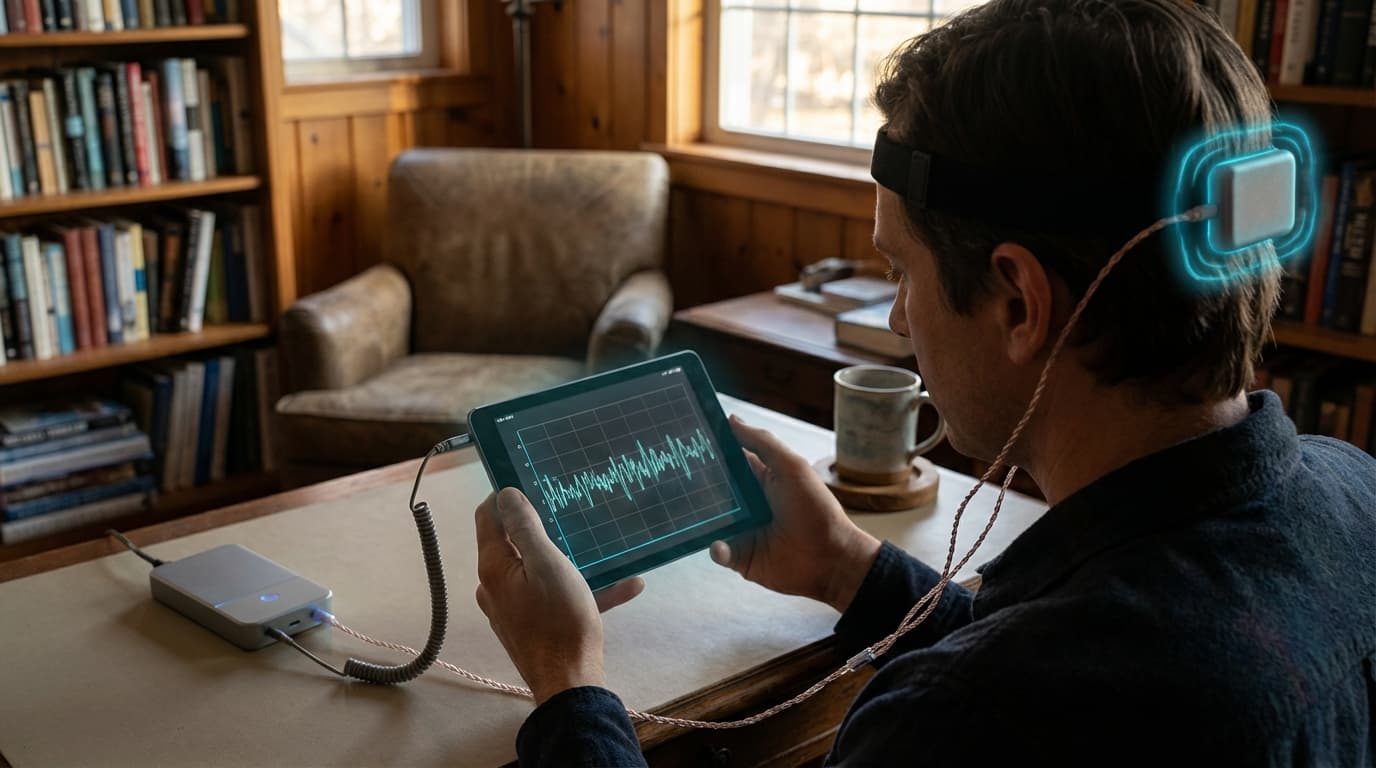
Deep Brain Stimulation for Parkinson's
Adaptive deep brain stimulation (DBS) systems are closed-loop neuromodulation devices that continuously monitor local field potentials (electrical activity) in the subthalamic nucleus (a key structure in the basal ganglia circuit involved in movement control) and automatically adjust stimulation parameters in real-time based on the brain's activity, smoothing motor symptoms like tremors and rigidity while minimizing side effects for Parkinson's disease patients. Unlike traditional open-loop DBS that provides constant stimulation, adaptive systems only stimulate when needed and adjust intensity based on real-time neural activity, potentially providing better symptom control with fewer side effects and lower power consumption.
This innovation addresses the limitation of traditional DBS, where constant stimulation may cause side effects and doesn't adapt to the brain's changing state. By responding to real-time neural activity, adaptive DBS can be more effective and efficient. Companies like Medtronic, Boston Scientific, and research institutions are developing these systems.
The technology is particularly significant for Parkinson's disease treatment, where adaptive stimulation could improve outcomes and reduce side effects. As the technology improves, it could become standard for DBS therapy. However, ensuring reliable detection, managing complexity, and optimizing algorithms remain challenges. The technology represents an important evolution in DBS, but requires continued development to achieve the reliability and effectiveness needed for widespread use. Success could improve DBS outcomes for Parkinson's patients, but the technology must prove itself in long-term clinical use and demonstrate clear advantages over traditional DBS.
Research this in Signals
Signals turns a topic into a sourced research record you can inspect and rerun. Your first scan is free, and this one starts with Deep Brain Stimulation for Parkinson's already loaded, so edit it or scan as is.