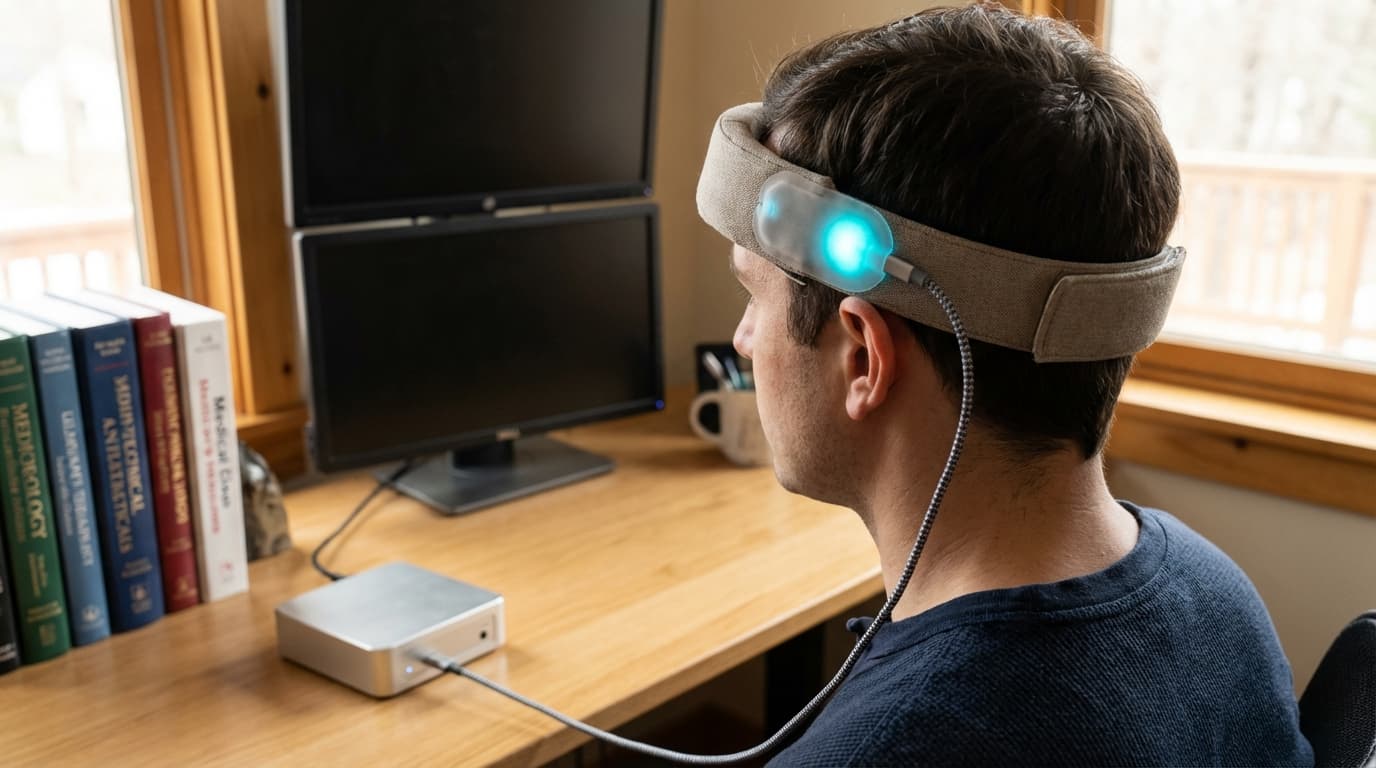
Optical & Ultrasonic Interfaces
Optical and ultrasonic interfaces are non-invasive or minimally invasive neural interfaces that utilize optogenetics (using light to control genetically modified neurons) or focused ultrasound (using acoustic waves for neuromodulation) to read and write neural activity deep within the brain without requiring physical contact with neural tissue, offering a safer path to bidirectional brain-computer interfaces that can both record from and stimulate the brain. These approaches avoid the risks associated with implanted electrodes while still providing access to deep brain structures, potentially enabling BCIs with much lower risk than traditional invasive approaches.
This innovation addresses the fundamental challenge of neural interfaces, where accessing deep brain structures typically requires invasive surgery. By using light or sound waves that can penetrate tissue, these approaches can interact with neurons without physical implants. However, optogenetics requires genetic modification of neurons, and ultrasound neuromodulation is still being refined. Research institutions and companies are developing these technologies.
The technology is particularly significant for enabling safer neural interfaces, where non-invasive or minimally invasive approaches could dramatically expand access to BCI technology. As the technology improves, it could enable new applications that aren't feasible with invasive approaches. However, ensuring effective neural control, managing specificity, and (for optogenetics) addressing the need for genetic modification remain challenges. The technology represents an important direction for safer neural interfaces, but requires continued development to achieve the performance and practicality needed for widespread use. Success could enable BCIs with much lower risk, but significant technical challenges must be overcome.
Related Organizations

Neuroscience company developing non-invasive brain recording technology (Flow and Flux).
France · Company
A clinical-stage biopharma company focusing on developing therapies for mitochondrial and neurodegenerative diseases of the eye.
United States · Company
Developed miniature microscopes (miniscopes) for brain imaging.
United States · Startup
A clinical-stage biotechnology company developing gene therapies for retinal degenerative diseases.

A company providing battery-free, wireless optogenetics systems for neuroscience research.
Canada · Company
A global leader in photonics solutions for life sciences, specifically neurophotonics.
United States · Company
A pioneer and leading innovator of custom, high-performance data acquisition, behavior and analysis solutions for scientific research.
Supporting Evidence
Research this in Signals
Signals turns a topic into a sourced research record you can inspect and rerun. Your first scan is free, and this one starts with Optical & Ultrasonic Interfaces already loaded, so edit it or scan as is.