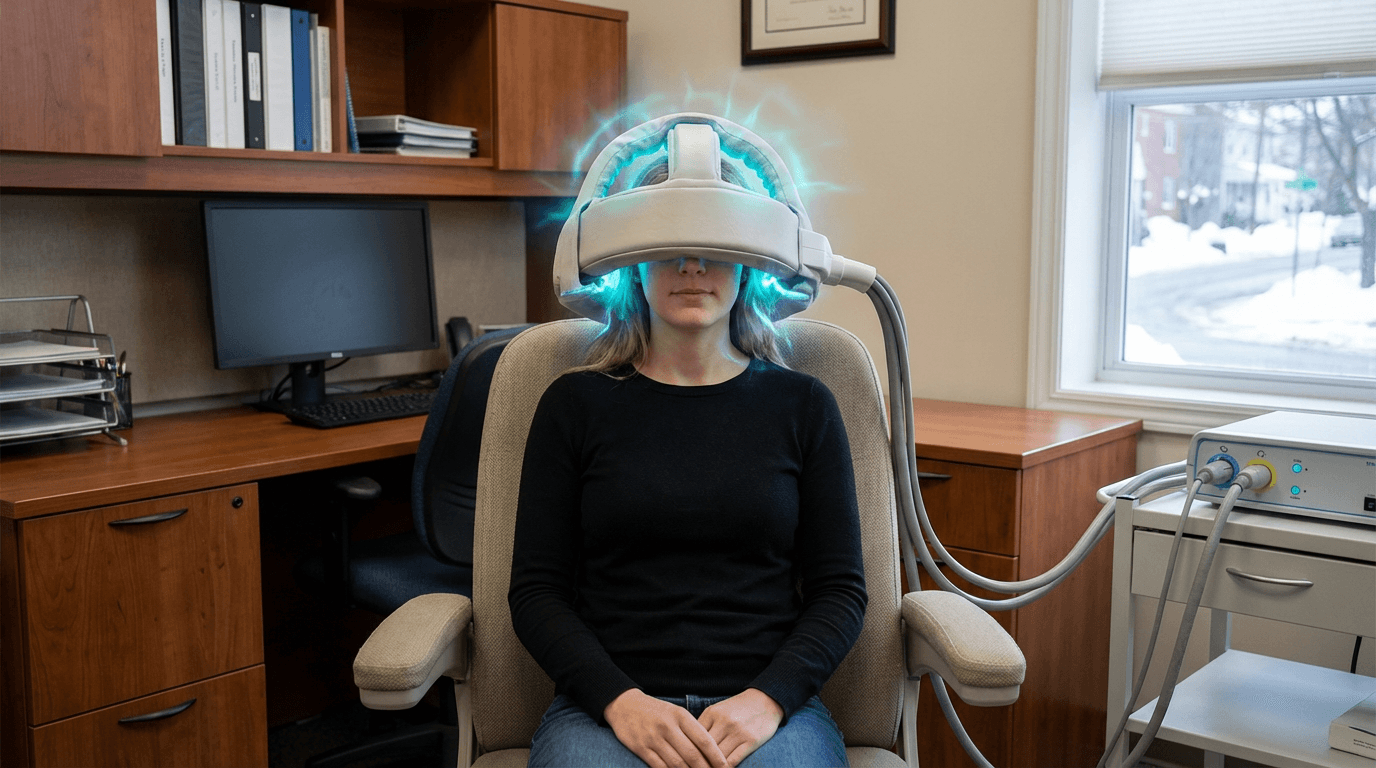
Transcranial Magnetic Stimulation Systems
Transcranial Magnetic Stimulation (TMS) systems use rapidly changing magnetic fields generated by electromagnetic coils placed near the scalp to induce electric currents in targeted cortical regions of the brain, enabling non-invasive neuromodulation that can temporarily alter neural activity. Modern TMS systems, including FDA-cleared 'TMS chairs' that provide comfortable, precise stimulation, deliver specific stimulation protocols for treatment-resistant depression, obsessive-compulsive disorder (OCD), migraines, and other conditions, and are being explored for cognitive enhancement applications where targeted brain stimulation might improve memory, attention, or other cognitive functions.
This innovation addresses the need for non-invasive brain stimulation treatments for neurological and psychiatric conditions, where traditional approaches like medication may be ineffective or have side effects. By providing targeted, non-invasive stimulation, TMS offers an alternative treatment option. Companies like Magstim, BrainsWay, and others manufacture these systems.
The technology is particularly significant for treating conditions like depression where non-invasive alternatives to medication are valuable. As the technology improves and protocols are refined, TMS could become more widely used. However, ensuring effectiveness, optimizing protocols, and managing costs remain challenges. The technology represents an established approach to non-invasive neuromodulation, but requires continued research to expand applications and improve outcomes. Success could provide more treatment options for various conditions, but the technology must continue to demonstrate effectiveness and value in clinical practice.
Related Organizations
Israel · Company
Developer of 'Deep TMS' technology using their proprietary H-Coil to reach deeper brain structures than standard TMS.
United States · Startup
Commercializing the SAINT protocol (Stanford Accelerated Intelligent Neuromodulation Therapy), a high-dose, rapid-acting TMS treatment.
United States · Company
Manufacturer of the NeuroStar TMS system, the first FDA-cleared TMS device for the treatment of Major Depressive Disorder.
United Kingdom · Company
The original developer of commercial TMS stimulators, providing devices for both research and clinical depression treatment (Horizon system).
Denmark · Company
A leading manufacturer of TMS research and clinical systems, known for the MagPro line.
Finland · Company
Specializes in navigated TMS (nTMS) with their SmartFocus technology, used for presurgical mapping and depression treatment.
France · Company
Develops robotic assistance systems specifically for Transcranial Magnetic Stimulation to ensure precise and repeatable coil placement.
Czech Republic · Company
Manufacturer of neurodiagnostic and neuromodulation equipment, including the DuoMAG TMS system.
Supporting Evidence
Research this in Signals
Signals turns a topic into a sourced research record you can inspect and rerun. Your first scan is free, and this one starts with Transcranial Magnetic Stimulation Systems already loaded, so edit it or scan as is.