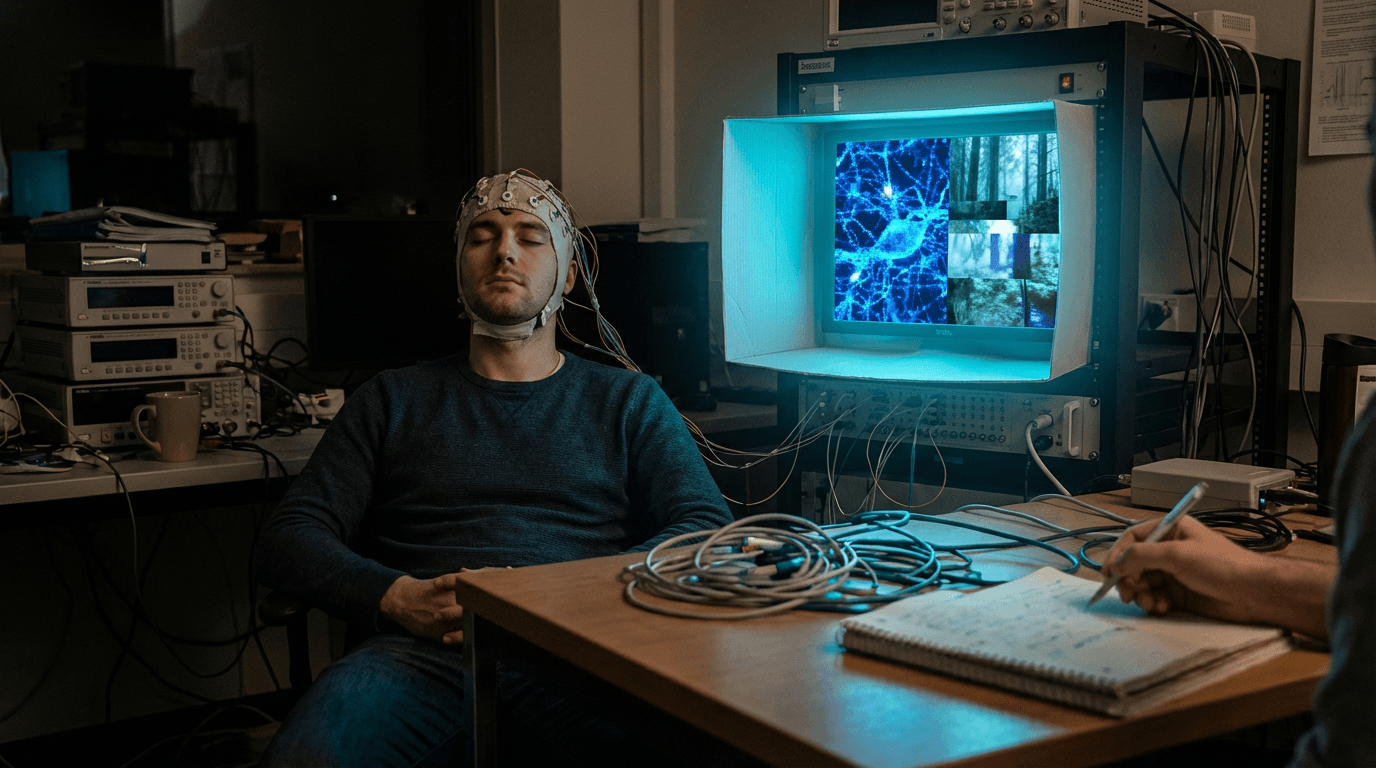
Dream Decoding Algorithms
Dream decoding algorithms are machine learning systems, primarily developed by Japanese research groups, that train generative models on fMRI (functional magnetic resonance imaging) or EEG signals captured during REM (rapid eye movement) sleep, correlating patterns of neural activity with visual categories and semantic content to reconstruct coarse dream imagery and content. These systems can decode what people are dreaming about by analyzing brain activity patterns during sleep, opening new windows into subconscious cognition and providing insights into how the brain processes information during sleep, potentially enabling new understanding of memory consolidation, creativity, and the nature of consciousness.
This innovation addresses the fundamental mystery of dreams, where we have no direct access to what people are experiencing during sleep. By decoding neural activity, these systems provide a way to study dreams objectively. Research institutions, particularly in Japan, are developing these technologies.
The technology is particularly significant for understanding sleep, memory, and consciousness, where decoding dreams could provide new insights. As the technology improves, it could enable new applications in sleep research and potentially therapeutic interventions. However, ensuring accuracy, managing the complexity of dream content, and interpreting results remain challenges. The technology represents an interesting research direction, but requires extensive development to achieve meaningful capabilities. Success could provide new insights into sleep and consciousness, but the technology is still early-stage and faces significant challenges in accurately decoding complex dream content.
Research this in Signals
Signals turns a topic into a sourced research record you can inspect and rerun. Your first scan is free, and this one starts with Dream Decoding Algorithms already loaded, so edit it or scan as is.