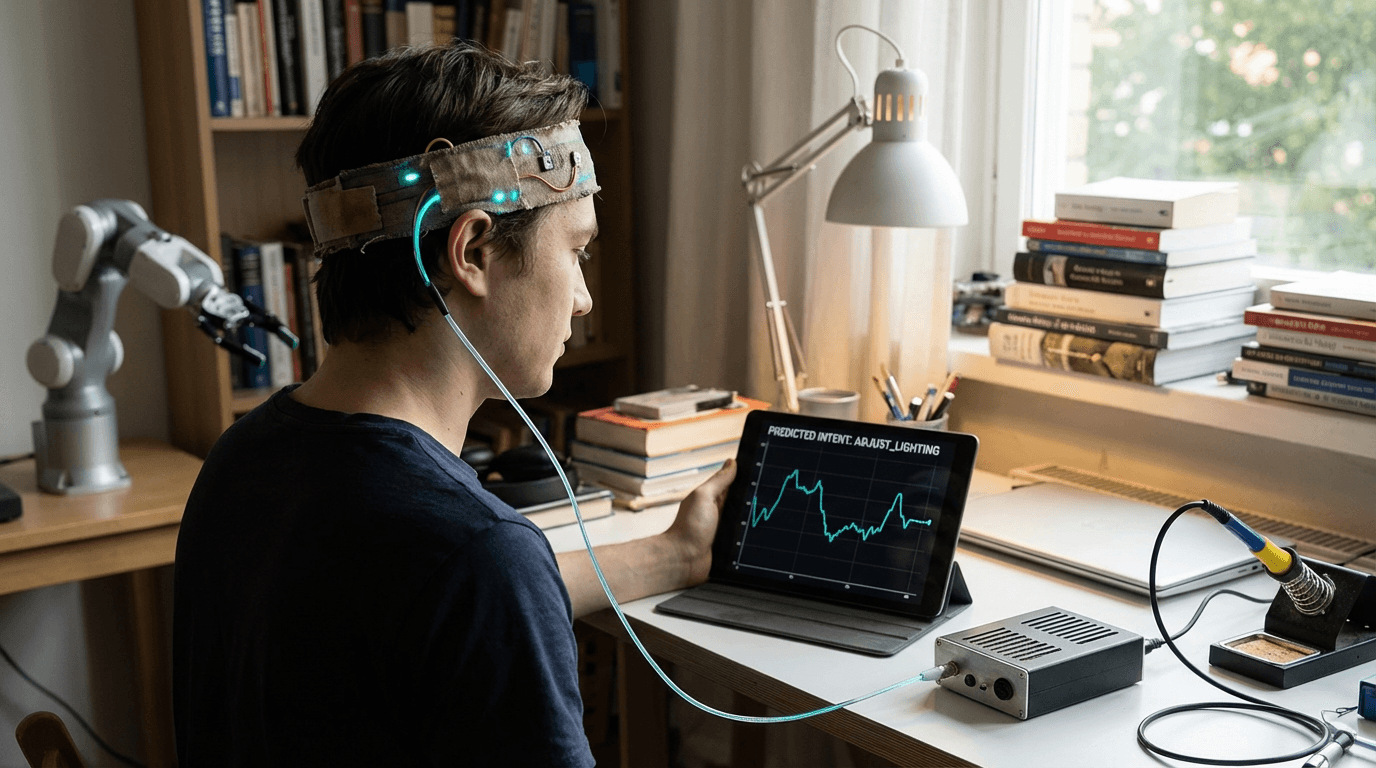
Real-Time Predictive Decoders
Real-time predictive decoders are optimized neural decoding algorithms capable of inferring high-level intent, continuous speech, and complex motor plans from brain signals with millisecond latency, enabling brain-computer interfaces that can translate thoughts into digital actions almost instantaneously. These systems use advanced machine learning techniques and efficient algorithms to process neural signals in real-time, bridging the gap between thought and digital action by predicting what a person intends to do or say before the action is completed, enabling natural, responsive BCIs that feel more like direct thought control than delayed commands.
This innovation addresses the latency problem in BCIs, where delays between thought and action make interfaces feel unnatural and limit their usefulness. By achieving millisecond latency, these decoders enable more natural interactions. Research institutions and companies are developing these technologies.
The technology is essential for practical BCIs, where low latency is critical for natural-feeling control. As the technology improves, it could enable new applications in assistive technology and human-computer interaction. However, ensuring accuracy, managing computational requirements, and achieving reliable real-time performance remain challenges. The technology represents an important evolution in BCI capabilities, but requires continued development to achieve the speed and accuracy needed for sophisticated applications. Success could enable truly responsive BCIs, but the technology must balance speed with accuracy and reliability.
Research this in Signals
Signals turns a topic into a sourced research record you can inspect and rerun. Your first scan is free, and this one starts with Real-Time Predictive Decoders already loaded, so edit it or scan as is.