Targeted Memory Reactivation (TMR)
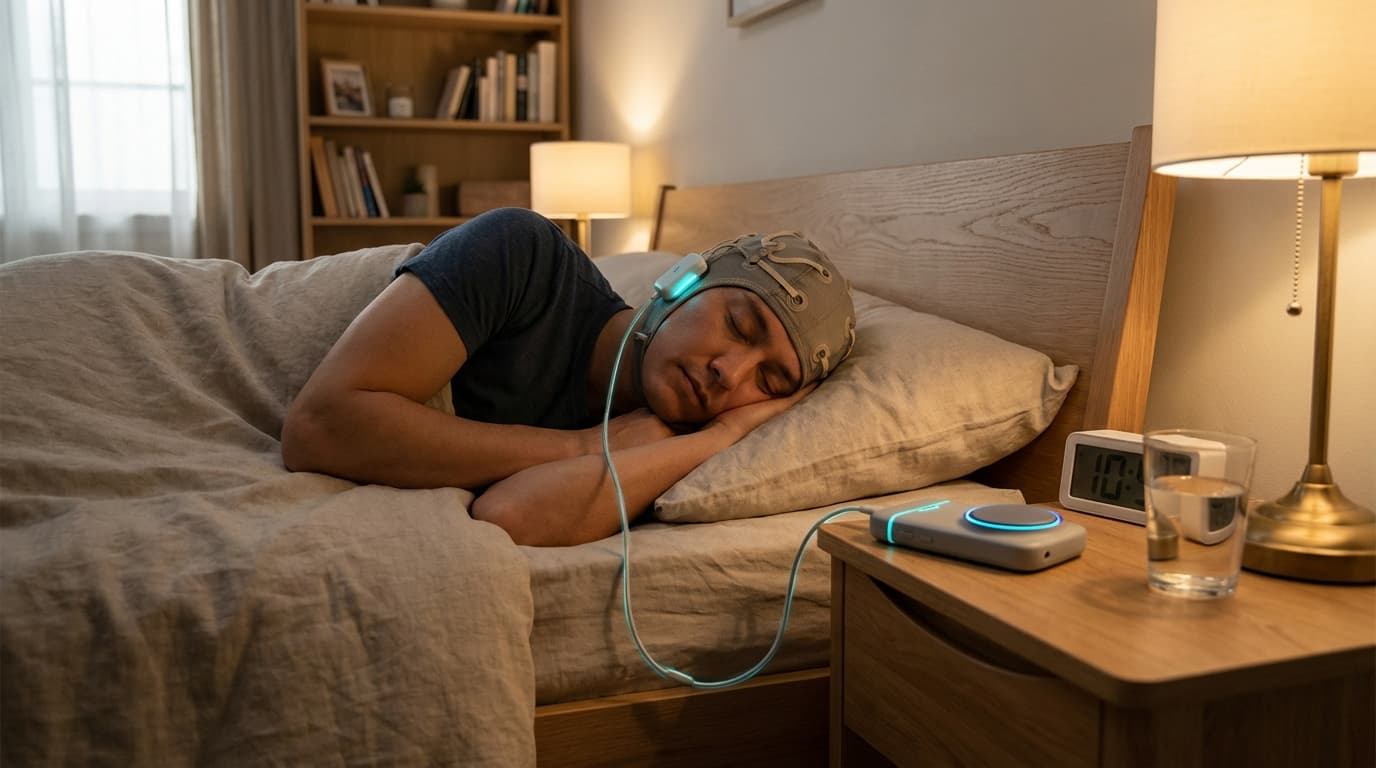
Targeted Memory Reactivation (TMR) systems detect specific sleep stages (particularly Slow Wave Sleep, which is important for memory consolidation) using EEG or other sleep monitoring, and automatically deliver auditory or olfactory cues (sounds or smells) that were associated with prior learning experiences, reactivating and strengthening those memories during sleep to enhance memory consolidation and accelerate skill acquisition without requiring conscious effort from the sleeper. These systems leverage the brain's natural memory consolidation processes during sleep, where memories are strengthened and reorganized, by providing cues that reactivate specific memories during optimal consolidation windows, potentially enabling passive learning enhancement during sleep.
This innovation addresses the potential to enhance learning and memory by optimizing the brain's natural consolidation processes during sleep, where targeted interventions could improve memory retention and skill learning. By reactivating memories during sleep, these systems could enhance learning outcomes. Research institutions are developing these technologies.
The technology is particularly significant for education and training, where enhancing memory consolidation could improve learning outcomes. As the technology improves, it could enable new approaches to learning and skill acquisition. However, ensuring effectiveness, managing individual differences, and understanding optimal protocols remain challenges. The technology represents an interesting approach to enhancing learning, but requires extensive research to establish effectiveness and optimal protocols. Success could enable new ways to enhance learning, but the technology must prove its effectiveness and understand the mechanisms by which it works. The field is still developing, and more research is needed to understand optimal applications.
Research this in Signals
Signals turns a topic into a sourced research record you can inspect and rerun. Your first scan is free, and this one starts with Targeted Memory Reactivation (TMR) already loaded, so edit it or scan as is.