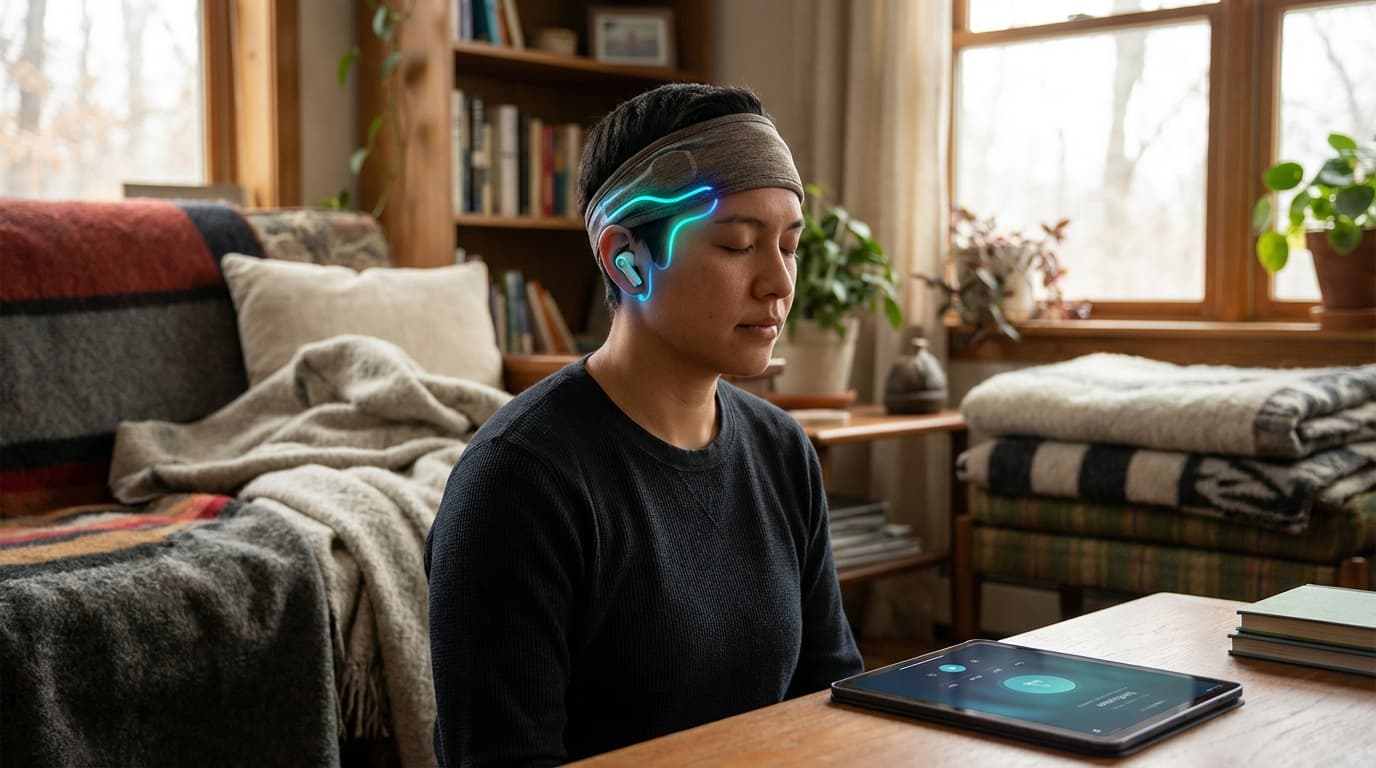
Consumer Neuro-Wearables
Consumer neuro-wearables are widely available consumer-grade devices including headbands, earbuds, and other wearable form factors that use dry-EEG sensors (electrodes that don't require conductive gel) to measure brain activity for applications like meditation, focus training, and sleep tracking. While these devices have lower resolution and accuracy than research-grade or clinical systems, they democratize access to neurofeedback and brain monitoring, making neural sensing technology available to consumers for wellness, productivity, and entertainment applications without requiring specialized equipment or expertise.
This innovation addresses the gap between high-end research/clinical neural interfaces and consumer applications, where most people have no access to brain monitoring technology. By creating affordable, easy-to-use devices, these wearables bring neural sensing to the mass market. Companies like Muse, Emotiv, and various startups are developing these consumer devices.
The technology is significant for making neural sensing accessible to everyone, potentially enabling new applications in wellness, productivity, and human-computer interaction. As the technology improves, consumer devices could become more capable. However, ensuring accuracy, managing user expectations, and demonstrating real value remain challenges. The technology represents an important step toward democratizing neural interfaces, but requires continued development to achieve meaningful capabilities. Success could bring brain monitoring to millions of people, but the technology must prove its value and accuracy to gain widespread adoption. The consumer neuro-wearable market is still developing, and it remains to be seen which applications will prove most valuable.
Related Organizations

Produces EEG headsets and the BCI-OS platform, allowing developers to build applications that respond to cognitive stress and facial expressions.

Develops the Muse EEG headband and software platform that adapts audio soundscapes in real-time based on the user's brain state (meditation/focus).

Develops BCI-enabled headphones that detect focus and intent to control digital experiences.

Specializes in soft, dry-EEG electrodes for in-ear applications (hearables).

Manufacturer of biosensor chips (ThinkGear) and the MindWave headset, enabling low-cost consumer EEG.
Creates open-source brain-computer interface tools and the Galea headset (integrating with VR) for researching physiological responses.

Develops semi-dry and dry EEG wearable devices for human behavior research and neurotechnology applications.

Provides a remote neurofeedback platform using consumer wearables (like Muse) to treat ADHD and anxiety.
Supporting Evidence
Research this in Signals
Signals turns a topic into a sourced research record you can inspect and rerun. Your first scan is free, and this one starts with Consumer Neuro-Wearables already loaded, so edit it or scan as is.