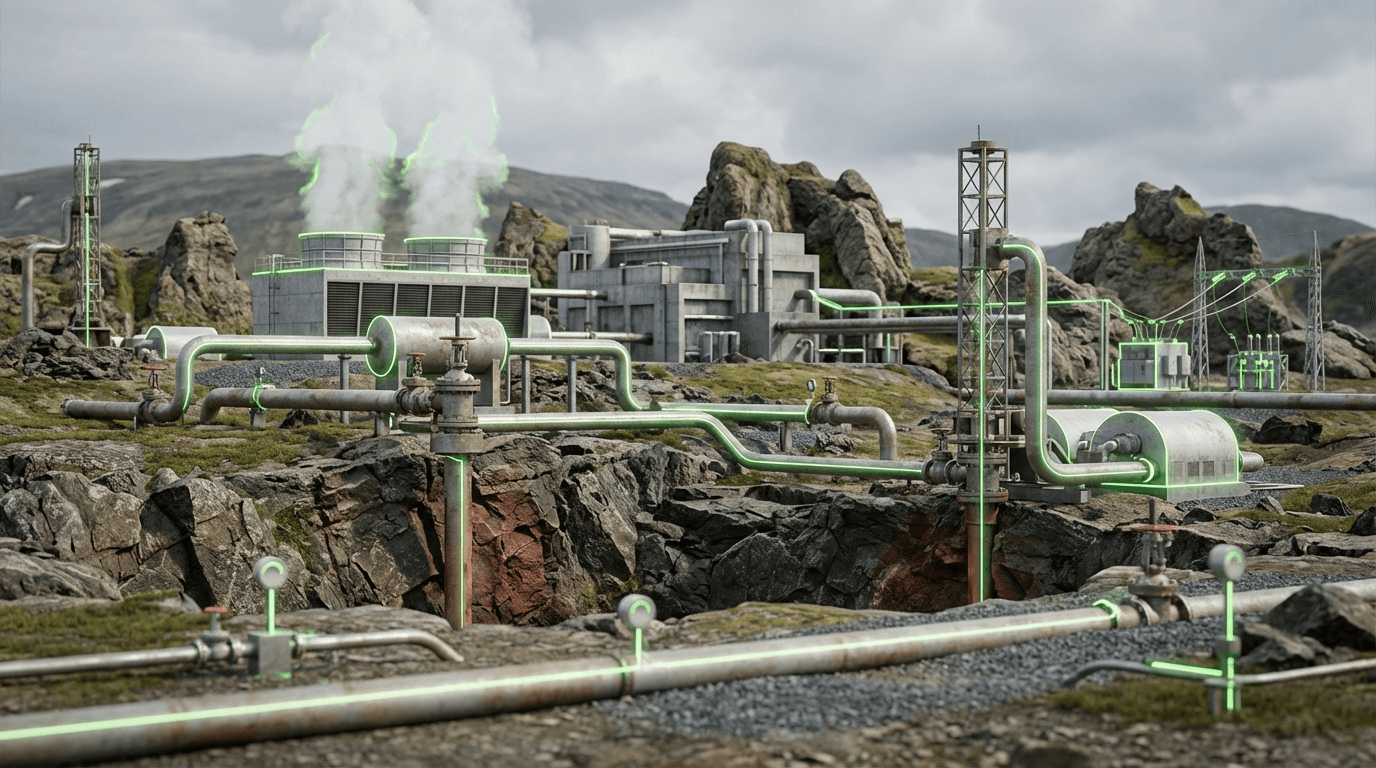
Deep and Closed-Loop Geothermal Systems
Enhanced geothermal systems (EGS) drill 5–10 km into hot, dry rock and stimulate fractures so water can circulate, while closed-loop concepts like Eavor or SageGeo run sealed pipes filled with proprietary working fluids that siphon heat without contacting formation water. Both approaches decouple geothermal potential from volcanic geography, letting developers tap high-resource gradients under sedimentary basins or near demand centers. Advances in oilfield tech—directed drilling, polycrystalline diamond bits, high-temperature fiber optics—slash costs and improve reservoir characterization.
These systems produce firm, dispatchable electricity and industrial heat for hydrogen plants, district heating, and greenhouses. Utilities see geothermal as a complement to wind/solar and a path to repower coal sites using existing transmission. Oil and gas companies redeploy rigs and workforce expertise into geothermal drilling campaigns, accelerating learning curves. Governments in the US, Canada, Germany, and Australia fund pilot wells, while corporate offtakers sign 10–20 year PPAs to anchor financing.
Technology maturity is around TRL 4–5: proof-of-concept wells exist, but scaling requires reducing drilling costs, managing seismicity, and securing deep-well permits. Carbon capture infrastructure bills, geothermal investment tax credits, and guaranteed interconnection queues are emerging to de-risk deployment. If drilling automation and reservoir management continue to improve, deep geothermal could provide gigawatts of 24/7 clean power across continents.
Related Organizations

Develops Eavor-Loop, a closed-loop geothermal system that circulates fluid through sealed wellbores.
Adapts horizontal drilling and distributed fiber optic sensing from the oil and gas industry to geothermal.

Combines geothermal energy with energy storage using fracture technology to harvest heat and pressure.
Utah FORGE
United States · Research Lab
A dedicated underground field laboratory sponsored by the DOE for developing EGS technologies.

Focuses on SuperHot Rock (SHR) geothermal energy technology development.

Develops GreenLoop technology to retrofit existing non-productive wells for geothermal power generation.

Developing millimeter-wave drilling technology to vaporize rock and reach superhot geothermal depths.

A specialized investment entity focused on scaling geothermal power worldwide, backing companies like Chevron and Eavor.

Develops PLASMABIT technology for contactless plasma drilling and milling of hard rock.
A leading geothermal operator now integrating EGS stimulation techniques into its portfolio to expand capacity.

Developing Zero Carbon Lithium extraction from geothermal brines in the Upper Rhine Valley.
Supporting Evidence
Research this in Signals
Signals turns a topic into a sourced research record you can inspect and rerun. Your first scan is free, and this one starts with Deep and Closed-Loop Geothermal Systems already loaded, so edit it or scan as is.