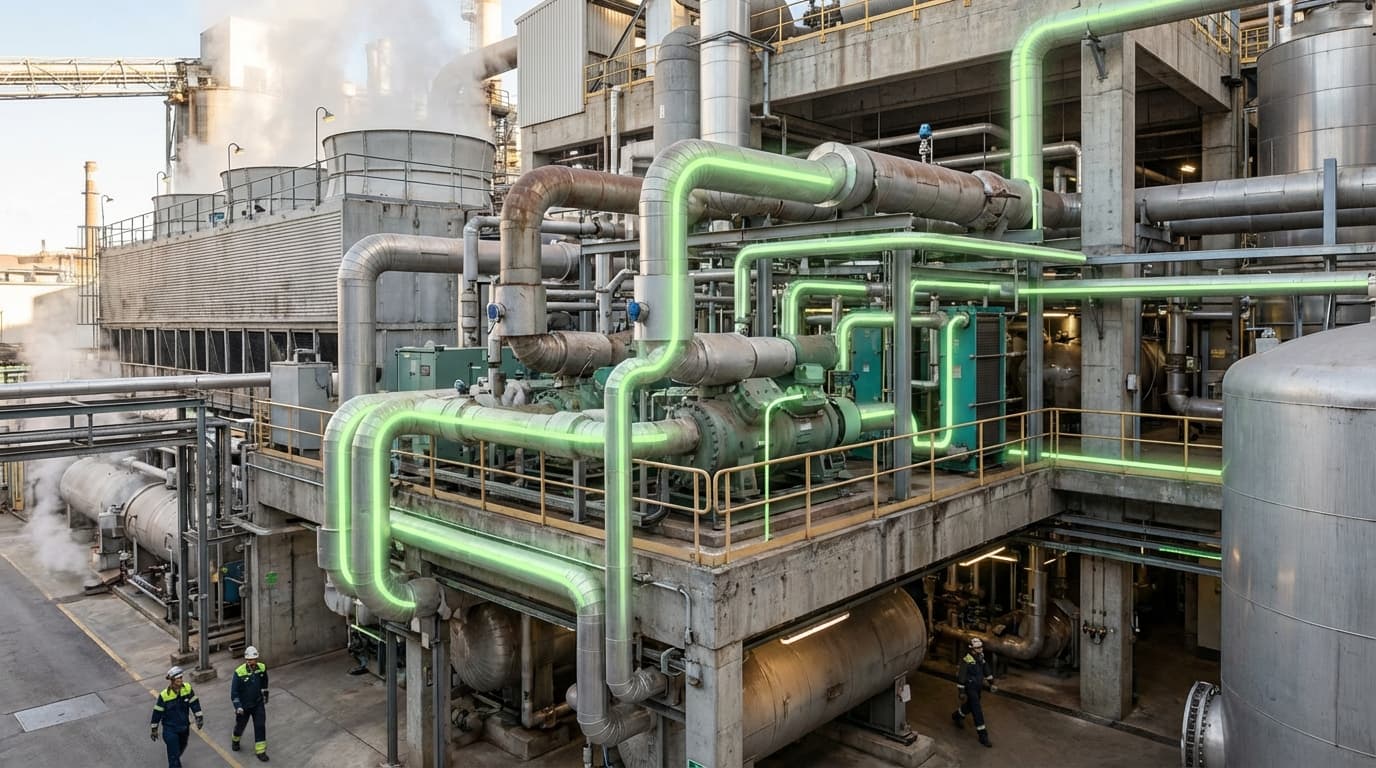
High-Temperature Industrial Heat Pumps
Industrial heat pumps now use advanced refrigerants (hydrofluoroolefins, CO₂ transcritical cycles), magnetic compression, or vapor recompression to deliver 150–200 °C steam with coefficients of performance above 3. They capture low-grade waste heat from chillers, kilns, or wastewater and upgrade it to replace fossil boilers in food processing, pulp & paper, textiles, and chemical plants. Modular skid designs integrate with existing steam networks, while predictive controls optimize operation in response to electricity prices and demand-response signals.
Deployments across Europe, Japan, and North America show 30–60% energy savings and rapid paybacks when paired with renewable PPAs. Corporations chasing Science Based Targets install heat pumps alongside electrified dryers or hydrogen-ready furnaces, creating hybrid heat systems resilient to fuel price shocks. District heating operators use large-scale heat pumps to tap river or data center waste heat, decarbonizing urban networks.
The technology sits at TRL 6–7. Barriers include high capital costs, permitting for flammable refrigerants, and limited familiarity among EPC contractors. Incentives from the US IRA (Section 48 C/45X), EU Innovation Fund, and Asian green loans are stimulating first movers, while standards bodies update pressure vessel codes and training programs. As supply chains mature, high-temp heat pumps will become a default tool for industrial electrification.
Related Organizations
United States · Startup
Building an electrified boiler that acts as an air-sourced heat pump for industrial steam generation.
Norway · Startup
Develops the HeatBooster, a very high-temperature heat pump (up to 165°C) for industrial waste heat recovery.
Japan · Company
Produces the 'Eco-Sirocco' and other high-lift heat pumps capable of delivering 85-120°C+ water and steam.
Japan · Company
Manufactures the SGH (Steam Grow Heat pump) series, delivering steam up to 175°C.

Produces large-scale industrial heat pumps using CO2 and other refrigerants for district heating and process steam.

Provides HVDC Plus technology (VSC) and transformers for ultra-high-voltage transmission projects globally.

Leading research organization in high-temperature heat pump cycles and natural refrigerants.
Finland · Company
Finnish manufacturer of industrial heat pumps (ChillHeat) capable of high temperatures for district heating.
Switzerland · Company
Specializes in heat pumps and chillers for district heating and industrial applications.
Germany · Company
Manufactures steam compressors and expansion engines used in industrial heat recovery and upgrading.
Italy · Company
Mitsubishi Heavy Industries subsidiary providing large heat pumps for district heating and industrial processes.
Supporting Evidence
Research this in Signals
Signals turns a topic into a sourced research record you can inspect and rerun. Your first scan is free, and this one starts with High-Temperature Industrial Heat Pumps already loaded, so edit it or scan as is.