




Thermoelectric Generators
Thermoelectric Generators
Solid-state devices converting waste heat from industrial processes into electricity
Thermoelectric generators (TEGs) exploit the Seebeck effect: temperature gradients across semiconductor junctions produce electric current. New skutterudite, half-Heusler, and organic materials boost conversion efficiency above 10%, while additive manufacturing enables custom heat exchangers that clamp onto exhaust stacks, kilns, or server racks. Because TEGs have no moving parts, they operate silently, endure harsh environments, and require minimal maintenance.
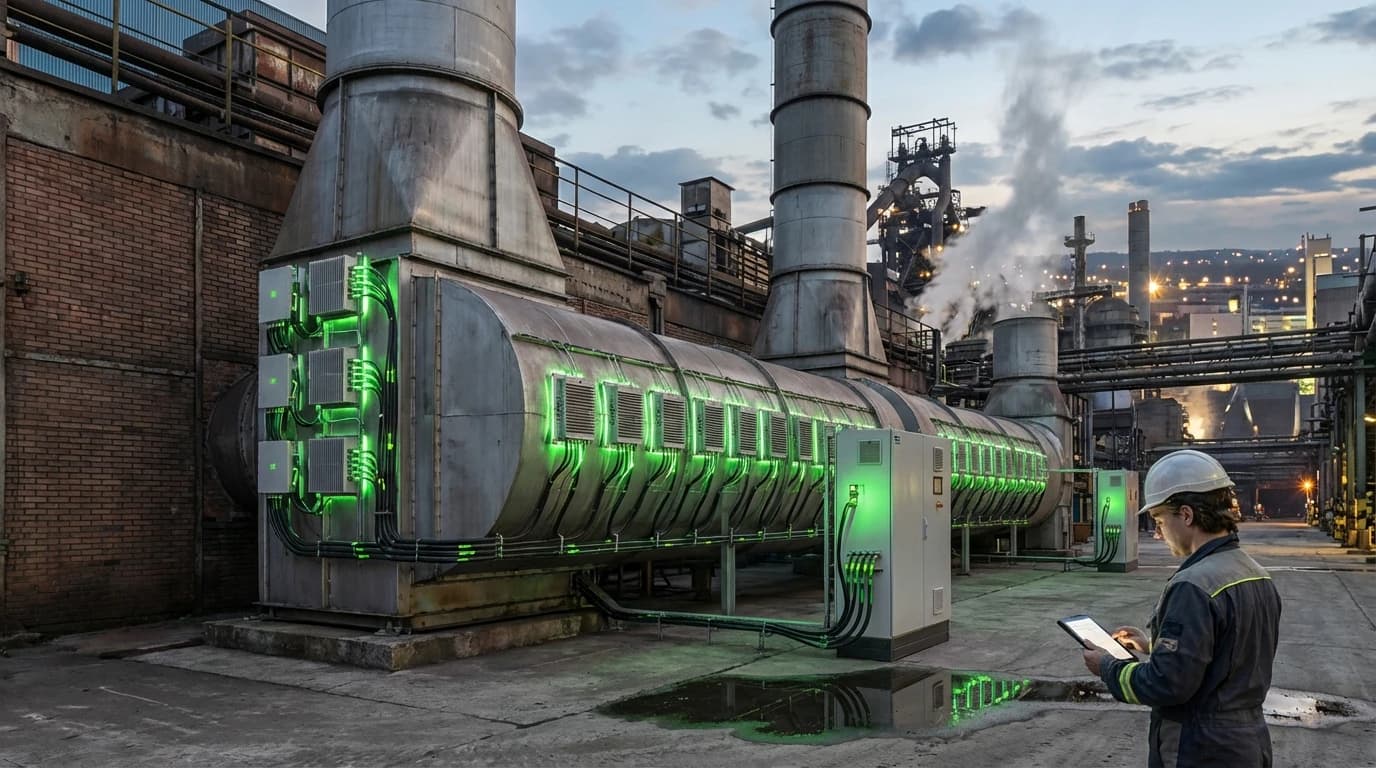
Steel mills, cement plants, and chemical facilities mount modular TEG panels on flue gas ducts to capture megawatts of waste heat that previously vented to the atmosphere. Heavy-duty vehicles and ships integrate TEGs to power onboard electronics, improving fuel economy. Data centers pair liquid-cooled TEG blocks with immersion racks to offset a portion of their power draw. Combined with thermal storage, TEGs can trickle-charge batteries or run sensors in remote infrastructure.
Technology maturity is TRL 6: costs remain high per kilowatt, and thermal interfaces must balance efficiency with minimal process disruption. Public funding through DOE, EU Horizon, and Japanese green innovation programs supports pilot lines, while carbon-pricing policies make waste-heat recovery more attractive. As material science improves and manufacturing scales, TEG systems could become standard retrofits in energy-intensive industries.
TRL
6/9Demonstrated
Impact
4/5
Investment
3/5
Category
hardware
Related Organizations
Global leader in thermal management technologies, developing TEGs for automotive waste heat recovery.
Developer
Ferrotec
90%Japan · Company
Major manufacturer of thermoelectric modules for cooling and power generation.
Developer
Fraunhofer IPM
90%Germany · Research Lab
German research institute working on caloric systems for heating and cooling.
Researcher
II-VI Marlow (Coherent)
90%United States · Company
A subsidiary of Coherent Corp, specializing in high-quality thermoelectric cooling and power generation modules.
Developer
Designs and manufactures thermoelectric modules and assemblies for medical, telecom, and industrial applications.
Developer
Swiss company developing heat flux sensors and TEGs for core body temperature monitoring and energy harvesting.
Developer
Silicon Valley materials science company using TEGs to power wearables (smartwatches) from body heat.
Developer
TEGway
South Korea · Startup
Spinoff from KAIST developing flexible thermoelectric devices (F-TED) for VR haptics and energy harvesting.
Developer
Industrial giant using thermoelectric generators via its subsidiary KELK to harvest waste heat in steel and manufacturing plants.
Deployer
Yamaha Corporation
70%Japan · Company
Conducts advanced research into thermoelectric materials for energy harvesting in automotive and sound applications.
Researcher
What was expected
Published forecasts about this technology, graded against what happened in Hindsight.
Supporting Evidence
Evidence data is not available for this technology yet.
Research this in Signals
Scan Thermoelectric Generators for yourself.
Signals turns a topic into a sourced research record you can inspect and rerun. Your first scan is free, and this one starts with Thermoelectric Generators already loaded, so edit it or scan as is.