Next-Generation Energy Storage
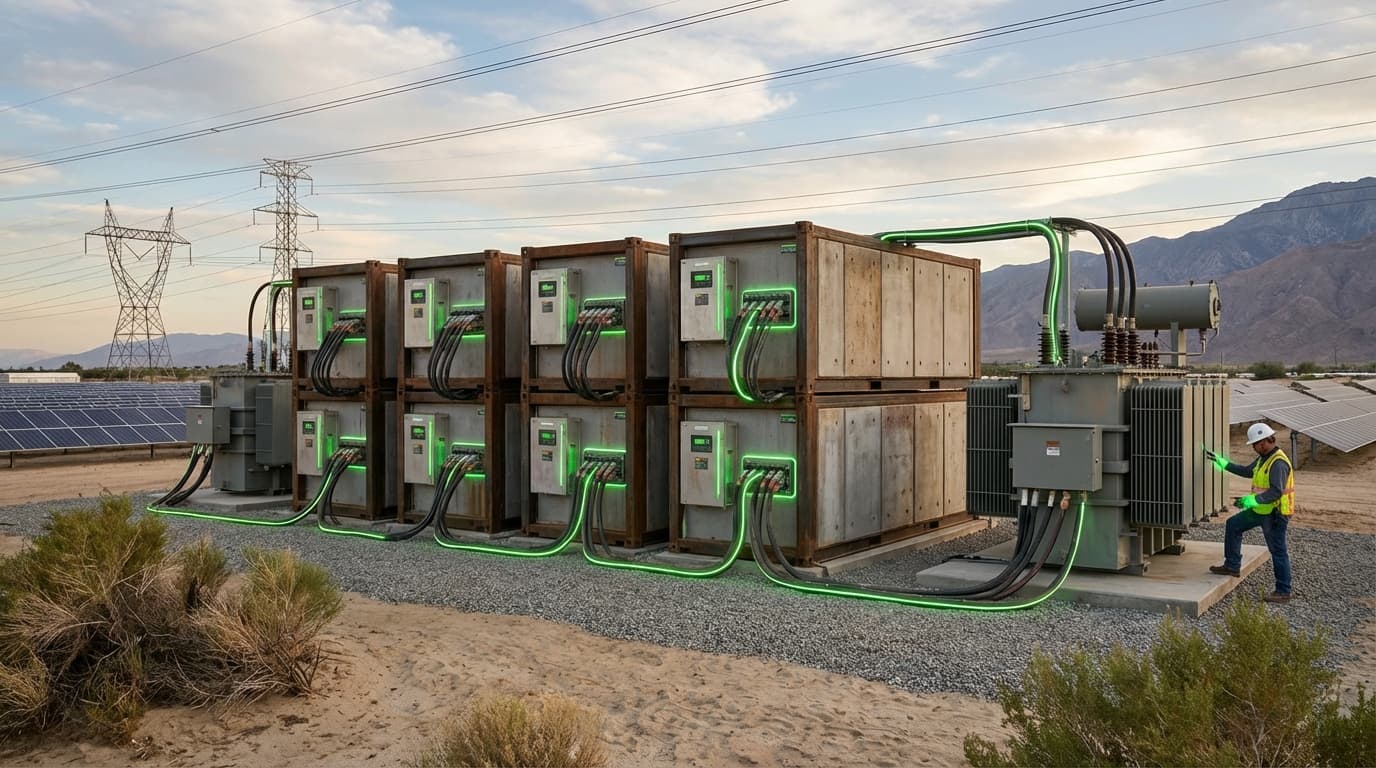
Next-generation stationary batteries marry solid-state electrolytes, lithium-metal anodes, and emerging chemistries—sodium-ion, lithium‑sulfur, zinc‑air—to deliver higher energy density and wider operating temperatures than today’s lithium-ion stacks. Ceramic or polymer electrolytes mitigate thermal runaway and enable compact designs, while sodium and zinc feedstocks reduce reliance on scarce cobalt or nickel. Modular architectures decouple energy and power, letting utilities dial storage duration from two to 100 hours without redesigning every inverter string.
These capabilities unlock new applications: pairing long-duration storage with offshore wind to guarantee 24/7 industrial supply, providing multi-day backup for data centers, and bridging seasonal gaps for island grids that want to retire diesel. Developers such as Form Energy, Ambri, CATL, and Northvolt are building gigafactories across the US, Europe, and China, often co-locating with recycling operations to guarantee low-carbon material flows. Policy support—from the US Inflation Reduction Act’s storage ITC to Europe’s Net-Zero Industry Act—creates bankable offtake and de-risks first-of-a-kind deployments.
The technology sits near TRL 5: prototypes are running at utility test sites, but scale-up challenges remain around dendrite suppression, manufacturability, and lifetime guarantees. Lenders demand third-party qualification data and performance-based warranties, while grid operators need market signals (capacity payments, resilience credits) to value multi-hour storage. As costs drop below $50–80/kWh and safety certifications mature, solid-state and metal-air systems will become foundational assets in decarbonized power systems.
Related Organizations
China · Company
Global leader in battery manufacturing, actively deploying sodium-ion batteries and condensed matter batteries for various applications.

Developing and commercializing multi-day energy storage systems using iron-air battery technology specifically for grid scaling.

Manufactures sodium-ion batteries using Prussian Blue electrode chemistry for high-power, long-life industrial and grid applications.

A battery manufacturer with a dedicated recycling program (Revolt) aiming for 50% recycled material in new cells by 2030.
United States · Company
Developer of Licerion technology, a lithium-metal battery system utilizing lithium-sulfur and other advanced chemistries.
United Kingdom · Consortium
The UK's independent institute for electrochemical energy storage research, funding projects in solid-state, sodium-ion, and lithium-sulfur.

A subsidiary of Bolloré Group producing solid-state Lithium Metal Polymer (LMP) batteries, deployed in buses and stationary storage.
United States · Company
Develops Liquid Metal batteries based on calcium and antimony electrodes for long-duration stationary energy storage.

Manufactures iron flow batteries for long-duration commercial and utility-scale energy storage applications.

Develops solid-state lithium-metal batteries with ceramic separators, primarily for EVs but with high relevance to future grid density.
Produces NAS (sodium-sulfur) batteries, a mature high-capacity battery technology used globally for grid stabilization.
Supporting Evidence
Research this in Signals
Signals turns a topic into a sourced research record you can inspect and rerun. Your first scan is free, and this one starts with Next-Generation Energy Storage already loaded, so edit it or scan as is.