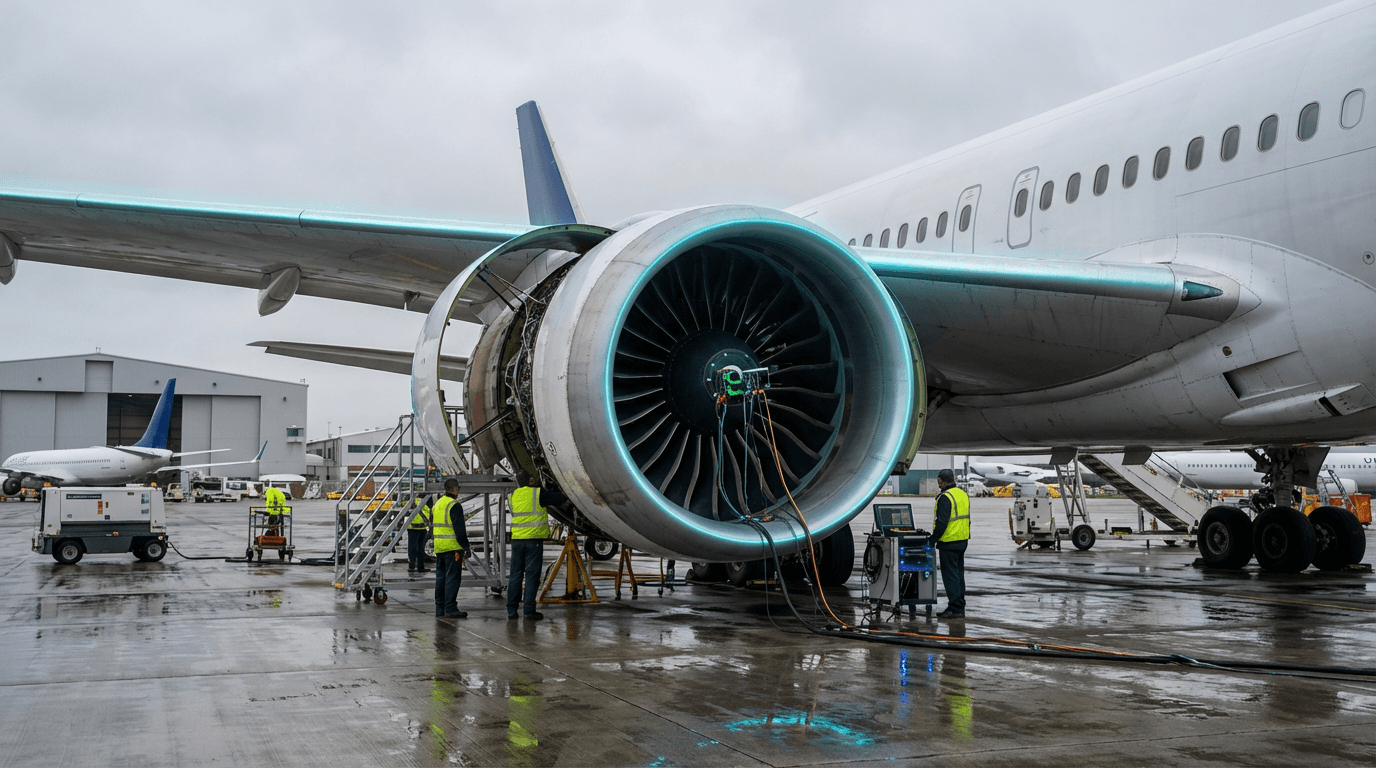
Ultra-High Bypass & Open-Rotor Engines
Ultra-high bypass and open-rotor engines represent a fundamental reimagining of turbofan architecture, pursuing dramatic gains in propulsive efficiency through larger fan diameters and unconventional blade configurations. Traditional turbofans balance core engine power with fan airflow, but modern ultra-high bypass designs push bypass ratios beyond 12:1—meaning more than twelve times as much air flows around the core as through it. Geared turbofan architectures decouple fan and turbine speeds using a reduction gearbox, allowing each to operate at optimal rotational velocities and enabling even larger, slower-turning fans that move air more efficiently. Open-rotor concepts take this logic further by eliminating the nacelle entirely, exposing counter-rotating propeller-like blades directly to the airstream. These unducted fans can achieve bypass ratios exceeding 30:1, extracting propulsive energy with minimal thermodynamic losses. The core technical challenge lies in managing the complex aerodynamics of transonic blade tips, structural loads on lightweight composite fan blades, and the acoustic signature of high-speed airflow over exposed rotating surfaces.
The aviation industry faces mounting pressure to reduce fuel consumption and carbon emissions as air traffic grows and regulatory frameworks tighten. Conventional turbofan improvements have yielded diminishing returns, with each generation delivering smaller efficiency gains. Ultra-high bypass and open-rotor engines promise step-change reductions in fuel burn per seat-kilometre—industry analyses suggest potential improvements of fifteen to twenty-five percent compared to current powerplants. However, these architectures introduce formidable engineering trade-offs. Larger fan diameters complicate airframe integration, requiring higher landing gear, revised wing mounts, or aft-fuselage installations. Open rotors generate significantly higher cabin noise and present blade containment challenges, as traditional nacelle structures no longer shield passengers or fuselage from potential blade-off events. Certification authorities demand rigorous demonstration of safety margins across diverse operating conditions—takeoff thrust, cruise efficiency, crosswind resilience, and emergency scenarios—extending development timelines and capital requirements.
Major engine manufacturers have launched technology demonstrators and ground-test programs to validate these concepts, with geared turbofans already entering commercial service on narrowbody aircraft and showing measurable fuel savings in airline operations. Open-rotor prototypes have completed wind-tunnel campaigns and limited flight testing, yet no commercial application has emerged, largely due to unresolved noise certification hurdles and airline concerns about passenger acceptance. The technology remains closely tied to broader decarbonisation strategies, as sustainable aviation fuels and hybrid-electric architectures may complement or compete with advanced turbofan designs. As regulatory pressure intensifies and fuel costs remain volatile, ultra-high bypass and open-rotor engines represent a critical pathway toward meeting mid-century emissions targets, provided manufacturers can reconcile aerodynamic performance with acoustic acceptability and operational safety standards that airlines and passengers demand.
Related Organizations

CFM International
France · Consortium
Joint venture between GE and Safran leading the 'RISE' program to develop open fan architecture.

Developing micro-reactors for nuclear thermal and nuclear electric propulsion in space.

Pratt & Whitney
United States · Company
Pioneered the Geared Turbofan (GTF) architecture, a key enabler for ultra-high bypass ratios.

GE Aerospace subsidiary responsible for the high-speed power gearbox in the RISE open fan program.

European Union public-private partnership funding the development of UltraFan and Open Fan technologies.

Developing the Flying Fuel Cell (FFC) and liquid hydrogen fuel systems.

Leads the SABERS (Solid-state Architecture Batteries for Enhanced Rechargeability and Safety) project.
GKN Aerospace
United Kingdom · Company
Leads the H2GEAR program developing liquid hydrogen fuel systems.

Developing the K-RACER, a heavy-lift unmanned helicopter for logistics.

Developing air supply systems and thermal management for hydrogen fuel cells.
Supporting Evidence
Research this in Signals
Signals turns a topic into a sourced research record you can inspect and rerun. Your first scan is free, and this one starts with Ultra-High Bypass & Open-Rotor Engines already loaded, so edit it or scan as is.