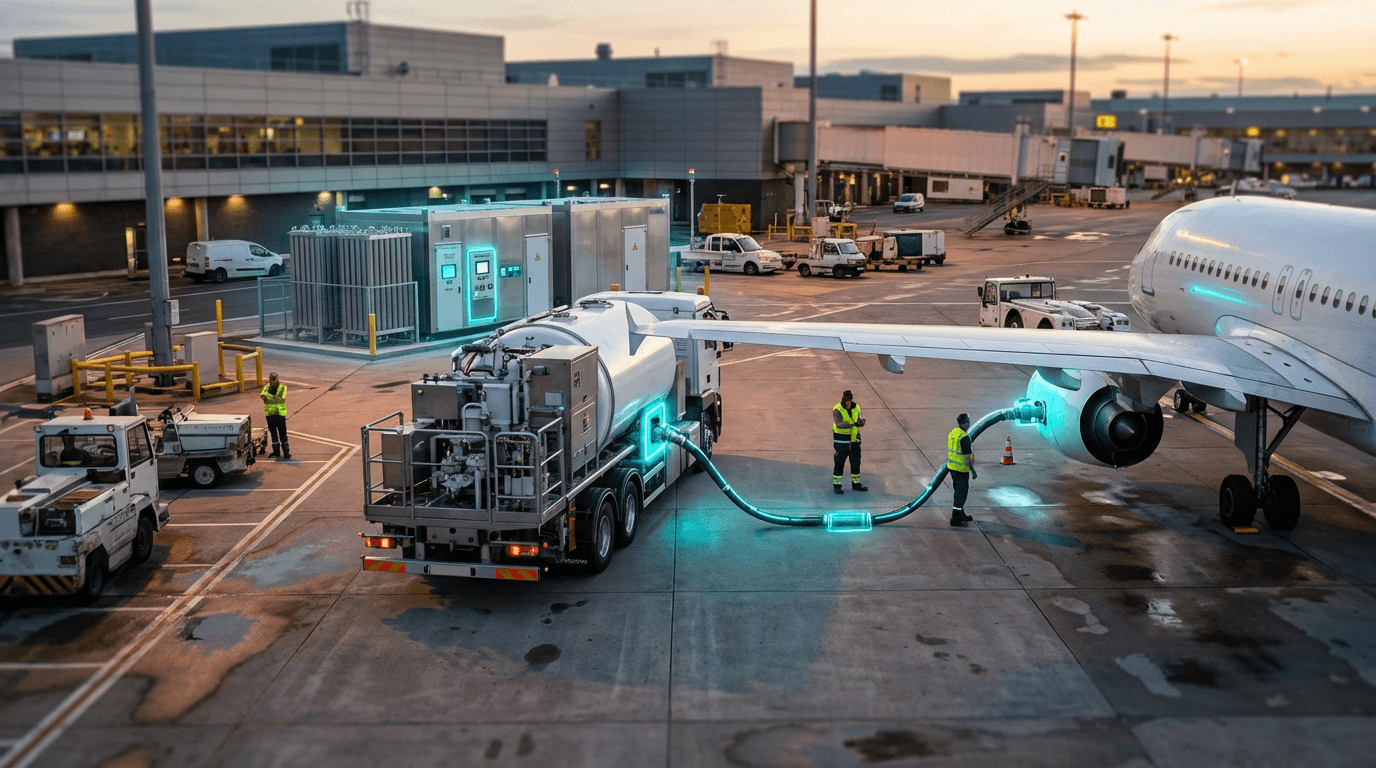
Hydrogen Airport Fueling Infrastructure
Hydrogen airport fueling infrastructure represents a comprehensive system for storing, handling, and dispensing liquid hydrogen (LH2) to aircraft at temperatures approaching -253°C. Unlike conventional jet fuel infrastructure, which operates at ambient temperatures, hydrogen systems require cryogenic storage tanks with advanced vacuum-insulated walls to minimize boil-off losses. The technical architecture encompasses multiple layers: large-scale stationary storage vessels, liquefaction plants that convert gaseous hydrogen into its liquid state, transfer pipelines with specialized materials resistant to hydrogen embrittlement, and mobile refueling trucks or hydrant systems that connect directly to aircraft. Safety systems are paramount, incorporating leak detection sensors, ventilation protocols, and emergency shutdown mechanisms, as hydrogen's wide flammability range and invisible flame characteristics demand fundamentally different hazard management approaches than kerosene-based aviation fuel.
The aviation industry faces a critical infrastructure challenge as it pursues decarbonization goals. Existing airport fuel systems, refined over decades for jet fuel, cannot simply be retrofitted for hydrogen. This creates a chicken-and-egg dilemma: airlines hesitate to invest in hydrogen aircraft without fueling infrastructure, while airports are reluctant to build expensive hydrogen facilities without committed aircraft orders. The problem extends beyond technical specifications to encompass workforce training, as ground crews, maintenance personnel, and emergency responders must develop entirely new competencies for handling cryogenic fuels. Regulatory frameworks also require substantial evolution, as current aviation fuel standards and airport design codes were not written with hydrogen in mind. Early adopters must navigate this regulatory uncertainty while managing the significant capital expenditure required for what amounts to building a parallel fuel ecosystem alongside existing infrastructure.
Several airports have initiated pilot programs to address these challenges, with facilities in Europe and Asia leading exploratory deployments. These early installations typically begin with small-scale hydrogen production and storage capabilities, often co-located with renewable energy sources like solar arrays or wind farms to produce green hydrogen through electrolysis. The integration of on-site liquefaction reduces transportation costs and energy losses, though the liquefaction process itself is energy-intensive, consuming roughly 30-40% of hydrogen's energy content. Industry analysts note that successful implementation will likely follow a hub-and-spoke model, where major airports develop comprehensive hydrogen infrastructure first, creating regional networks that gradually expand as aircraft adoption increases. This infrastructure transformation aligns with broader airport modernization trends, including electrification of ground support equipment and integration of distributed energy resources, positioning hydrogen facilities as components of larger smart airport ecosystems rather than isolated fuel systems.
Related Organizations

World leader in gases, technologies, and services for industry and health.

Operator of Paris airports, actively building a vertiport network in Paris for the 2024 Olympics and beyond.

Chart Industries
United States · Company
Global manufacturer of cryogenic equipment, including liquid hydrogen tanks for aviation.

Developing the K-RACER, a heavy-lift unmanned helicopter for logistics.

Global airport operator deploying hydrogen gas stations at Lyon-Saint Exupéry and other locations.

GKN Aerospace
United Kingdom · Company
Leads the H2GEAR program developing liquid hydrogen fuel systems.

A provider of turnkey hydrogen solutions, including electrolyzers, fuel cells, and liquid hydrogen delivery systems.

Leader in hydrogen-electric aviation, developing fuel cell powertrains for regional aircraft.

Focuses on liquid hydrogen infrastructure solutions, including controlled storage and transfer for aviation.
Supporting Evidence
Research this in Signals
Signals turns a topic into a sourced research record you can inspect and rerun. Your first scan is free, and this one starts with Hydrogen Airport Fueling Infrastructure already loaded, so edit it or scan as is.