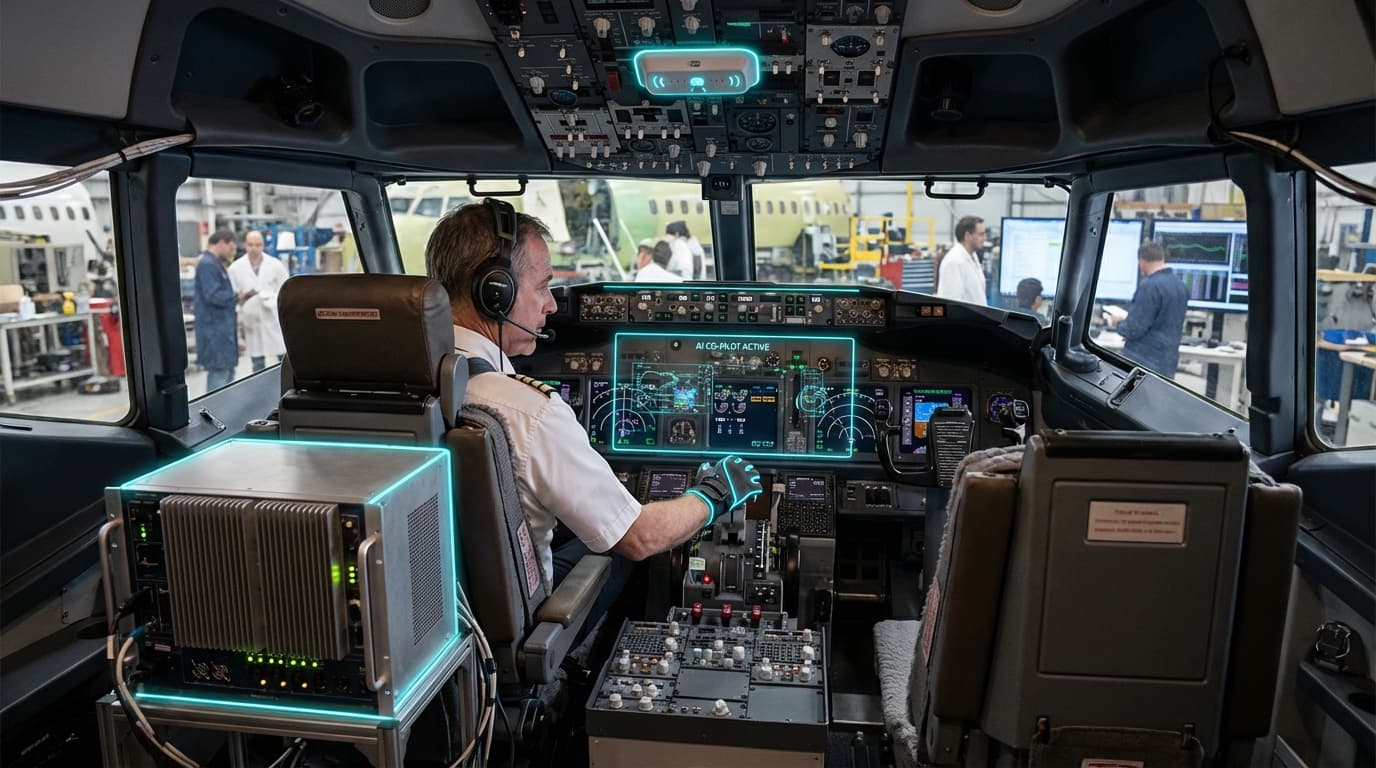
Single-Pilot Operations (SPO) Frameworks
Single-Pilot Operations (SPO) frameworks represent a fundamental reimagining of the traditional two-pilot cockpit model that has defined commercial aviation for decades. These systems integrate advanced automation, artificial intelligence, and ground-based support to enable a lone pilot to safely operate aircraft that currently require a full flight crew. At the technical core, SPO frameworks employ sophisticated human-machine teaming architectures that distribute traditional co-pilot responsibilities across multiple layers: onboard AI systems handle routine monitoring and procedural tasks, while ground-based operators provide strategic oversight and intervention capabilities during critical phases of flight. The technology stack includes real-time pilot state monitoring through biometric sensors and eye-tracking systems to detect fatigue or incapacitation, automated flight envelope protection that can assume control during emergencies, and high-bandwidth satellite communication links that maintain continuous connectivity between the aircraft and ground support centers. Machine learning algorithms process vast streams of flight data to anticipate potential issues and provide decision support, while redundant automation systems ensure that critical functions remain available even if individual components fail.
The aviation industry faces mounting economic pressures from pilot shortages, rising labor costs, and the need to improve operational efficiency on routes where full crew utilization remains challenging. SPO frameworks directly address these constraints by reducing crew requirements while maintaining or potentially enhancing safety margins through the elimination of human-to-human coordination errors and the introduction of tireless automated monitoring systems. For cargo operations, where passenger safety concerns are absent and operational flexibility is paramount, the business case proves particularly compelling—airlines could optimize crew scheduling, reduce overnight accommodation costs, and operate smaller aircraft economically on thin routes. The technology also tackles the persistent challenge of pilot incapacitation, which currently relies on the remaining crew member's ability to safely land the aircraft. SPO systems can automatically execute emergency procedures, communicate with air traffic control, and guide the aircraft to the nearest suitable airport without human intervention, potentially providing superior outcomes compared to scenarios where a single remaining pilot must manage both flying duties and an in-flight medical emergency.
Current regulatory frameworks remain the primary barrier to widespread SPO adoption, as aviation authorities require extensive evidence that single-pilot configurations with AI support can match or exceed the safety record of conventional two-pilot operations. Several major aircraft manufacturers and airlines have initiated research programs exploring SPO concepts, with cargo carriers showing particular interest in near-term implementation. Pilot programs have focused on long-haul cruise phases where automation already handles most flying tasks, gradually expanding the operational envelope as systems mature and regulators gain confidence. The technology aligns with broader industry trends toward increased automation, predictive maintenance, and data-driven operations, while also serving as a crucial stepping stone toward fully autonomous flight systems. As certification pathways become clearer and the technology demonstrates consistent reliability across diverse operational scenarios, SPO frameworks are positioned to reshape crew resource management across the aviation sector, beginning with cargo operations before potentially extending to commercial passenger flights on specific routes and aircraft types where the safety case can be conclusively established.
Related Organizations
Partner in the EuroQCI initiative, working on the space segment of the European quantum communication infrastructure.

Regulatory body defining the 'U-space' regulatory framework for drone integration in Europe.

Developing the 'Merlin Pilot', an autonomous flight system designed to enable reduced crew and eventually pilot-less operations for cargo and commercial aircraft.

Leads the SABERS (Solid-state Architecture Batteries for Enhanced Rechargeability and Safety) project.

Developing automation systems to enable remote operation of existing cargo aircraft (e.g., Cessna Caravan).

Collins Aerospace
United States · Company
A major aerospace and defense contractor, a subsidiary of RTX Corporation.

A Swiss startup developing safety-critical AI systems for avionics and actively collaborating with regulators to define certification standards.

Conducts extensive research on Hybrid Laminar Flow Control (HLFC) and suction systems.

A global leader in industrial technology and aerospace manufacturing.

A major European satellite manufacturer leading the ASCEND feasibility study.

International airline partnering with Airbus to test and validate reduced crew operations for long-haul flights.

FedEx
United States · Company
Global logistics company actively exploring single-pilot and autonomous cargo operations to address pilot shortages.
Supporting Evidence
Research this in Signals
Signals turns a topic into a sourced research record you can inspect and rerun. Your first scan is free, and this one starts with Single-Pilot Operations (SPO) Frameworks already loaded, so edit it or scan as is.