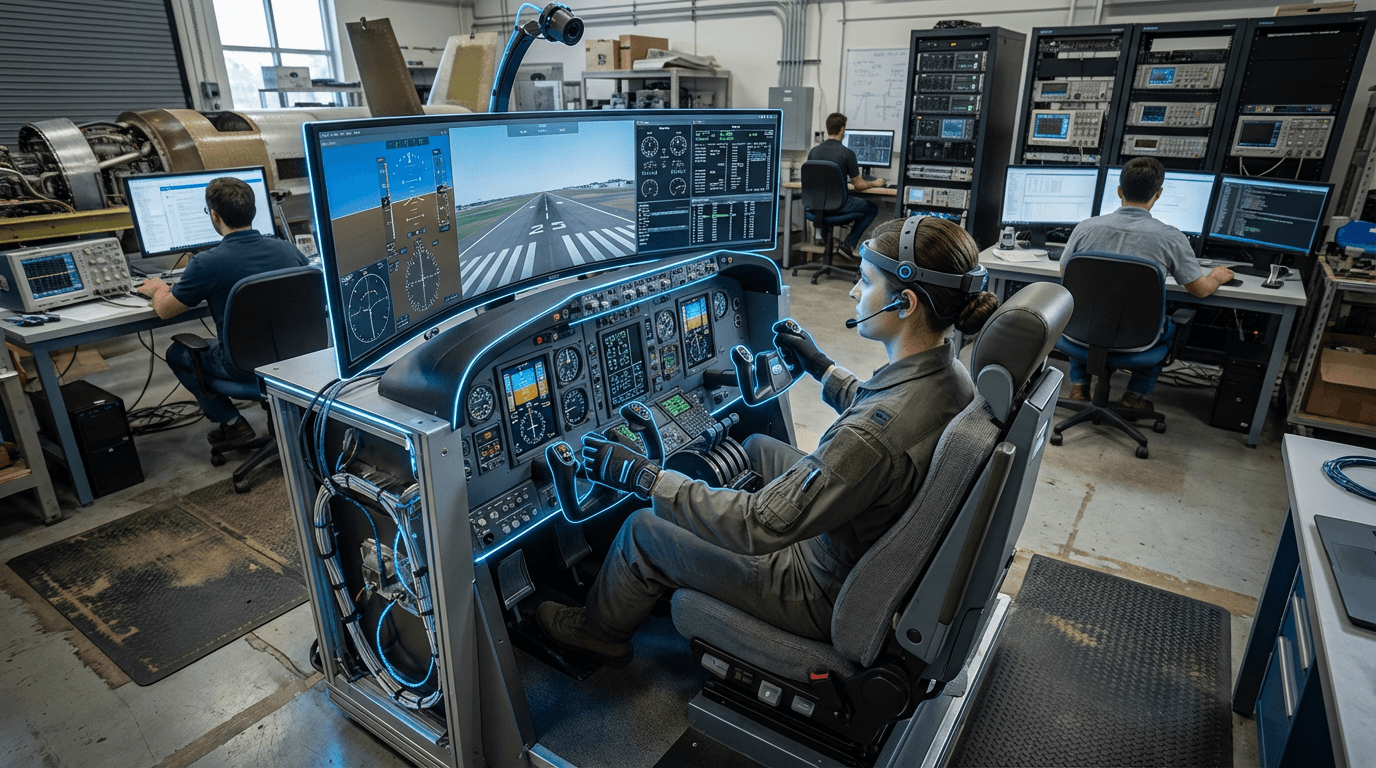
Automation Human Factors & Skill Degradation
Aviation automation has transformed cockpit operations over the past several decades, shifting pilots from active controllers to system supervisors in many flight regimes. Modern flight management systems, autopilots, and autothrottle mechanisms handle routine tasks with precision, reducing crew workload during normal operations and enabling safer, more fuel-efficient flight profiles. However, this shift introduces a paradox: as automation handles more tasks more reliably, pilots exercise manual flying skills less frequently, and their proficiency in hand-flying the aircraft can atrophy over time. Simultaneously, the complexity of automated systems creates new cognitive demands. Mode confusion—where pilots misunderstand which automation mode is active or what the system will do next—has been implicated in numerous incidents. When automation behaves unexpectedly or fails during critical phases of flight, crews must rapidly diagnose the situation, disengage or reconfigure systems, and revert to manual control, often under high stress and time pressure. The challenge lies in designing automation that supports rather than supplants human skill, maintaining transparency about system state and intent, and ensuring that pilots retain the proficiency and situational awareness needed to intervene effectively when automation reaches its limits.
The aviation industry faces a fundamental tension between leveraging automation's reliability and preserving human competence as the ultimate safety backstop. Regulatory bodies and airlines have responded with initiatives to address skill degradation, including revised training syllabi that emphasize manual handling practice, upset recovery training, and scenario-based exercises that simulate automation failures or degraded modes. Research suggests that pilots who fly highly automated aircraft may experience fewer opportunities to practice energy management, flight path control, and other foundational skills, particularly in airline operations where standard procedures minimize manual flying. This erosion of tactile familiarity with the aircraft's handling characteristics can manifest during rare but critical events—such as sensor failures, unexpected weather, or system malfunctions—when pilots must take over manually. Beyond individual skill, the design of automation interfaces plays a crucial role: systems that provide clear feedback, intuitive mode transitions, and graceful degradation pathways help pilots maintain the mental model necessary for effective supervision and intervention. The goal is not to eliminate automation but to calibrate the human-machine partnership so that technology amplifies rather than obscures pilot judgment and capability.
Current industry efforts focus on balancing automation benefits with sustained manual proficiency through a combination of training innovation, regulatory oversight, and human-centered design principles. Airlines are incorporating more frequent manual flying segments into routine operations, and simulator programs now dedicate significant time to practicing transitions from automated to manual control under various failure scenarios. Manufacturers are refining cockpit interfaces to improve mode awareness, using clearer annunciations, simplified logic, and design patterns that reduce the cognitive burden of monitoring complex automation states. As the industry moves toward even higher levels of automation—including single-pilot operations and eventually autonomous flight in certain contexts—the lessons learned from managing skill degradation and mode confusion will become even more critical. The trajectory points toward automation architectures that are not only capable but also transparent, predictable, and designed to keep human operators engaged and proficient, ensuring that when technology falters or encounters the unexpected, skilled human judgment remains ready to intervene. This ongoing evolution reflects a broader recognition that the safest aviation systems are those that thoughtfully integrate human strengths and limitations into every layer of design and operation.
Related Organizations

A British postgraduate public research university specializing in science, engineering, design, technology, and management.

An international non-profit organization exclusively concerned with research, education, advocacy, and publishing in the field of aviation safety.

A global leader in simulation and training for civil aviation, defense, and healthcare.

Conducts extensive research on Hybrid Laminar Flow Control (HLFC) and suction systems.

The world's largest fully accredited university specializing in aviation and aerospace.

Leading research institute for thermoplastic composite manufacturing and repair.

Air Line Pilots Association, International (ALPA)
United States · Nonprofit
The largest airline pilot union in the world.

A public land-grant research university in Columbus, Ohio.

Multinational technology company known for GPS and wearable technology.

A global leader in industrial technology and aerospace manufacturing.
Supporting Evidence
Research this in Signals
Signals turns a topic into a sourced research record you can inspect and rerun. Your first scan is free, and this one starts with Automation Human Factors & Skill Degradation already loaded, so edit it or scan as is.