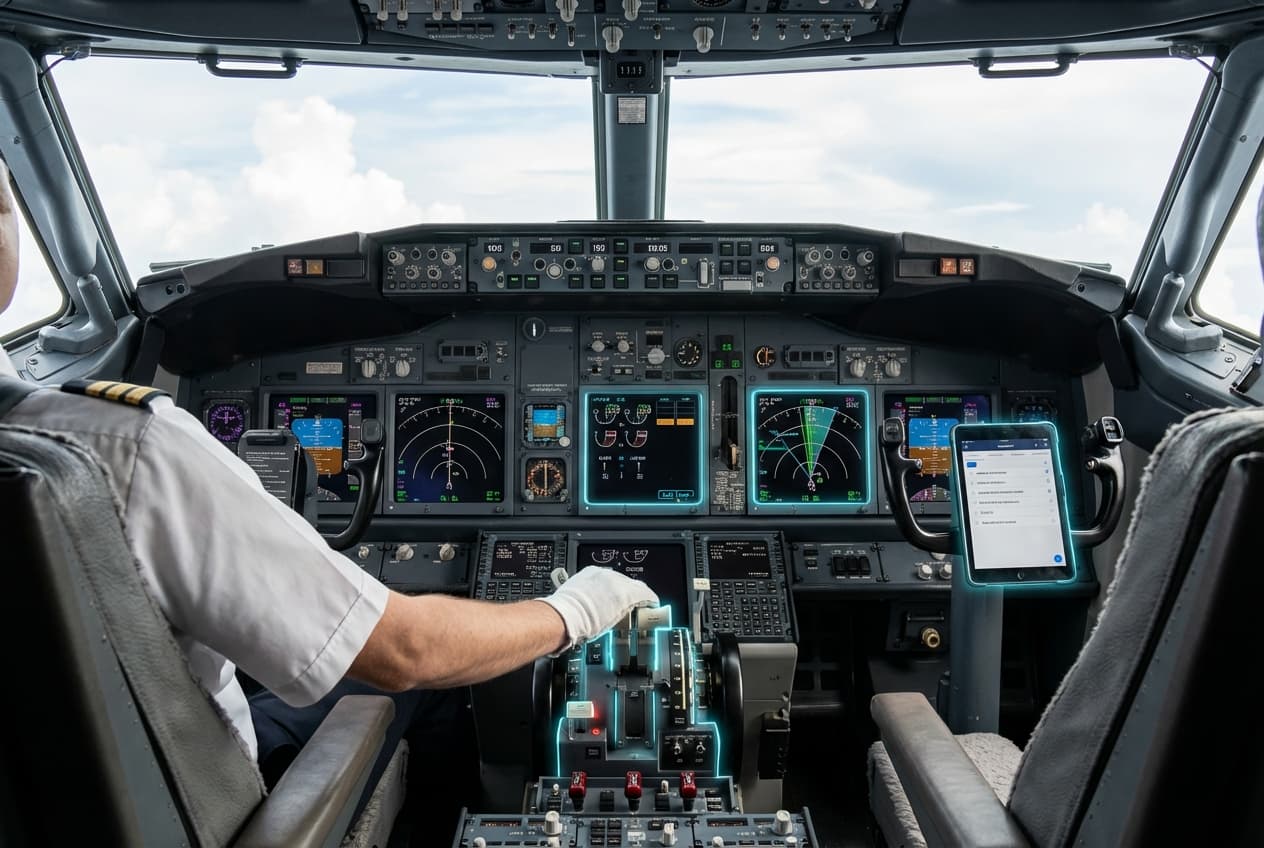
AI-Assisted Flight Deck Decision Support
AI-assisted flight deck decision support represents a new generation of cockpit intelligence that synthesizes real-time aircraft state data, weather conditions, performance parameters, and operational procedures to provide pilots with actionable guidance during both routine and abnormal flight situations. Unlike traditional glass cockpit systems that primarily display information, these AI-driven tools actively interpret complex data streams from multiple sources—flight management systems, engine sensors, navigation databases, air traffic control feeds, and meteorological services—to generate prioritized recommendations. The underlying technology typically employs machine learning models trained on vast libraries of flight data, incident reports, and simulator scenarios, combined with rule-based expert systems that encode decades of aviation best practices. These systems can recognize patterns that might escape human attention during high-workload phases of flight, such as identifying subtle energy state deviations during approach or suggesting optimal diversion airports when multiple system failures occur simultaneously.
The aviation industry faces mounting pressure to maintain safety margins even as airspace becomes more congested, weather patterns grow less predictable, and aircraft systems increase in complexity. Traditional crew resource management relies heavily on memorized procedures and paper or electronic checklists, which can become overwhelming when multiple abnormal conditions cascade or when time-critical decisions must be made with incomplete information. AI decision support addresses these challenges by serving as an intelligent co-pilot that never experiences fatigue, can instantly cross-reference thousands of procedural documents, and maintains situational awareness across all aircraft systems simultaneously. This technology promises to reduce pilot workload during critical phases, minimize the risk of checklist errors or omissions, and provide decision options that account for factors human crews might not immediately consider—such as fuel burn implications of different holding patterns or the structural stress consequences of various emergency descent profiles.
Early implementations of these systems are appearing in both commercial aviation and military contexts, with several major aircraft manufacturers integrating basic decision-support features into next-generation flight decks. Research programs are exploring how to present AI recommendations in ways that maintain appropriate pilot authority and skepticism, ensuring crews remain engaged rather than becoming passive monitors. The critical challenge facing widespread adoption is establishing the reliability and explainability standards necessary for certification authorities to approve these systems for safety-critical roles. Industry analysts note that the path forward requires solving the "black box" problem—ensuring that AI recommendations can be audited and understood—and preventing automation complacency, where crews might over-rely on suggestions without maintaining independent situational awareness. As these systems mature, they are expected to become integral to managing increasingly autonomous aircraft operations, serving as the bridge between today's human-piloted flights and tomorrow's more automated aviation ecosystem.
Related Organizations
Partner in the EuroQCI initiative, working on the space segment of the European quantum communication infrastructure.

A Swiss startup developing safety-critical AI systems for avionics and actively collaborating with regulators to define certification standards.

A major European satellite manufacturer leading the ASCEND feasibility study.

The innovation center of Airbus in Silicon Valley, focusing on Wayfinder and autonomy projects.

Collins Aerospace
United States · Company
A major aerospace and defense contractor, a subsidiary of RTX Corporation.

A global leader in industrial technology and aerospace manufacturing.

Developing the 'Merlin Pilot', an autonomous flight system designed to enable reduced crew and eventually pilot-less operations for cargo and commercial aircraft.

Multinational technology company known for GPS and wearable technology.

Subsidiary of Elbit Systems developing enhanced flight vision systems (EFVS) and synthetic vision.
IT subsidiary of Lufthansa Group developing 'NetLine/Ops ++' which includes AI-driven disruption management.
Supporting Evidence
Research this in Signals
Signals turns a topic into a sourced research record you can inspect and rerun. Your first scan is free, and this one starts with AI-Assisted Flight Deck Decision Support already loaded, so edit it or scan as is.