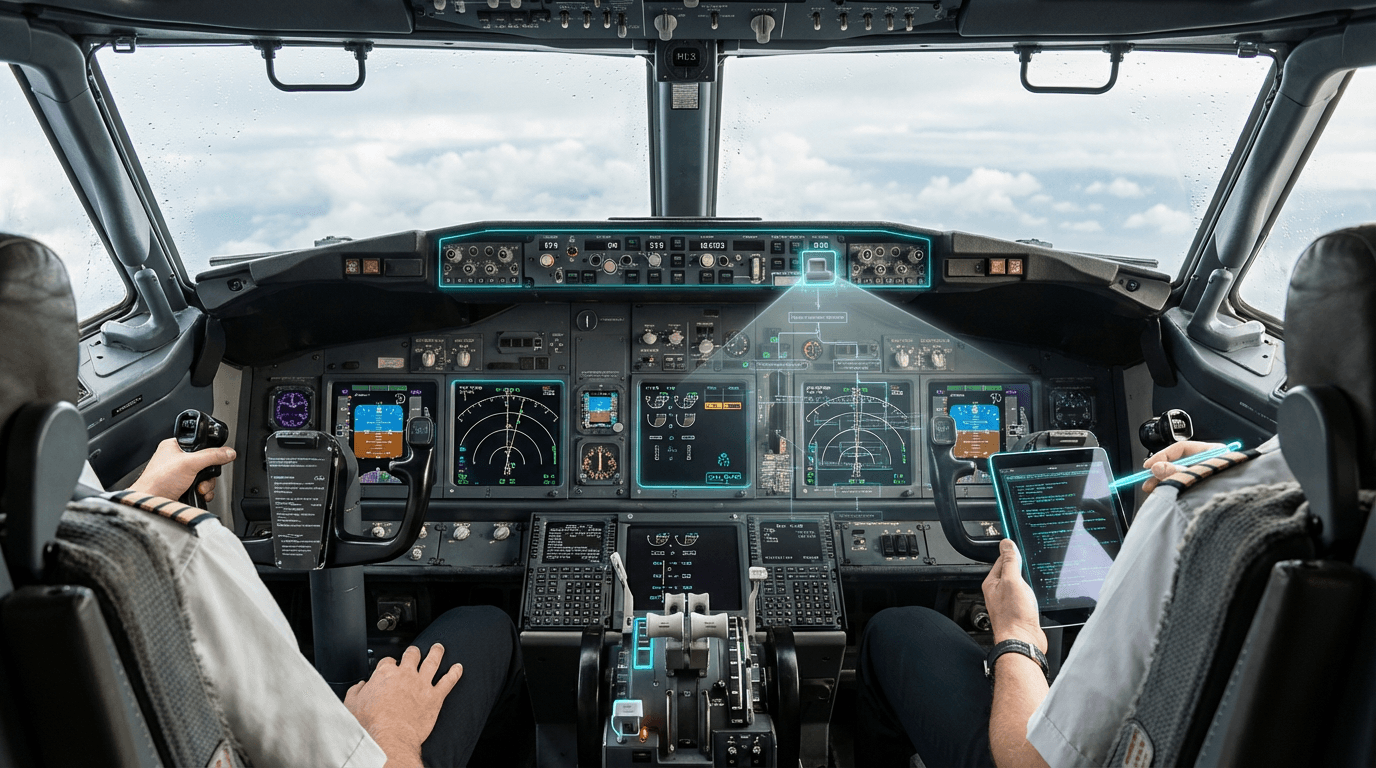
AI Pilot / Autonomy Certification Frameworks
The certification of autonomous systems in aviation represents a fundamental departure from traditional airworthiness standards, which were developed for deterministic systems with predictable failure modes. Unlike conventional autopilots that follow explicit programmed rules, AI-based flight systems employ machine learning models trained on vast datasets, introducing statistical uncertainty into safety-critical decisions. These frameworks must establish rigorous evidence standards for how autonomous systems perceive their environment, make decisions, and respond to conditions outside their training data. The core technical challenge lies in validating systems that cannot be exhaustively tested in advance—neural networks may exhibit emergent behaviors, and their decision boundaries are often opaque even to their designers. Certification frameworks therefore focus on defining operational design domains, specifying the precise conditions under which autonomous functions can safely operate, and establishing monitoring requirements to detect when systems approach the edges of their validated performance envelope.
The aviation industry faces a critical accountability gap as automation advances beyond traditional pilot assistance. Current certification processes, designed for systems where human pilots retain ultimate authority, struggle to address scenarios where AI systems make time-critical decisions with minimal human oversight. These frameworks must delineate clear chains of responsibility when autonomous systems fail or make unexpected choices, distinguishing between manufacturer liability for system design, operator responsibility for deployment decisions, and regulatory oversight of safety standards. A persistent challenge is the temptation to anthropomorphize these systems, describing them as "thinking" or "deciding" in ways that obscure their actual capabilities and limitations. Effective frameworks instead specify precisely which tasks are automated—such as collision avoidance maneuvers, approach stabilization, or system degradation management—and under what conditions human intervention is required. This precision is essential for establishing appropriate training requirements for pilots who must supervise these systems and for defining the boundaries of acceptable automation.
Early regulatory efforts, including working groups within aviation authorities worldwide, are developing tiered certification approaches that scale requirements based on the level of autonomy and criticality of automated functions. These frameworks typically mandate extensive documentation of training datasets, including their sources, limitations, and potential biases, alongside evidence that systems can recognize and safely handle corner cases not explicitly represented in training data. Fail-safe behaviors receive particular scrutiny, with requirements that autonomous systems degrade gracefully and transfer control to human operators with sufficient time and context for effective intervention. The frameworks also address ongoing monitoring obligations, requiring operators to track system performance in real-world conditions and report anomalies that might indicate dataset drift or emerging failure modes. As aviation automation continues to evolve, these certification standards will likely influence autonomous system regulation across other safety-critical domains, establishing precedents for how societies validate and deploy AI systems where failures carry catastrophic consequences.
Related Organizations
Regulatory body defining the 'U-space' regulatory framework for drone integration in Europe.
US transportation agency regulating civil aviation and commercial space transportation.

A Swiss startup developing safety-critical AI systems for avionics and actively collaborating with regulators to define certification standards.

The European leader in the development of worldwide recognized industry standards for aviation.
Private, not-for-profit association that develops consensus-based standards for aviation modernization.

Developing the 'Merlin Pilot', an autonomous flight system designed to enable reduced crew and eventually pilot-less operations for cargo and commercial aircraft.
Developing automation systems to enable remote operation of existing cargo aircraft (e.g., Cessna Caravan).
A wholly-owned subsidiary of Boeing developing self-flying (autonomous) eVTOL air taxis.

Designs and operates missions like Parker Solar Probe and STEREO that provide fundamental space weather data.
Leads the SABERS (Solid-state Architecture Batteries for Enhanced Rechargeability and Safety) project.

A major European satellite manufacturer leading the ASCEND feasibility study.

Collins Aerospace
United States · Company
A major aerospace and defense contractor, a subsidiary of RTX Corporation.
Supporting Evidence
Research this in Signals
Signals turns a topic into a sourced research record you can inspect and rerun. Your first scan is free, and this one starts with AI Pilot / Autonomy Certification Frameworks already loaded, so edit it or scan as is.