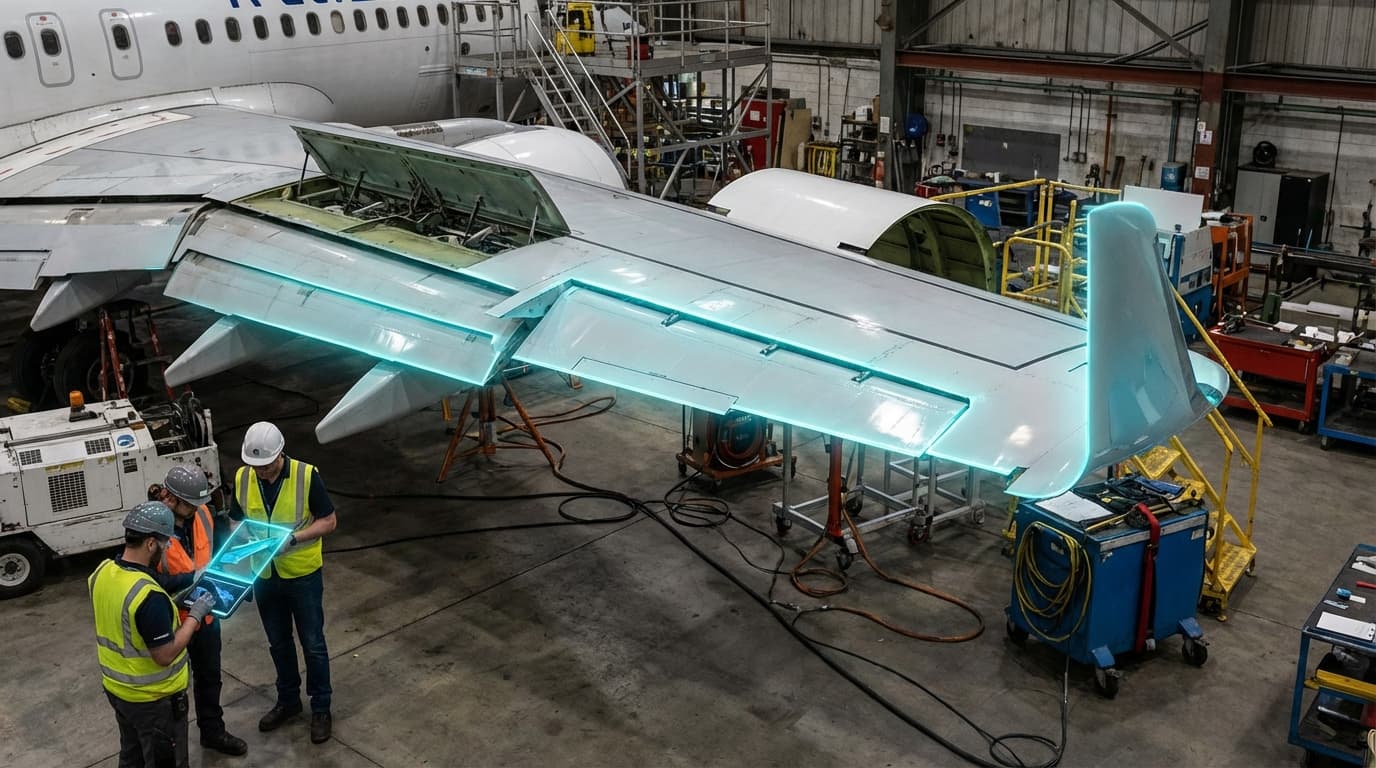
Morphing Wing Structures
Morphing wing structures represent a fundamental departure from conventional fixed-geometry aircraft design, employing advanced materials and actuation systems to enable continuous, real-time shape adaptation during flight. Unlike traditional wings that maintain a static profile optimized for a narrow range of conditions, these adaptive structures integrate compliant materials—such as shape-memory alloys, piezoelectric composites, and flexible skin panels—with distributed actuator networks to modify wing geometry seamlessly. The underlying principle draws from biomimicry, particularly the flight mechanics of birds and bats, which naturally adjust wing camber, twist, and span to suit varying aerodynamic demands. Key technical mechanisms include variable camber systems that alter the wing's curvature, span morphing that extends or retracts wing length, and twist morphing that adjusts the angle of attack along the wing's span. These transformations are controlled through sophisticated sensor networks and flight control algorithms that continuously monitor flight conditions and optimize wing configuration in milliseconds.
The aviation industry faces persistent challenges in balancing competing performance requirements across different flight phases, as conventional aircraft must compromise between takeoff efficiency, cruise optimization, and landing safety. Traditional solutions like flaps, slats, and ailerons introduce mechanical complexity, weight penalties, and aerodynamic discontinuities that generate drag and noise. Morphing wing technology addresses these limitations by eliminating discrete control surfaces in favor of smooth, continuous shape changes that maintain aerodynamic cleanliness throughout the flight envelope. This capability enables significant fuel savings—research suggests potential reductions of 5-12% in cruise conditions—while simultaneously reducing acoustic signatures during takeoff and landing, a critical consideration for urban airports facing noise restrictions. Beyond efficiency gains, morphing structures enable new operational capabilities, including enhanced gust response for passenger comfort, improved maneuverability for military applications, and the potential for mission-adaptive aircraft that reconfigure for different roles without physical modifications.
Early deployments of morphing wing technology have progressed from laboratory demonstrations to flight testing on both unmanned aerial vehicles and crewed aircraft, with aerospace manufacturers exploring integration into next-generation commercial and military platforms. NASA's Adaptive Compliant Trailing Edge project successfully demonstrated seamless flap replacement on a Gulfstream business jet, while defense programs have tested morphing structures for improved mission flexibility. The technology aligns with broader industry trends toward more electric aircraft architectures, as modern actuator systems increasingly rely on electrical rather than hydraulic power, and with the push for sustainable aviation through drag reduction and fuel efficiency. As materials science advances and manufacturing techniques like additive manufacturing enable more complex geometries, morphing wing structures are positioned to transition from niche applications to mainstream adoption, potentially becoming standard features in aircraft designed for the 2030s and beyond.
Related Organizations

Pioneers of compliant aero-structures, specifically the FlexFoil variable geometry control surface technology tested by NASA.

Leads the SABERS (Solid-state Architecture Batteries for Enhanced Rechargeability and Safety) project.

Partner in the EuroQCI initiative, working on the space segment of the European quantum communication infrastructure.

Conducts extensive research on Hybrid Laminar Flow Control (HLFC) and suction systems.

An interdisciplinary initiative at MIT that originated the concept of the Fab Lab.

Research institute specializing in shaping and functional materials, including shape-memory alloys for aerospace.

A leading technical university known for research into self-healing asphalt using steel wool and induction heating.

Public research university known for the Bristol Interaction Group.

Italian research body conducting projects on adaptive structures and morphing winglets.

Japanese precision equipment manufacturer developing flight control actuators.
Supporting Evidence
Research this in Signals
Signals turns a topic into a sourced research record you can inspect and rerun. Your first scan is free, and this one starts with Morphing Wing Structures already loaded, so edit it or scan as is.