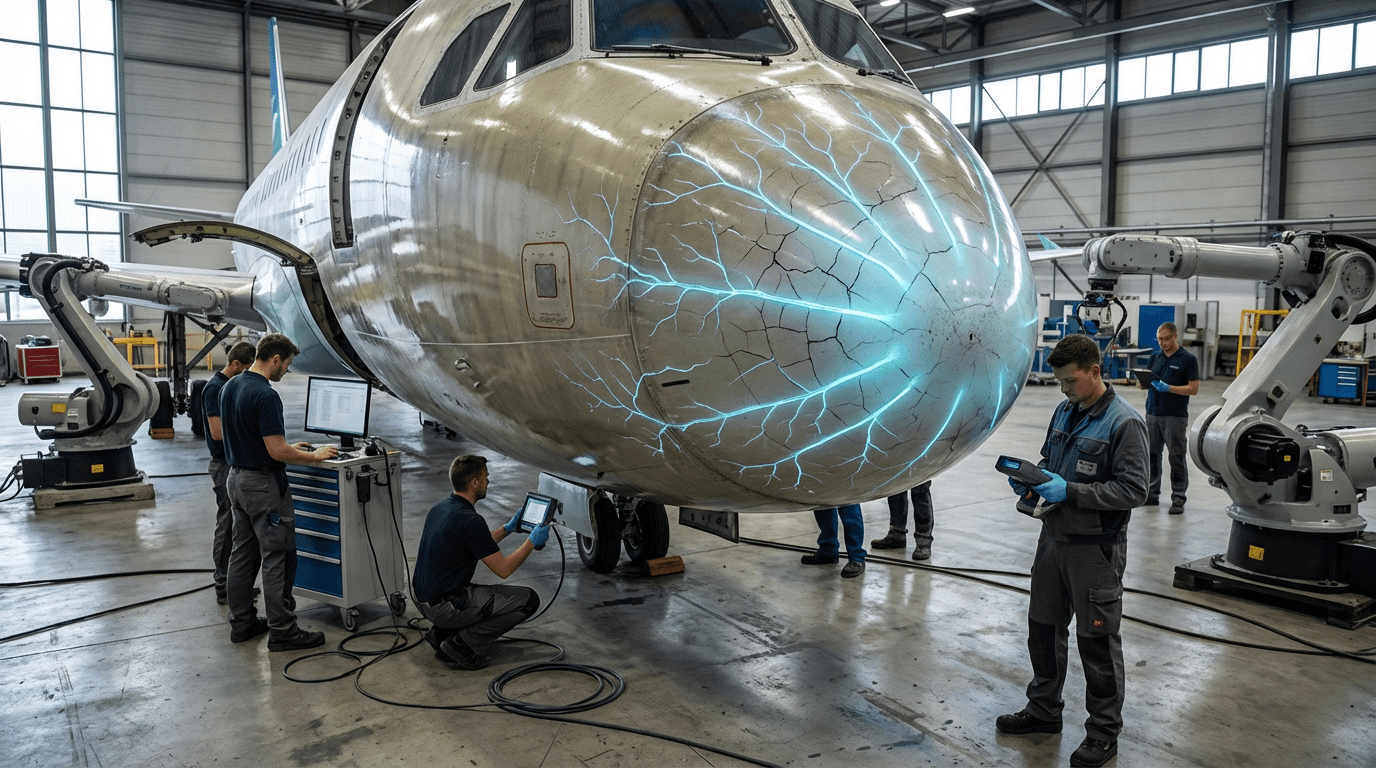
Self-Healing Fuselage Materials
Self-healing fuselage materials represent a paradigm shift in aerospace structural design, drawing inspiration from biological systems that naturally repair damage. These advanced composites incorporate embedded healing mechanisms—typically either micro-capsules containing liquid healing agents or vascular networks filled with restorative compounds—distributed throughout the material matrix. When micro-cracks form due to fatigue, impact, or environmental stress, these capsules rupture or the vascular channels release their contents directly into the damaged area. The healing agents then polymerize through chemical reactions triggered by contact with a catalyst also embedded in the composite, effectively "sealing" the crack before it can propagate. Some systems employ dual-capsule approaches where two reactive components mix only when damage occurs, while others use thermoplastic healing agents that can be activated multiple times through heating. The underlying composite materials themselves often consist of carbon fiber or glass fiber reinforced polymers, chosen for their high strength-to-weight ratios critical in aerospace applications.
The aviation industry faces persistent challenges with structural fatigue and damage accumulation in aircraft fuselages, which currently require extensive inspection regimes and costly maintenance interventions. Traditional composite materials, while lighter than metals, are particularly vulnerable to barely visible impact damage and internal delamination that can compromise structural integrity without obvious external signs. Self-healing materials address these concerns by providing autonomous damage mitigation at the microscopic level, potentially extending airframe service life by 20-30% according to early research. This capability directly tackles the economic burden of scheduled maintenance downtime and unscheduled repairs, which represent significant operational costs for airlines. Beyond cost savings, these materials offer enhanced safety margins by preventing the progression of small defects into catastrophic failures—a critical consideration given that fatigue cracks are implicated in numerous historical aircraft incidents. The technology also enables new design philosophies where structures can tolerate minor damage without immediate intervention, reducing the conservative safety factors that currently add weight to aircraft designs.
Research institutions and aerospace manufacturers have demonstrated the viability of self-healing composites through laboratory testing and small-scale component trials, though full-scale commercial deployment remains in development. Early applications focus on non-critical secondary structures and interior components where certification requirements are less stringent, allowing engineers to validate healing performance under real operational conditions. The technology aligns with broader industry movements toward condition-based maintenance and structural health monitoring systems, where embedded sensors could detect damage and confirm autonomous healing has occurred. Challenges remain in scaling production, ensuring healing effectiveness across the wide temperature ranges aircraft experience, and meeting rigorous aviation certification standards that demand predictable, verifiable performance over decades of service. As material science advances and regulatory frameworks adapt to accommodate these innovative materials, self-healing composites are positioned to become integral to next-generation aircraft design, contributing to the industry's goals of improved sustainability through longer-lasting structures and reduced material waste from premature component replacement.
Related Organizations

Provides healable and sustainable composite materials.

Home to artist-academic Ben Grosser, creator of 'Go Rando', a tool that obfuscates Facebook emotional profiling by randomizing reactions.

A leading technical university known for research into self-healing asphalt using steel wool and induction heating.

Public research university known for the Bristol Interaction Group.
Cardiff University
United Kingdom · University
A public research university in Cardiff, Wales.

Leads the SABERS (Solid-state Architecture Batteries for Enhanced Rechargeability and Safety) project.

Home to the Brubotics research group, pioneers in self-healing polymers for soft robotics.

Japanese chemical giant producing advanced textiles, including nanofiber-based nonwovens for medical and industrial use.

Supporting Evidence
Research this in Signals
Signals turns a topic into a sourced research record you can inspect and rerun. Your first scan is free, and this one starts with Self-Healing Fuselage Materials already loaded, so edit it or scan as is.