Global Airspace Equity & Developing World Access
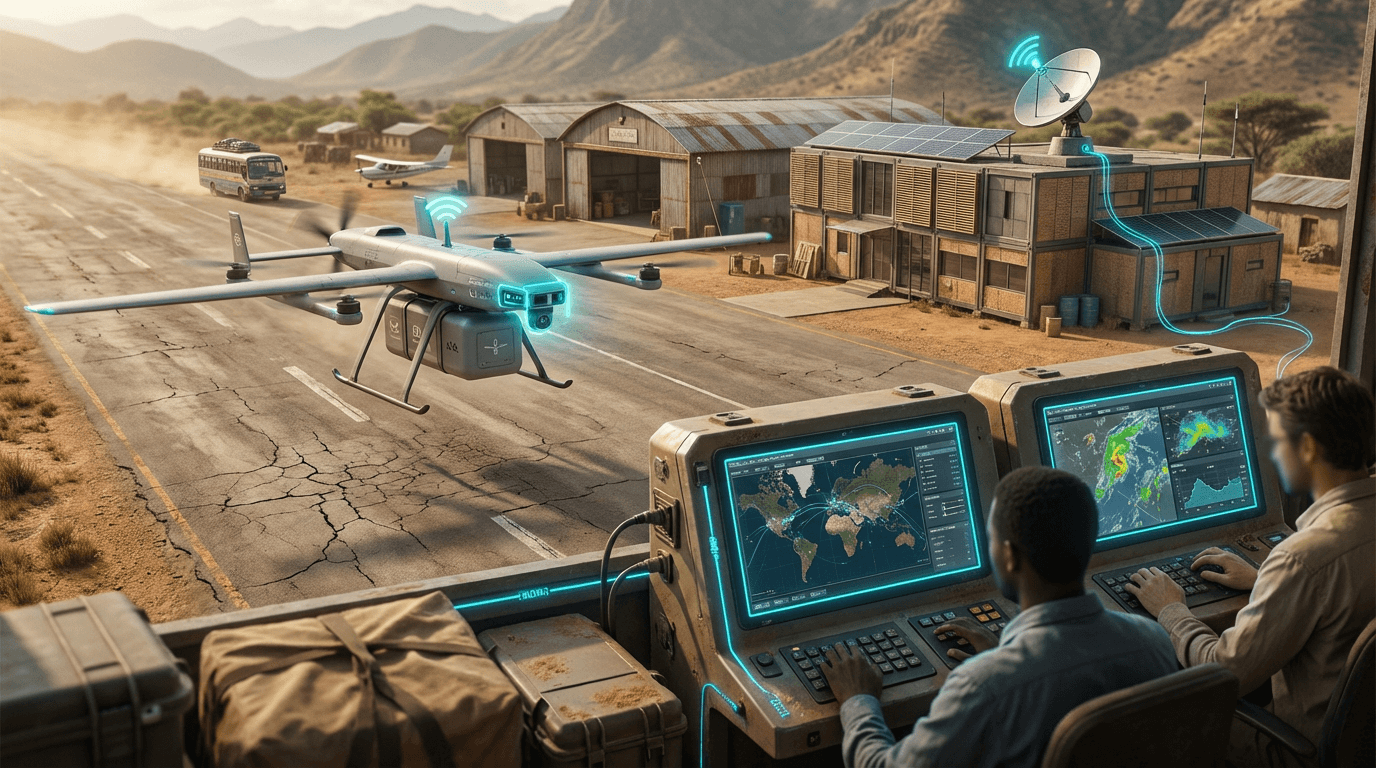
The rapid evolution of aviation technologies—from urban air mobility (UAM) platforms and hydrogen-powered aircraft to autonomous flight systems—presents a paradox for global development. While these innovations promise to revolutionize air travel and connectivity, they simultaneously risk creating a two-tiered aviation ecosystem that leaves developing nations further behind. The fundamental challenge lies in the substantial infrastructure requirements, capital investments, and regulatory sophistication needed to deploy these advanced systems. Wealthy regions with established aviation ecosystems, robust electrical grids, and mature certification frameworks are positioned to adopt these technologies quickly, while nations in the Global South often lack the foundational infrastructure—from vertiports and hydrogen production facilities to advanced air traffic management systems—necessary to participate in this transformation. This technological divide threatens to replicate historical patterns of unequal development, where innovations designed to solve global challenges instead concentrate benefits among those already advantaged.
Addressing this disparity requires deliberate frameworks that prioritize inclusive growth and technology accessibility. Equitable aviation development involves several interconnected strategies: technology transfer agreements that share intellectual property and manufacturing capabilities with developing nations, capacity-building programs that train local engineers and regulators, and innovative financing mechanisms that leverage climate funds and development banks to offset initial capital barriers. International aviation organizations and bilateral partnerships play crucial roles in establishing these pathways, ensuring that regulatory harmonization doesn't inadvertently exclude nations with less sophisticated certification processes. The challenge extends beyond simply providing access to existing technologies—it requires designing aviation solutions specifically suited to low-infrastructure environments, such as short takeoff and landing (STOL) aircraft that can operate from unpaved runways, or systems powered by off-grid renewable energy that don't depend on centralized electrical networks.
Early initiatives in this space demonstrate both the potential and complexity of equitable aviation access. Some aircraft manufacturers are exploring modular designs that can be assembled and maintained with limited specialized equipment, while development organizations are piloting programs that combine aviation infrastructure with broader electrification and connectivity goals. The integration of aviation equity into climate financing frameworks represents a particularly promising avenue, as many developing nations stand to benefit significantly from emission-reducing technologies while contributing least to historical aviation emissions. Looking forward, the success of global airspace equity will depend on whether the international community can move beyond viewing developing markets merely as future consumers and instead engage them as active participants in shaping aviation's next chapter. This shift requires recognizing that sustainable aviation cannot be truly sustainable if it remains accessible only to a fraction of the world's population, and that the innovations needed to serve resource-constrained environments may ultimately benefit the entire industry through increased efficiency and resilience.
Related Organizations
A UN specialized agency that sets global standards for passports (Machine Readable Travel Documents) and Digital Travel Credentials (DTC).
The specialized agency of the African Union responsible for civil aviation matters in Africa.

Operates the world's largest autonomous drone delivery network, specializing in medical supplies and e-commerce delivery.

The aviation regulator for Rwanda.

Australian drone logistics company focused on essential health supplies.

UNICEF
United States · Nonprofit
United Nations agency responsible for providing humanitarian and developmental aid to children.


An international financial institution that provides loans and grants to the governments of low- and middle-income countries.


Supporting Evidence
Research this in Signals
Signals turns a topic into a sourced research record you can inspect and rerun. Your first scan is free, and this one starts with Global Airspace Equity & Developing World Access already loaded, so edit it or scan as is.