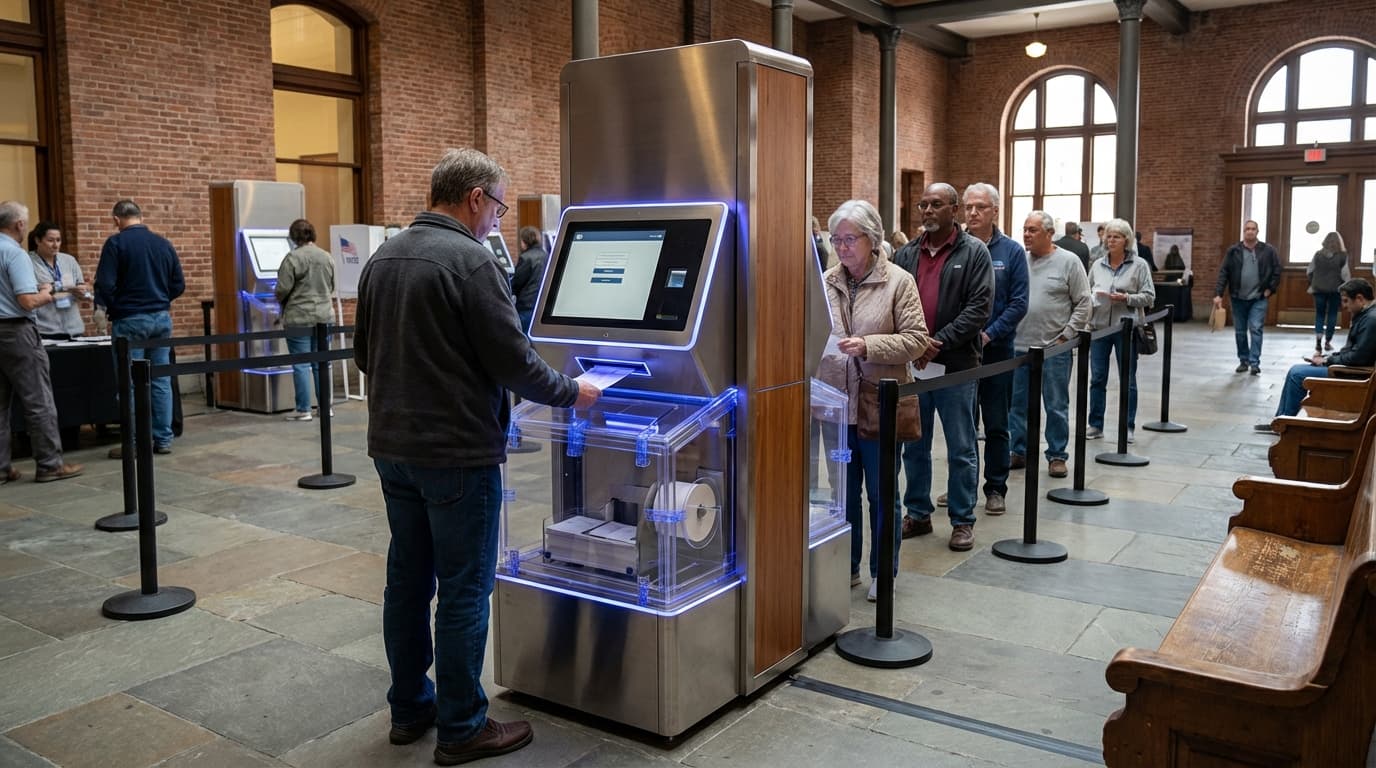
Tamper-Evident Voting Kiosks
Tamper-evident voting kiosks represent a critical evolution in electoral infrastructure, addressing longstanding concerns about the integrity and transparency of electronic voting systems. Unlike traditional black-box voting machines, these terminals are built on open-source hardware specifications that allow independent verification of their design and function. The core innovation lies in their transparent construction—often featuring clear acrylic or polycarbonate casings that expose internal components to visual inspection—combined with cryptographic security measures and mandatory paper ballot generation. When a voter makes selections on the touchscreen interface, the system simultaneously creates a human-readable paper record that the voter can verify before casting, while also generating encrypted digital tallies protected by tamper-evident seals and write-once memory modules. This dual-layer approach ensures that any physical intrusion or unauthorized modification becomes immediately visible to poll workers and observers, while cryptographic hashing techniques create an auditable chain of custody for digital vote records.
The fundamental challenge these kiosks address is the erosion of public trust in electoral systems, particularly in democracies where questions about vote counting accuracy and potential manipulation have undermined confidence in election outcomes. Traditional electronic voting machines have faced persistent criticism for their proprietary designs, lack of verifiable paper trails, and vulnerability to both technical failures and deliberate tampering. Tamper-evident kiosks solve these problems by making the voting process observable and verifiable at multiple levels. The transparent hardware design allows election officials, party observers, and even voters themselves to confirm that no unauthorized devices or modifications have been introduced. The mandatory paper trail creates a physical backup that can be hand-counted in audits or recounts, providing a failsafe against digital manipulation. This combination of physical transparency and cryptographic security enables a new model of electoral technology where trust is built not on opacity and vendor assurances, but on verifiable evidence and open scrutiny.
Several jurisdictions have begun piloting these systems in local and regional elections, with early deployments indicating strong voter acceptance and improved audit capabilities. The technology is particularly valuable in contexts where electoral integrity has been contested, as it provides multiple independent verification methods that can satisfy diverse stakeholders. Beyond traditional polling places, these kiosks are being adapted for accessible voting centers that serve voters with disabilities, incorporating features like audio ballots and adaptive interfaces while maintaining the same transparency standards. The broader trend toward election security emphasizes defense-in-depth strategies, and tamper-evident kiosks fit naturally into frameworks that combine physical security, cryptographic protection, and human oversight. As concerns about election security continue to shape democratic discourse worldwide, this approach offers a tangible path toward rebuilding public confidence through verifiable, observable voting processes that balance technological efficiency with transparent accountability.
Related Organizations

A non-partisan non-profit building open-source, verifiable voting machines.
Los Angeles County Registrar-Recorder/County Clerk
United States · Government Agency
Developed the Voting Solutions for All People (VSAP), a publicly owned, open-source hardware voting system design.

A nonprofit election technology research and development institute.

A computer science R&D firm specializing in formal verification and cryptography.

US federal agency that sets standards for technology, including facial recognition vendor tests (FRVT).

A non-partisan organization advocating for legislation and regulation that promotes accuracy, transparency, and verifiability of elections.

Runs the Semantic Forensics (SemaFor) program to develop technologies for automatically detecting, attributing, and characterizing falsified media.

A consultancy (now part of Galois) specializing in high-assurance election technologies and open-source voting systems.

Through Copilot and the 'Recall' feature in Windows, Microsoft is integrating persistent memory and agentic capabilities directly into the operating system.

Supporting Evidence
Research this in Signals
Signals turns a topic into a sourced research record you can inspect and rerun. Your first scan is free, and this one starts with Tamper-Evident Voting Kiosks already loaded, so edit it or scan as is.