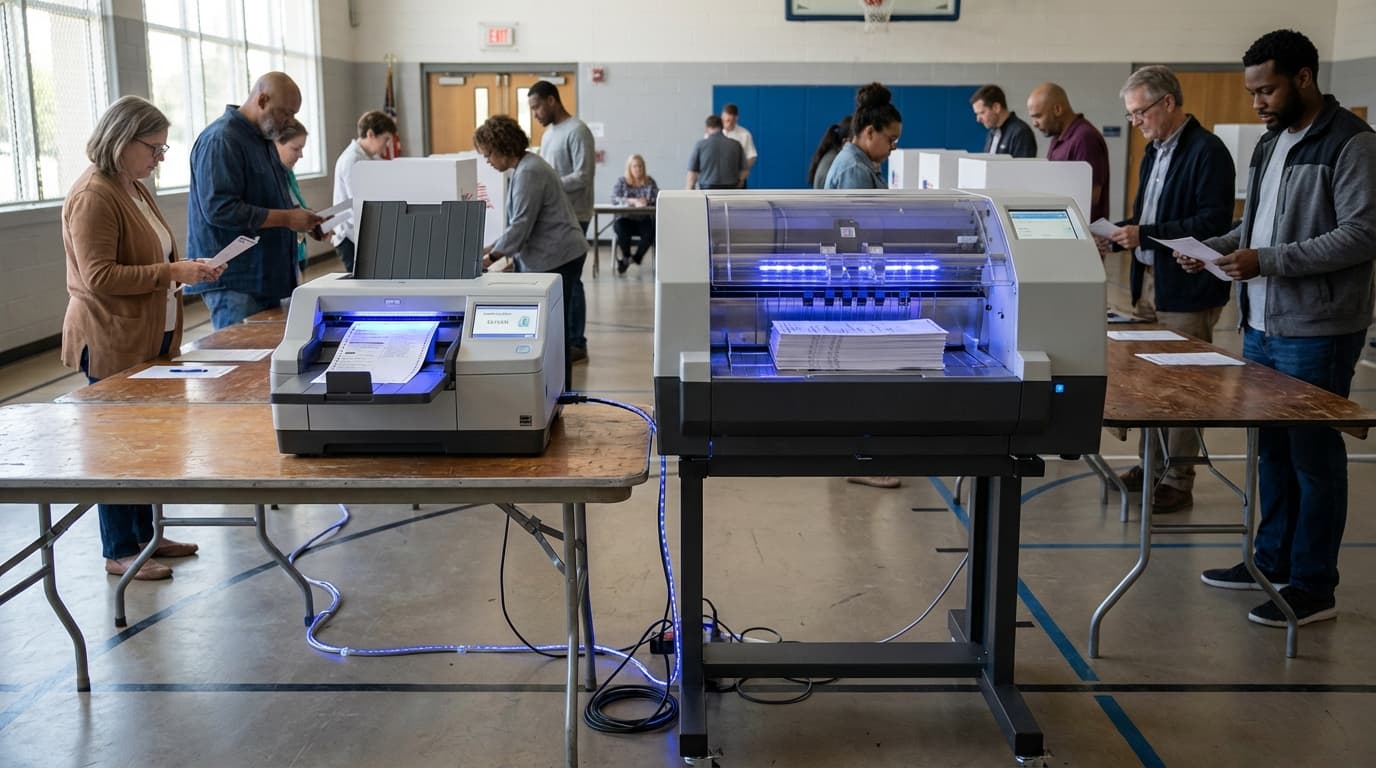
High-Speed Precinct & Central Scanners
High-speed precinct and central scanners represent a critical infrastructure component in modern democratic systems, designed to bridge the efficiency demands of large-scale elections with the transparency requirements of auditable voting processes. These optical scanning devices read marked paper ballots, interpreting voter selections through advanced image recognition algorithms that detect filled ovals, checkmarks, or other standardized marking methods. Unlike earlier generations of voting technology, contemporary scanners incorporate hardened firmware—software that is cryptographically signed and resistant to tampering—alongside comprehensive chain-of-custody logging systems that record every interaction with the device. The scanners generate cast vote records (CVRs), which are digital representations of each ballot's selections that can be exported for independent verification and statistical audits. This dual-layer approach maintains both the physical paper ballot as the official record and a digital tabulation for rapid counting, addressing longstanding tensions between speed and security in electoral administration.
The fundamental challenge these systems address is the scalability crisis facing democratic institutions: how to process millions of ballots quickly enough to deliver timely election results while maintaining the verifiability that underpins electoral legitimacy. Manual counting, while transparent, becomes impractical in jurisdictions with hundreds of thousands of voters and complex multi-contest ballots. Early electronic voting systems promised efficiency but often sacrificed auditability, creating what election security experts termed "black box" voting where results could not be independently verified. High-speed scanners resolve this dilemma by automating the counting process while preserving paper ballots that can be manually recounted if disputes arise. The exportable CVR functionality enables risk-limiting audits, a statistical method that can verify election outcomes by examining a sample of ballots rather than conducting full recounts. This capability has become increasingly important as election integrity concerns have intensified, providing election officials with tools to demonstrate accuracy without the resource burden of universal hand counts.
Precinct-based scanners are now widely deployed across democratic nations, with voters feeding their completed ballots into machines at polling places that provide immediate feedback on potential errors like overvotes or blank ballots. Central count scanners, which process absentee and mail-in ballots at election headquarters, have become particularly critical as remote voting options have expanded. Research from election administration organizations indicates that jurisdictions using scanner-based systems with robust audit procedures have successfully defended their results against challenges by producing verifiable evidence of accuracy. The technology continues to evolve with enhanced security features such as tamper-evident seals, air-gapped operation to prevent network intrusions, and improved accessibility features for voters with disabilities. As democratic societies grapple with declining trust in institutions, these systems represent an essential infrastructure investment—not merely for operational efficiency, but as a foundation for the transparency and verifiability that legitimate governance requires.
Related Organizations

Dominion Voting Systems
United States · Company
A major North American vendor of electronic voting hardware and software.

The largest manufacturer of voting machines in the United States.
Independent agency of the US government focused on election administration.
Election technology company specializing in audit and voting systems.


Smartmatic
United Kingdom · Company
A multinational company that builds and implements electronic voting systems.

Global technology company developing UTM hubs and U-space platforms for European airspace.

A certified voting system vendor in the US.

A South Korean election technology manufacturer that exports optical mark readers (OMR) and voting machines to countries like the Philippines, Iraq, and DRC.

Offers the Digital Annealer, a quantum-inspired architecture specifically built to solve large-scale combinatorial optimization problems.
Supporting Evidence
Research this in Signals
Signals turns a topic into a sourced research record you can inspect and rerun. Your first scan is free, and this one starts with High-Speed Precinct & Central Scanners already loaded, so edit it or scan as is.