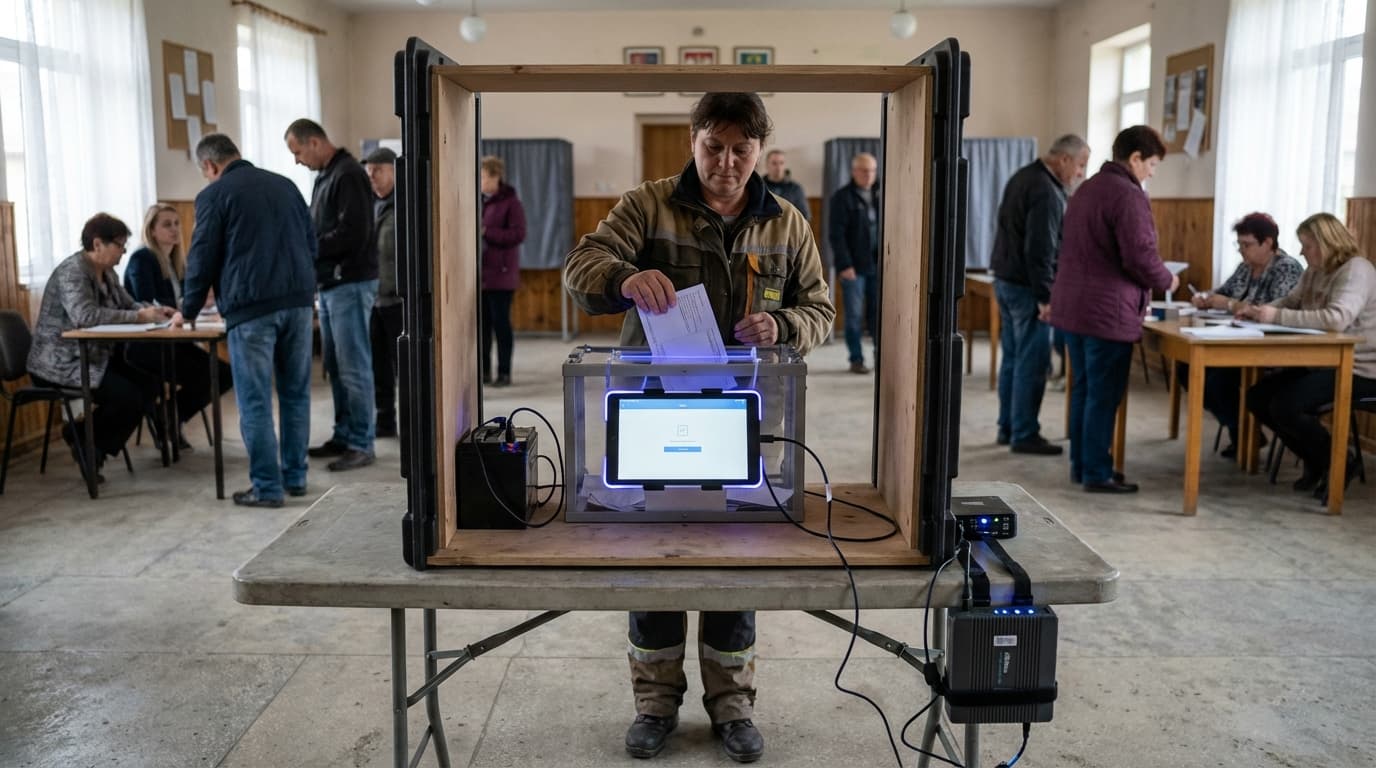
Offline-First Voting Infrastructure
Offline-First Voting Infrastructure represents a critical advancement in democratic technology, addressing the fundamental challenge of conducting secure, verifiable elections in environments where reliable internet connectivity cannot be assumed. This hybrid approach combines physical paper ballots with digital verification systems, creating a resilient voting mechanism that operates independently of network infrastructure. At its technical core, these systems typically employ ruggedized hardware—often solar-powered kiosks or portable units—that can capture, encrypt, and store voter selections locally. The technology relies on cryptographic protocols that ensure ballot integrity even when devices operate in isolation for extended periods. When connectivity becomes available, whether through cellular networks, satellite links, or physical transport of encrypted storage media, the systems synchronize their data with central tabulation servers while maintaining end-to-end verification chains that allow independent audits of results.
The primary challenge this technology addresses is the persistent digital divide that threatens to create a two-tiered global democracy, where only well-connected urban populations can access modern voting systems while rural and marginalized communities remain dependent on purely manual processes vulnerable to manipulation or logistical failure. Traditional electronic voting systems assume constant connectivity for real-time verification and result transmission, making them unsuitable for regions experiencing frequent power outages, limited telecommunications infrastructure, or temporary displacement scenarios. Offline-First Voting Infrastructure overcomes these limitations by decoupling the act of voting from the requirement of immediate network access, while still providing the transparency, speed, and auditability benefits of digital systems. This approach enables election officials to deploy consistent voting technology across diverse geographic and infrastructural contexts, reducing the complexity and cost of managing parallel systems for different regions.
Early deployments of offline-first voting systems have emerged in several contexts where traditional infrastructure proves inadequate. Humanitarian organizations have piloted these systems in refugee settlements, where populations require mechanisms for community decision-making despite lacking permanent infrastructure. Research initiatives in parts of Sub-Saharan Africa and Southeast Asia have explored solar-powered voting kiosks that can operate for weeks without external power or connectivity, later syncing results when mobile network coverage becomes available or when physical media are transported to counting centers. These implementations demonstrate the technology's potential to extend democratic participation to populations previously excluded by infrastructure limitations. As climate change and geopolitical instability create more scenarios requiring resilient civic infrastructure, offline-first approaches represent an essential evolution in electoral technology. The broader trend toward edge computing and intermittent connectivity solutions across multiple sectors suggests that voting systems designed for infrastructure-poor environments may ultimately influence mainstream electoral technology, creating more robust democratic processes even in well-connected regions facing potential disruptions.
Related Organizations

State-owned aerospace and defense company that manufactures India's Electronic Voting Machines (EVMs).

The superior electoral court of Brazil, responsible for the management and development of the Brazilian electronic voting system.

A non-partisan non-profit building open-source, verifiable voting machines.

A nonprofit election technology research and development institute.

The largest manufacturer of voting machines in the United States.

Global technology company developing UTM hubs and U-space platforms for European airspace.


Through Copilot and the 'Recall' feature in Windows, Microsoft is integrating persistent memory and agentic capabilities directly into the operating system.

Africa's largest network of civic technology and data journalism labs.

Intergovernmental organization supporting sustainable democracy worldwide.
Supporting Evidence
Research this in Signals
Signals turns a topic into a sourced research record you can inspect and rerun. Your first scan is free, and this one starts with Offline-First Voting Infrastructure already loaded, so edit it or scan as is.