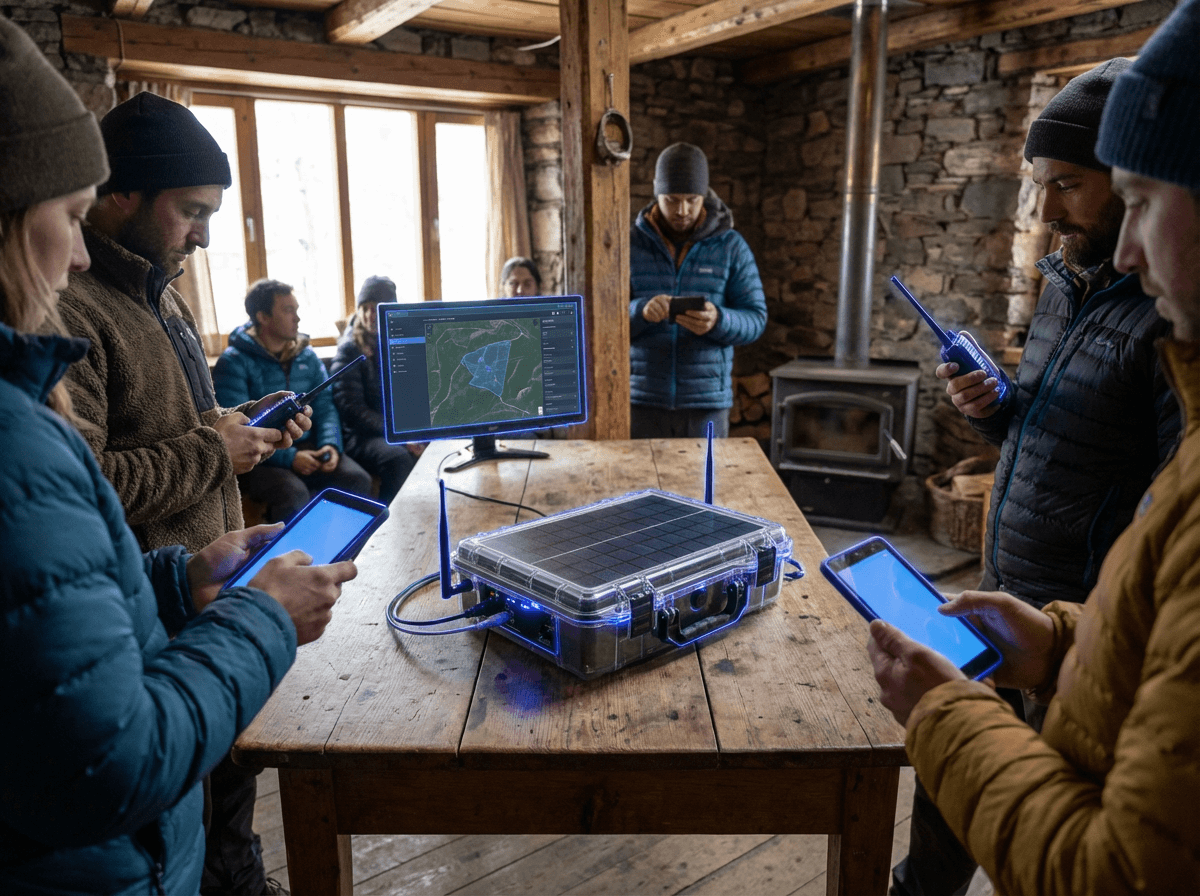
Mesh Democracy Nodes
Mesh Democracy Nodes represent a critical infrastructure solution for civic participation in environments where traditional internet connectivity is unreliable, censored, or deliberately disrupted. These specialized hardware devices create self-organizing wireless networks that operate independently of centralized internet service providers or government-controlled telecommunications infrastructure. Unlike conventional networking equipment that relies on hierarchical routing through central servers, mesh nodes communicate directly with one another in a peer-to-peer architecture, automatically finding the most efficient paths for data transmission across the network. Each node functions simultaneously as both a client and a relay point, extending network coverage organically as more devices join the mesh. The devices typically employ low-power radio frequencies and ruggedized enclosures designed to withstand harsh environmental conditions, making them deployable in diverse settings from urban neighborhoods to remote rural areas. Advanced encryption protocols ensure that communications remain secure even as data packets hop across multiple nodes to reach their destination.
The fundamental challenge these systems address is the vulnerability of democratic processes to connectivity disruptions, whether caused by natural disasters, authoritarian censorship, or inadequate telecommunications infrastructure. In regions where governments restrict internet access during protests or elections, traditional digital organizing tools become unavailable precisely when civic coordination is most critical. Similarly, communities in areas with limited commercial internet infrastructure face barriers to participating in digital governance initiatives that increasingly define modern civic life. Mesh Democracy Nodes overcome these limitations by creating resilient communication channels that cannot be easily shut down or monitored by centralized authorities. This technology enables communities to conduct secure voting, share information about local issues, coordinate emergency responses, and maintain democratic dialogue even when cut off from the broader internet. The decentralized architecture means there is no single point of failure that authorities can target to disable the entire network.
Early deployments of mesh networking for civic purposes have emerged in contexts ranging from protest movements seeking to evade surveillance to rural communities building their own communication infrastructure. Research in disaster response scenarios suggests that mesh networks can maintain critical coordination capabilities when conventional telecommunications fail. As concerns about digital authoritarianism and infrastructure resilience grow globally, these systems represent an important safeguard for democratic participation. The technology aligns with broader movements toward digital sovereignty and community-controlled infrastructure, offering a model where civic communication tools remain under local control rather than dependent on commercial or state-operated platforms. Looking forward, mesh democracy infrastructure may become an essential component of resilient governance systems, ensuring that the ability to organize, deliberate, and make collective decisions persists regardless of external connectivity conditions.
Related Organizations

Develops mobile mesh networking hardware and protocols that enable off-grid communication and transaction relaying.

A bottom-up, citizenship-driven technological, social and economic project to create a free, open and neutral telecommunications network.

An open-source project providing off-grid mesh communication using LoRa radios, increasingly used for decentralized data relay.

Develops hardware and software for incentivized mesh networks where routers pay each other for bandwidth.


A community-owned network in New York City providing resilient, neutral internet access via rooftop mesh nodes.

Facilitates community-owned GSM/LTE cellular networks in rural areas of Latin America.

International network of organizations supporting community networks and internet rights.

A hardware manufacturer specializing in IoT and LoRaWAN devices, producing the core modules used in Meshtastic and Helium nodes.

Steward of the Helium Network, a decentralized wireless infrastructure.
Supporting Evidence
Research this in Signals
Signals turns a topic into a sourced research record you can inspect and rerun. Your first scan is free, and this one starts with Mesh Democracy Nodes already loaded, so edit it or scan as is.