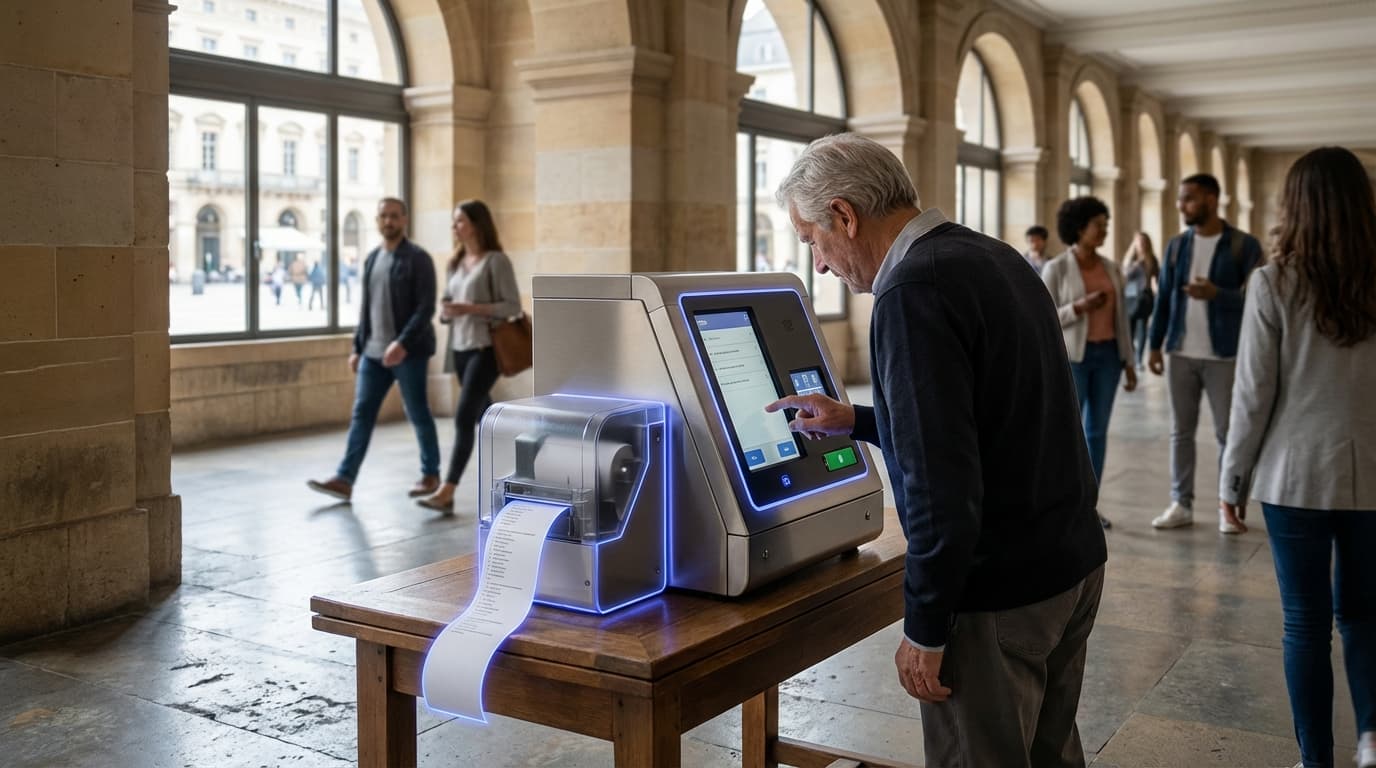
Ballot Marking Devices (with VVPAT)
Ballot Marking Devices (BMDs) with Voter-Verifiable Paper Audit Trails (VVPAT) represent a hybrid approach to election technology that combines the accessibility benefits of digital interfaces with the security and auditability of paper-based voting systems. These devices function as assistive tools that allow voters to make their selections through a digital interface—often featuring touchscreens, audio instructions, or adaptive input devices—before producing a human-readable paper ballot that serves as the official record of the vote. The core technical mechanism involves translating voter selections made on the digital interface into a printed ballot that displays choices in clear text, which the voter can review before casting. This paper record becomes the authoritative version of the vote, not the digital selections stored in the device's memory. The VVPAT component ensures that every vote has a physical manifestation that can be independently verified by the voter and later audited without relying on the device's internal software or data storage.
The fundamental challenge these devices address is the tension between accessibility and election security in democratic systems. Traditional hand-marked paper ballots, while auditable and resistant to certain forms of digital manipulation, present significant barriers for voters with visual impairments, limited dexterity, or those who require language assistance beyond what can be practically printed on standard ballots. Purely electronic voting systems, conversely, have faced persistent concerns about software vulnerabilities, the potential for undetectable vote manipulation, and the difficulty of conducting meaningful post-election audits. BMDs with VVPAT resolve this dilemma by enabling all voters to cast their ballots independently and privately through accessible digital interfaces while maintaining the paper trail that election security experts widely consider essential for verifiable elections. This approach also supports multilingual voting experiences without requiring jurisdictions to print separate ballot versions in multiple languages, reducing costs and logistical complexity while expanding language access.
Current deployments of BMD-VVPAT systems vary significantly across jurisdictions, with some using them as the primary voting method for all voters while others reserve them specifically for voters who request accessibility assistance. Research in election administration suggests that voter confidence in these systems depends heavily on the design of the verification process—whether voters actually review their printed ballots before casting and whether the paper records are genuinely used in post-election audits. Early implementations have revealed important considerations around ballot design, the clarity of verification instructions, and the need for robust chain-of-custody procedures for the paper records. As concerns about election security intensify globally and as accessibility requirements become more stringent, these devices represent an evolving compromise between competing values in democratic governance. The trajectory of this technology points toward increasingly sophisticated interfaces that can accommodate a wider range of disabilities while maintaining the fundamental principle that paper records, not digital files, constitute the authoritative record of voter intent.
Related Organizations

Dominion Voting Systems
United States · Company
A major North American vendor of electronic voting hardware and software.

The largest manufacturer of voting machines in the United States.


Smartmatic
United Kingdom · Company
A multinational company that builds and implements electronic voting systems.

Independent agency of the US government focused on election administration.

A non-partisan non-profit building open-source, verifiable voting machines.

A non-partisan organization advocating for legislation and regulation that promotes accuracy, transparency, and verifiability of elections.

A nonprofit election technology research and development institute.

A certified voting system vendor in the US.

Election technology company specializing in audit and voting systems.

Through Copilot and the 'Recall' feature in Windows, Microsoft is integrating persistent memory and agentic capabilities directly into the operating system.
Supporting Evidence
Research this in Signals
Signals turns a topic into a sourced research record you can inspect and rerun. Your first scan is free, and this one starts with Ballot Marking Devices (with VVPAT) already loaded, so edit it or scan as is.