Multi-Domain Battle Management Clouds
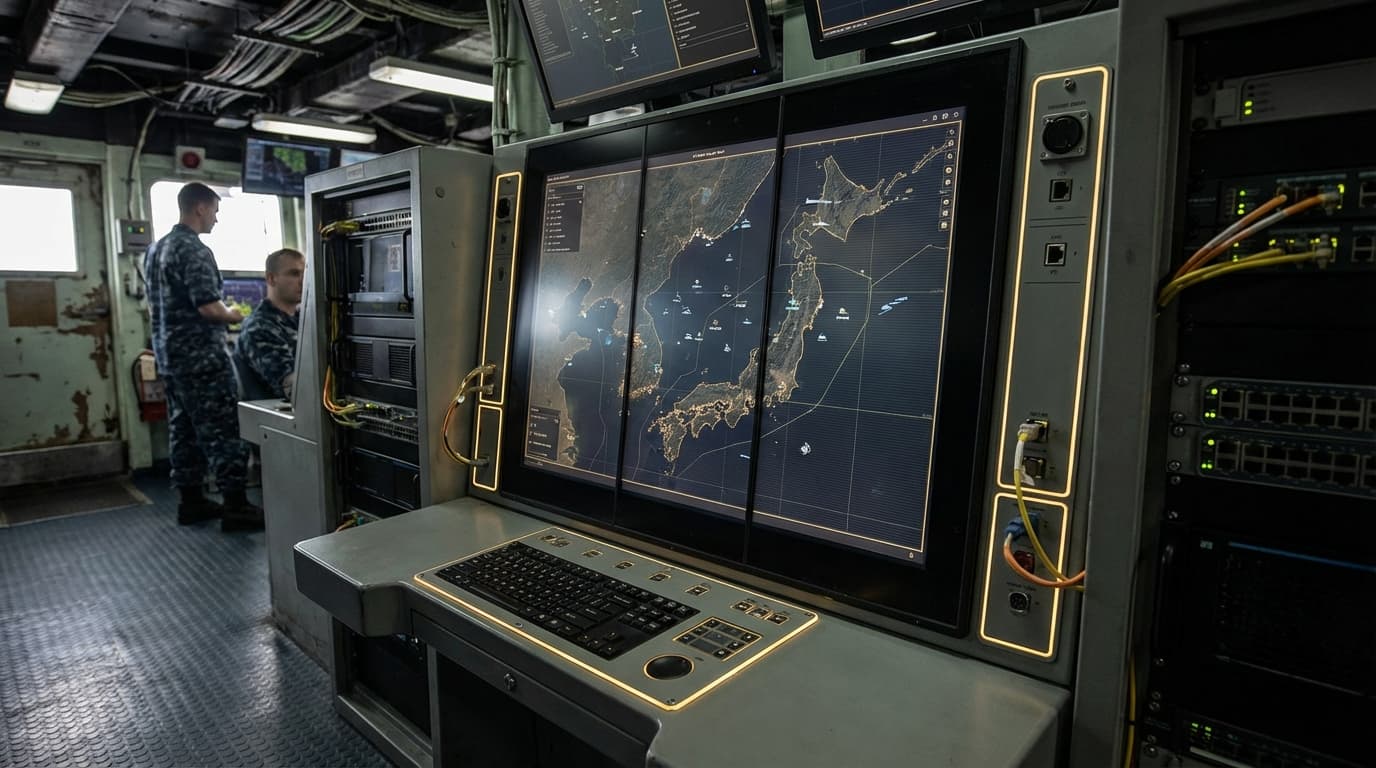
Multi-Domain Battle Management Clouds represent a paradigm shift in how military forces coordinate operations across increasingly complex battlespaces. Traditional command and control systems have historically operated in silos, with air, land, sea, space, and cyber forces maintaining separate operational pictures that require manual coordination and reconciliation. This fragmentation creates dangerous gaps in situational awareness, particularly as modern conflicts unfold at speeds that exceed human decision-making capabilities. Multi-Domain Battle Management Clouds address this challenge through federated cloud architectures that continuously ingest sensor data and intelligence from all warfighting domains, applying advanced fusion algorithms to create a unified, real-time operational picture. These systems employ sophisticated publish-subscribe messaging protocols that enable low-latency data distribution across geographically dispersed units, ensuring that commanders at every echelon share access to the same tactical truth. Critically, the architecture incorporates granular security controls that respect classification levels and coalition boundaries, allowing allied forces to collaborate on shared threats while protecting sensitive national capabilities and intelligence sources.
The operational implications of this technology extend far beyond simple data aggregation. Modern military operations increasingly require synchronized effects across multiple domains—a missile defense engagement might simultaneously involve satellite tracking, naval radar systems, ground-based interceptors, and cyber operations to disrupt adversary command networks. Without a common operational picture that spans these domains, forces risk fratricide, duplicated efforts, and missed opportunities to leverage cross-domain synergies. Multi-Domain Battle Management Clouds solve this coordination problem by providing a single source of truth that automatically correlates tracks from disparate sensors, identifies conflicts or gaps in coverage, and enables commanders to orchestrate complex multi-domain operations with unprecedented precision. The federated architecture also addresses the challenge of operating in contested environments where communications may be degraded or intermittent, allowing local nodes to maintain operational capability even when disconnected from higher headquarters while automatically synchronizing when connectivity is restored.
Research and development efforts in this domain have accelerated significantly in recent years, with major defense organizations pursuing various implementations of the concept. Early operational experiments have demonstrated the potential for dramatic improvements in decision speed and operational effectiveness, particularly in scenarios involving integrated air and missile defense or anti-access/area denial challenges. The technology builds upon decades of progress in distributed computing, data fusion algorithms, and network-centric warfare concepts, but recent advances in cloud infrastructure, artificial intelligence, and edge computing have made truly scalable multi-domain integration feasible for the first time. As military forces worldwide confront increasingly sophisticated adversaries capable of operating across all domains simultaneously, the ability to fuse information and coordinate actions at machine speed becomes not merely advantageous but essential for maintaining operational superiority. The trajectory of this technology points toward increasingly autonomous battle management systems that can recommend or even execute coordinated multi-domain responses faster than human operators could achieve through traditional command processes, fundamentally transforming the character of modern warfare.
Related Organizations


Major defense contractor developing Reciprocal Quantum Logic (RQL) for cryogenic computing.

Cloud computing giant offering Amazon Braket.

Through Copilot and the 'Recall' feature in Windows, Microsoft is integrating persistent memory and agentic capabilities directly into the operating system.

The prime contractor for the European Robotic Arm (ERA) currently on the ISS.

A global aerospace and defense technology innovator delivering end-to-end solutions.

Multinational company designing and building electrical systems and providing services for the aerospace, defence, transportation and security markets.

Creators of CausalImpact, a package for causal inference using Bayesian structural time-series.

Offers Oracle Cloud for Government with isolated regions and high-security accreditation.

A management and information technology consulting firm.

Builds mission engineering software that uses AI to process data for decision advantage in defense and national security.
Supporting Evidence
Research this in Signals
Signals turns a topic into a sourced research record you can inspect and rerun. Your first scan is free, and this one starts with Multi-Domain Battle Management Clouds already loaded, so edit it or scan as is.