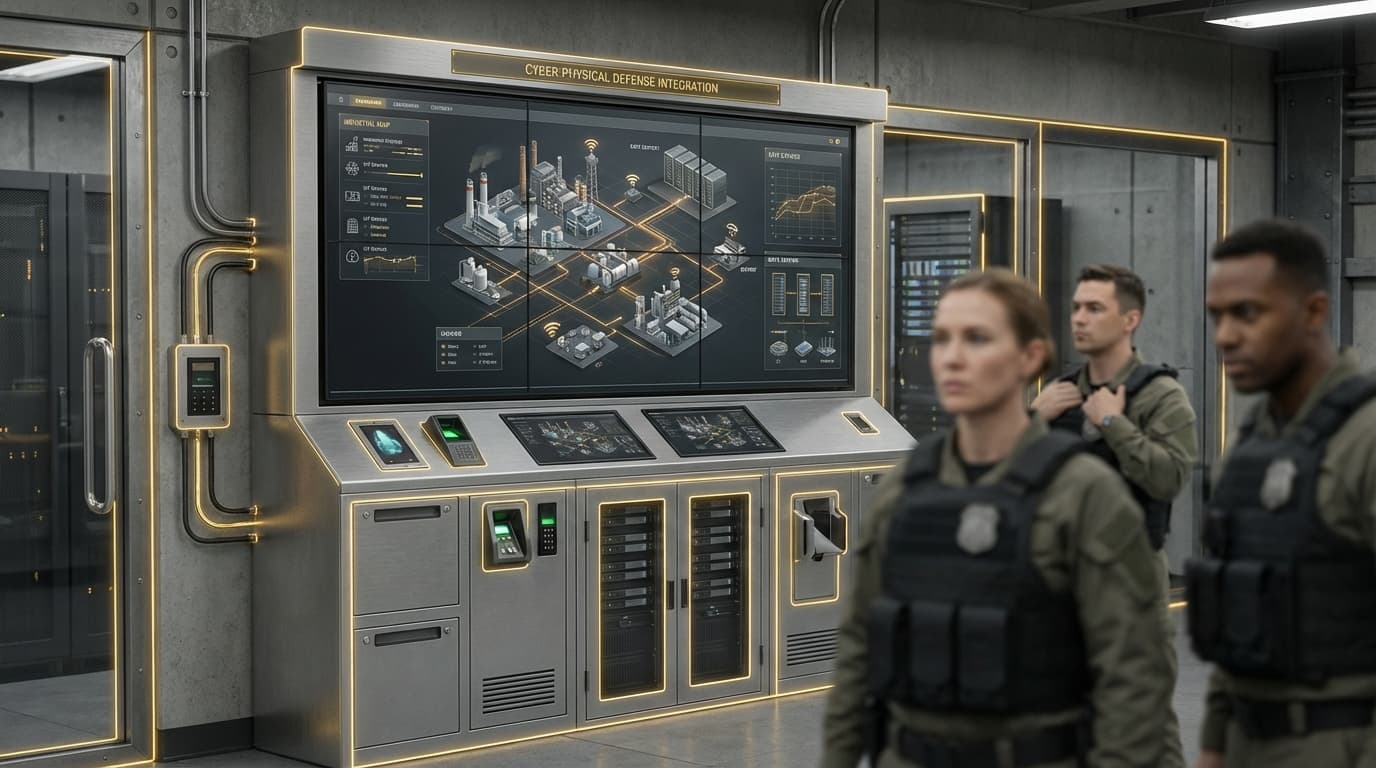
Cyber-Physical Defense Integration
Modern critical infrastructure faces an unprecedented challenge: the convergence of previously isolated operational technology (OT) systems with internet-connected IT networks and proliferating IoT devices has created vast attack surfaces that traditional security approaches cannot adequately protect. Industrial control systems that once operated in air-gapped isolation now connect to enterprise networks for efficiency gains, while sensors and actuators communicate across IP networks, creating pathways for cyber threats to trigger physical consequences. The 2021 Colonial Pipeline incident and similar attacks on water treatment facilities have demonstrated how digital intrusions can halt physical operations, disrupt supply chains, and threaten public safety. Cyber-Physical Defense Integration addresses this convergence challenge by implementing adaptive security architectures that understand the unique operational constraints of physical systems—where a security response that shuts down a network port might also halt a manufacturing line or disable a power substation.
This integrated approach works by deploying security layers that span the entire technology stack, from field devices and programmable logic controllers through SCADA systems to enterprise IT networks. Unlike conventional cybersecurity that treats OT and IT as separate domains, these systems employ unified threat intelligence that correlates anomalies across all layers simultaneously. Machine learning algorithms trained on normal operational patterns can distinguish between legitimate process variations and malicious activity, while automated response mechanisms are calibrated to the specific tolerances of physical systems. For instance, when detecting unusual command sequences to industrial equipment, the system can isolate compromised segments without triggering emergency shutdowns that might damage machinery or endanger personnel. This contextual awareness is critical because OT environments often cannot tolerate the patch cycles, system reboots, or network interruptions that are routine in IT security operations.
Early deployments in energy, manufacturing, and transportation sectors indicate that millisecond-scale automated responses can contain threats before they propagate across interconnected systems. Utilities are implementing these frameworks to protect smart grid infrastructure, where compromised sensors or controllers could destabilize electrical distribution. Chemical plants and refineries use similar architectures to prevent cyber attacks from manipulating process controls in ways that could cause explosions or toxic releases. As critical infrastructure becomes increasingly automated and interconnected, this technology represents a fundamental shift from perimeter-based security to continuous monitoring and adaptive defense. The integration challenge extends beyond technology to encompass operational culture, requiring collaboration between IT security teams, control engineers, and operations personnel who traditionally worked in isolation. This convergence of expertise, enabled by platforms that provide unified visibility across cyber and physical domains, is essential for protecting the complex systems that underpin modern society.
Related Organizations

Specializes in securing the Extended Internet of Things (XIoT), bridging the gap between IT, OT, and IoT security.
Provides industrial cybersecurity platform for asset identification, threat detection, and response in OT environments.

Delivers OT and IoT visibility and security, using AI to detect anomalies in industrial control networks.

Armis
United States · Startup
Asset intelligence platform that discovers and secures managed, unmanaged, and IoT/OT devices.

Provides a blockchain-protected cybersecurity mesh for industrial operations and critical infrastructure.

Uses self-learning AI to detect and respond to cyber threats across IT and OT/industrial environments.
Automated cybersecurity across the digital terrain.

OPSWAT
United States · Company
Critical infrastructure protection cybersecurity company.

Provides HVDC Plus technology (VSC) and transformers for ultra-high-voltage transmission projects globally.


Offers Cortex XSIAM, an autonomous security operations platform driven by AI.
Supporting Evidence
Research this in Signals
Signals turns a topic into a sourced research record you can inspect and rerun. Your first scan is free, and this one starts with Cyber-Physical Defense Integration already loaded, so edit it or scan as is.