Critical Infrastructure Resilience
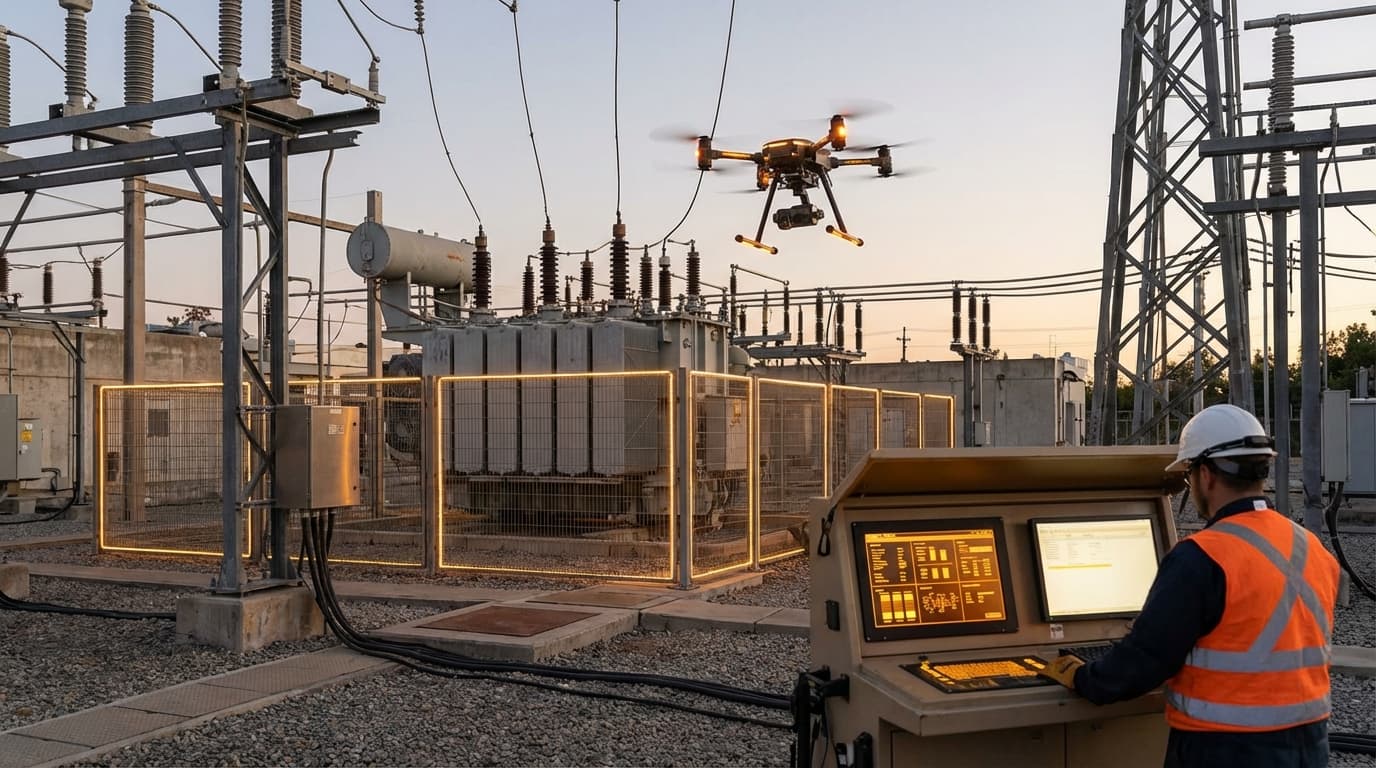
Critical infrastructure resilience represents a comprehensive approach to protecting and maintaining the operational continuity of essential systems—including power grids, water networks, transportation hubs, and communication systems—in the face of both natural disasters and deliberate attacks. This solution integrates autonomous monitoring technologies with distributed energy architectures to create self-healing infrastructure networks. At its technical core, the system deploys edge-computing sensors throughout critical infrastructure assets, continuously collecting data on system performance, structural integrity, and environmental conditions. These sensors work in concert with autonomous drones that conduct regular aerial inspections of pipelines, transmission lines, and port facilities, identifying potential vulnerabilities before they escalate into failures. The data streams feed into artificial intelligence systems that can detect anomalies, predict maintenance needs, and trigger automated responses to emerging threats. Complementing this monitoring layer are islandable microgrids—localized energy networks capable of disconnecting from the main grid and operating independently using distributed generation sources such as solar arrays, battery storage systems, and backup generators.
The fundamental challenge this technology addresses is the vulnerability of centralized infrastructure systems to cascading failures. Traditional grid architectures operate as interconnected networks where a single point of failure can trigger widespread outages affecting millions of people and critical services. Similarly, conventional monitoring approaches rely on periodic manual inspections that may miss rapidly developing problems or fail to provide real-time situational awareness during crisis events. By combining continuous autonomous surveillance with the ability to isolate and independently power critical facilities, this approach transforms infrastructure from brittle, interdependent systems into resilient networks capable of graceful degradation. When a cyberattack targets a regional power grid or a natural disaster damages transmission infrastructure, islandable microgrids can immediately disconnect affected facilities—such as hospitals, emergency response centers, or water treatment plants—and maintain their operations using local power generation. This capability is particularly crucial for defense installations, government facilities, and emergency services that must remain operational regardless of external conditions.
Early implementations of critical infrastructure resilience systems are already demonstrating their value in both military and civilian contexts. Defense installations have deployed microgrids with autonomous monitoring to ensure mission-critical operations can continue during grid disruptions, while several municipalities have established resilience hubs—community facilities equipped with islandable power systems and emergency services—that can serve as refuge points during extended outages. Research in this domain continues to advance, with developments in swarm robotics enabling coordinated drone inspections of vast infrastructure networks, and improvements in battery storage technology extending the duration that critical facilities can operate independently. As climate change intensifies the frequency and severity of extreme weather events, and as geopolitical tensions raise concerns about infrastructure security, the adoption of resilient infrastructure systems is accelerating. This technology represents a fundamental shift from reactive emergency response to proactive resilience engineering, ensuring that the essential services underpinning modern society can withstand and rapidly recover from disruptions that would have previously caused catastrophic failures.
Related Organizations

The Cybersecurity and Infrastructure Security Agency leads the US national effort to understand and manage risk to critical infrastructure.
Provides industrial cybersecurity platform for asset identification, threat detection, and response in OT environments.

Idaho National Laboratory (INL)
United States · Research Lab
The US Department of Energy's lead laboratory for nuclear energy and critical infrastructure protection.

Delivers OT and IoT visibility and security, using AI to detect anomalies in industrial control networks.

Specializes in securing the Extended Internet of Things (XIoT), bridging the gap between IT, OT, and IoT security.

Designs and manufactures digital products and systems that protect power grids.

Global specialist in energy management and automation that integrates cybersecurity into its industrial hardware and software.

Provides HVDC Plus technology (VSC) and transformers for ultra-high-voltage transmission projects globally.

Armis
United States · Startup
Asset intelligence platform that discovers and secures managed, unmanaged, and IoT/OT devices.

Provides a blockchain-protected cybersecurity mesh for industrial operations and critical infrastructure.
Supporting Evidence
Research this in Signals
Signals turns a topic into a sourced research record you can inspect and rerun. Your first scan is free, and this one starts with Critical Infrastructure Resilience already loaded, so edit it or scan as is.