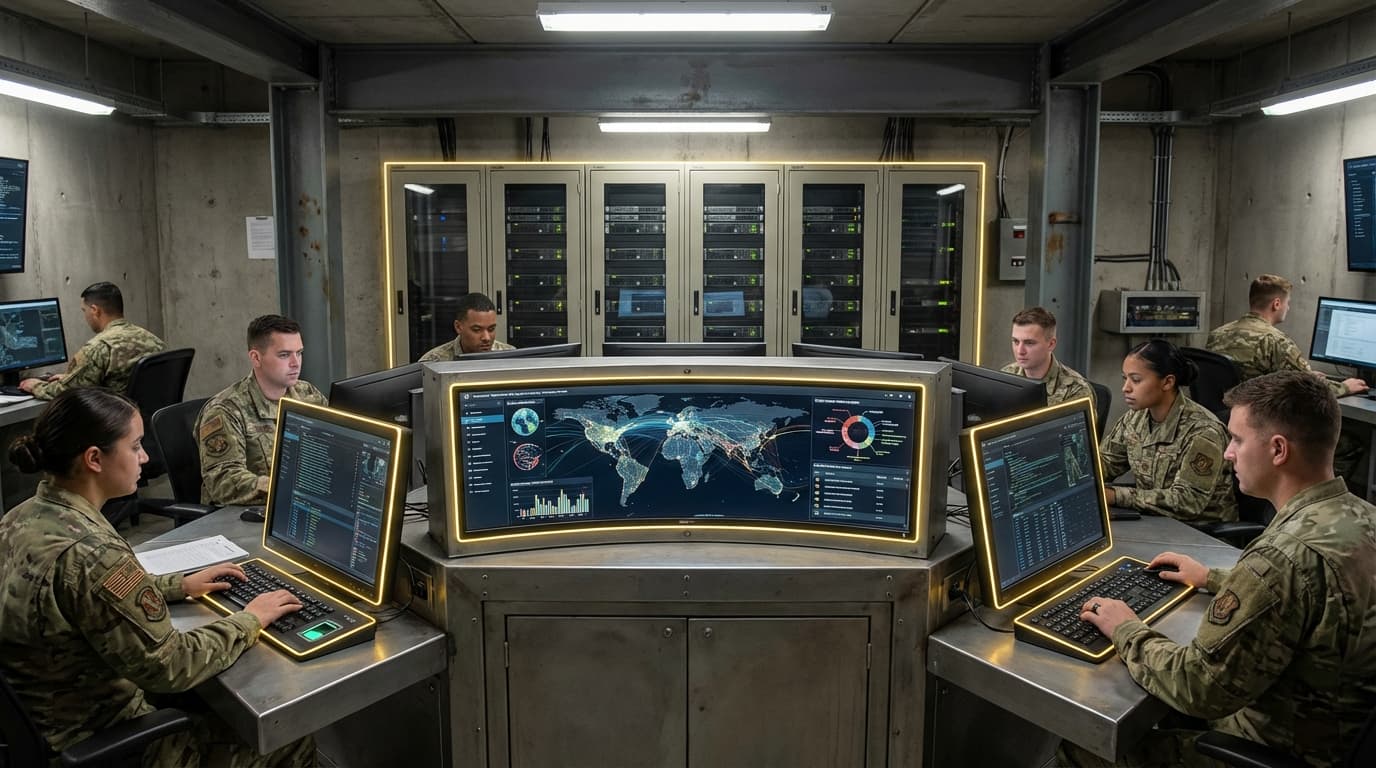
Information Operations & Cognitive Security Platforms
Information Operations & Cognitive Security Platforms represent a critical evolution in defense capabilities, addressing the reality that modern conflicts increasingly unfold in the information domain rather than solely on physical battlefields. These platforms employ sophisticated monitoring systems that continuously scan multiple media channels—from social networks and messaging apps to news outlets and online forums—to identify patterns indicative of coordinated influence campaigns. At their technical core, these systems utilize network analysis algorithms to detect synchronized posting behaviors, natural language processing to identify narrative themes and their propagation patterns, and machine learning models trained to recognize the signatures of inauthentic activity. By mapping how information flows through digital ecosystems, these platforms can distinguish organic discourse from orchestrated campaigns designed to manipulate public opinion, sow discord, or undermine institutional trust. The technology treats information itself as both terrain to be defended and a weapon system to be understood, requiring real-time analysis of narrative velocity, amplification networks, and psychological targeting strategies.
The emergence of these platforms addresses a fundamental vulnerability in modern societies: the susceptibility of populations to coordinated manipulation through information channels. Traditional security frameworks focused on physical threats have proven inadequate against adversaries who weaponize social media algorithms, exploit cognitive biases, and leverage the speed of digital communication to achieve strategic objectives without firing a shot. These platforms enable defense organizations and government agencies to detect influence operations early in their lifecycle, before narratives become entrenched in public consciousness. Beyond detection, they support the development of counter-messaging strategies that can inoculate populations against manipulation by pre-exposing them to weakened forms of disinformation, similar to how vaccines work in biological systems. This capability is particularly valuable in protecting democratic processes, where foreign interference campaigns have demonstrated the ability to amplify divisions and undermine electoral integrity. The platforms also enable attribution analysis, helping identify the sources and sponsors of influence operations, which supports both diplomatic responses and the development of deterrence strategies.
Early deployments of these capabilities have primarily occurred within military intelligence organizations and national security agencies, though research institutions and some technology companies have developed parallel systems for studying information warfare. The platforms are increasingly being adapted to protect critical infrastructure sectors, where coordinated disinformation could trigger panic or undermine public confidence in essential services. As hybrid warfare tactics become more prevalent, with adversaries blending conventional military operations with information campaigns, these platforms are evolving to provide integrated threat pictures that combine physical and cognitive domain awareness. The trajectory of this technology points toward more automated response capabilities, where defensive counter-narratives can be deployed at machine speed to match the velocity of attacks. However, the development of these systems also raises important questions about the boundaries between legitimate security operations and potential overreach into domestic information spaces, requiring careful governance frameworks to ensure they defend democratic values rather than undermine them.
Related Organizations
A multi-national organization that researches information warfare, psychological defense, and strategic communications.

Uses AI to detect narrative manipulation and disinformation risks for enterprises and governments.

A network analysis company that maps social media landscapes to detect disinformation and coordinated inauthentic behavior.

Combines AI with expert human analysis to detect and mitigate disinformation and harmful content online.

Primer.ai
United States · Company
An AI company providing natural language processing and knowledge graph generation for intelligence analysts.

A technology company detecting disinformation and social media manipulation using machine learning.

Conducts advanced research in social cybersecurity and the detection of online influence campaigns (e.g., ORA tool).

Provides technology for information advantage, cyber operations, and electronic systems to the intelligence community.

Intelligence cloud platform that analyzes threat actor behavior across the open and dark web.
Supporting Evidence
Research this in Signals
Signals turns a topic into a sourced research record you can inspect and rerun. Your first scan is free, and this one starts with Information Operations & Cognitive Security Platforms already loaded, so edit it or scan as is.