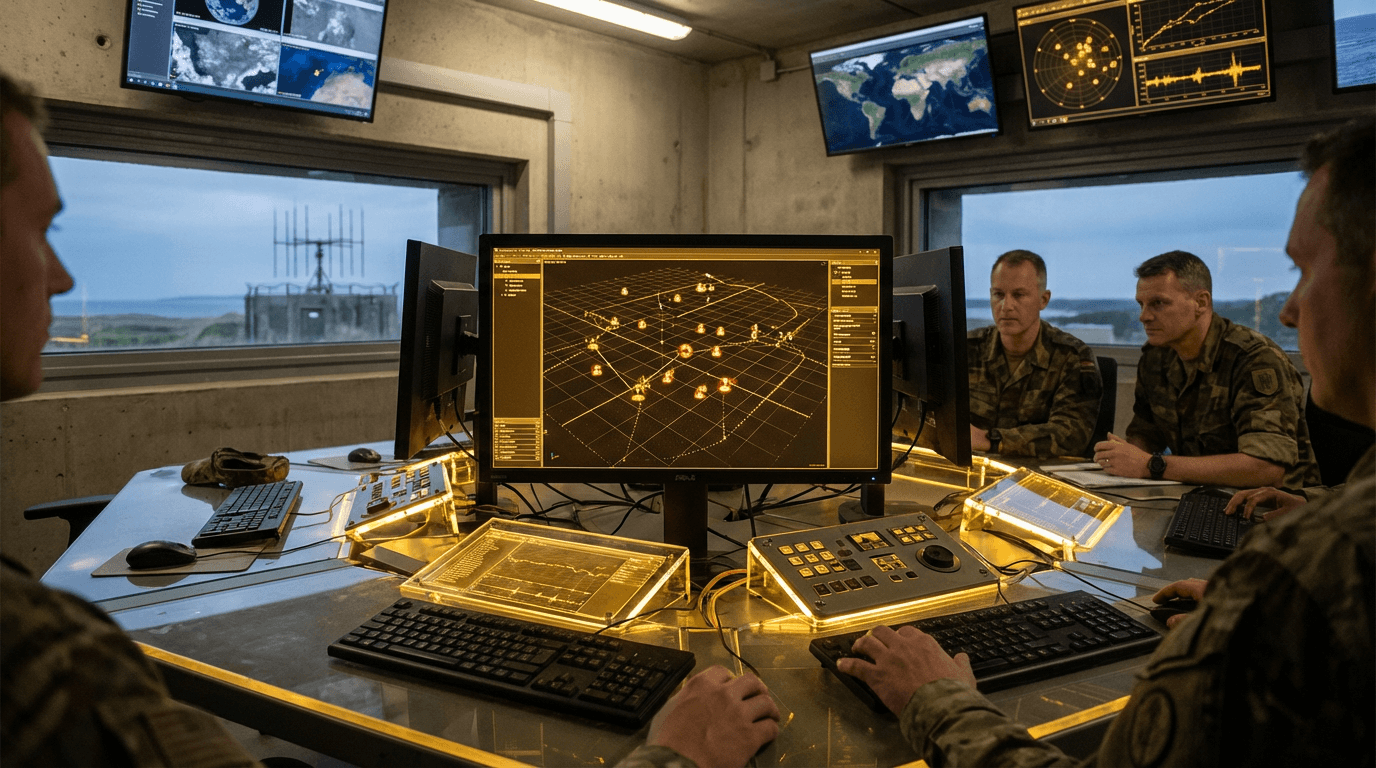
Autonomous Threat Detection
Autonomous threat detection represents a paradigm shift in defense and security operations, leveraging advanced sensor networks and artificial intelligence to identify potential threats across multiple domains before they materialize into active dangers. At its technical core, these systems employ deep learning algorithms that continuously analyze vast streams of data from diverse sources—radio frequency communications, radar signatures, network traffic patterns, and behavioral indicators—to establish baseline patterns of normal activity and flag deviations that may signal hostile intent. The architecture typically combines edge computing for real-time processing at sensor nodes with centralized fusion engines that correlate findings across domains, creating a comprehensive threat picture that no single sensor could provide alone. Machine learning models are trained on historical threat data and continuously refined through operational feedback, enabling the system to recognize both known threat signatures and novel attack patterns that might evade traditional rule-based detection systems.
The defense and security landscape faces an increasingly complex challenge: adversaries operate across multiple domains simultaneously, blending cyber attacks with physical maneuvers, electronic warfare with conventional operations, and legitimate traffic with malicious activity. Traditional monitoring approaches, which rely on human analysts reviewing data from isolated sensor systems, cannot keep pace with the volume, velocity, and variety of modern threats. Autonomous threat detection addresses this challenge by providing persistent, tireless surveillance that can process millions of data points per second, identifying subtle correlations that human operators might miss. This capability is particularly critical in contested environments where adversaries employ sophisticated denial and deception techniques designed to exploit the seams between different intelligence disciplines. By fusing satellite imagery showing unusual troop movements with intercepted communications suggesting operational planning and cyber logs revealing reconnaissance of critical infrastructure, these systems can provide early warning of coordinated attacks that might otherwise remain invisible until execution.
Current deployments of autonomous threat detection systems are primarily concentrated in national defense applications, where military organizations are integrating these capabilities into command and control architectures to enhance situational awareness along borders, in maritime domains, and across critical infrastructure networks. Early operational experience suggests that these systems can reduce the time from threat emergence to actionable intelligence from hours or days to minutes, fundamentally changing the decision calculus for defensive operations. Beyond military applications, the technology is finding adoption in critical infrastructure protection, where utilities and transportation networks face persistent threats from both state and non-state actors. The trajectory of this technology points toward increasingly sophisticated multi-domain integration, where autonomous systems will not only detect threats but also recommend or execute coordinated defensive responses across cyber, electronic warfare, and kinetic domains. As sensor networks become more ubiquitous and AI models more capable, autonomous threat detection will likely become a foundational element of national security architecture, enabling smaller forces to maintain awareness over larger areas and providing decision-makers with the early warning necessary to prevent conflicts rather than merely respond to them.
Related Organizations

Develops Lattice OS, an AI-powered operating system that fuses sensor data to automate command and control across autonomous systems.

Provides airspace security solutions to detect and monitor other drones.

Defense technology company building Hivemind, an AI pilot for autonomous drone swarms and aircraft operating without GPS or comms.


Provides distributed sensor networks for low-altitude airspace monitoring.

Builds mission engineering software that uses AI to process data for decision advantage in defense and national security.

Uses self-learning AI to detect and respond to cyber threats across IT and OT/industrial environments.

Multinational company designing and building electrical systems and providing services for the aerospace, defence, transportation and security markets.

Builds software that empowers organizations to integrate their data, decisions, and operations (Foundry and AIP).
Supporting Evidence
Research this in Signals
Signals turns a topic into a sourced research record you can inspect and rerun. Your first scan is free, and this one starts with Autonomous Threat Detection already loaded, so edit it or scan as is.